ペルセウス座分子雲の星屑
Stardust in the Perseus Molecular Cloud
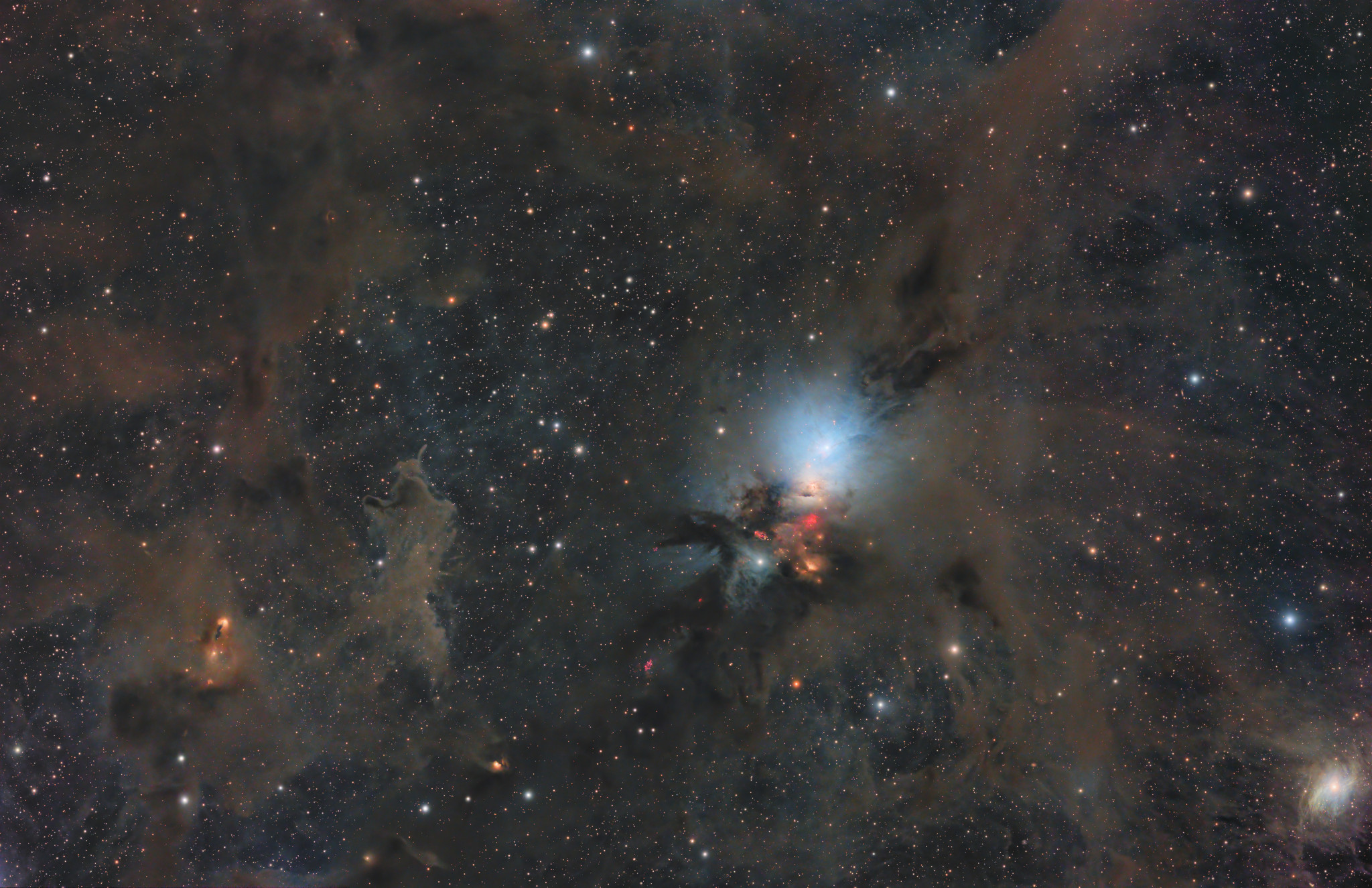
星屑の雲が、約850光年離れたペルセウス座分子雲を横切るこの深遠な宇宙風景を漂っています。約4度の視野の中で、埋め込まれた若い星からの光を反射する塵の星雲が際立っています。特徴的な青みがかった色の反射星雲NGC 1333は、中心付近で目立っています。ハービッグ・ハロー天体からの対照的な赤い放射の痕跡、最近形成された星から放出されるジェットと衝撃を受けた輝くガスが、塵の広がり全体に散らばっています。分子雲では多くの星が形成されていますが、ほとんどは遍在する塵によって可視波長では隠されています。NGC 1333を取り巻く混沌とした環境は、45億年以上前に私たちの太陽が形成された環境に似ている可能性があります。ペルセウス座分子雲の推定距離では、この宇宙の光景は約80光年に及ぶでしょう。成長ギャラリー:アトラス彗星(G3)
原文(English)
Clouds of stardust drift through this deep skyscape, across the Perseus molecular cloud some 850 light-years away. Dusty nebulae reflecting light from embedded young stars stand out in the nearly 4 degree wide field of view. With a characteristic bluish color reflection nebula NGC 1333 is prominent near center. Hints of contrasting red emission from Herbig-Haro objects, the jets and shocked glowing gas emanating from recently formed stars, are scattered across the dusty expanse. While many stars are forming in the molecular cloud, most are obscured at visible wavelengths by the pervasive dust. The chaotic environment surrounding NGC 1333 may be similar to one in which our own Sun formed over 4.5 billion years ago. At the estimated distance of the Perseus molecular cloud, this cosmic scene would span about 80 light-years. Growing Gallery: Comet ATLAS (G3)
\ この感動を宇宙仲間にシェア /
宇宙をXでシェア
© Jeff Schilling / APOD