彗星G3アトラスが崩壊
Comet G3 ATLAS Disintegrates
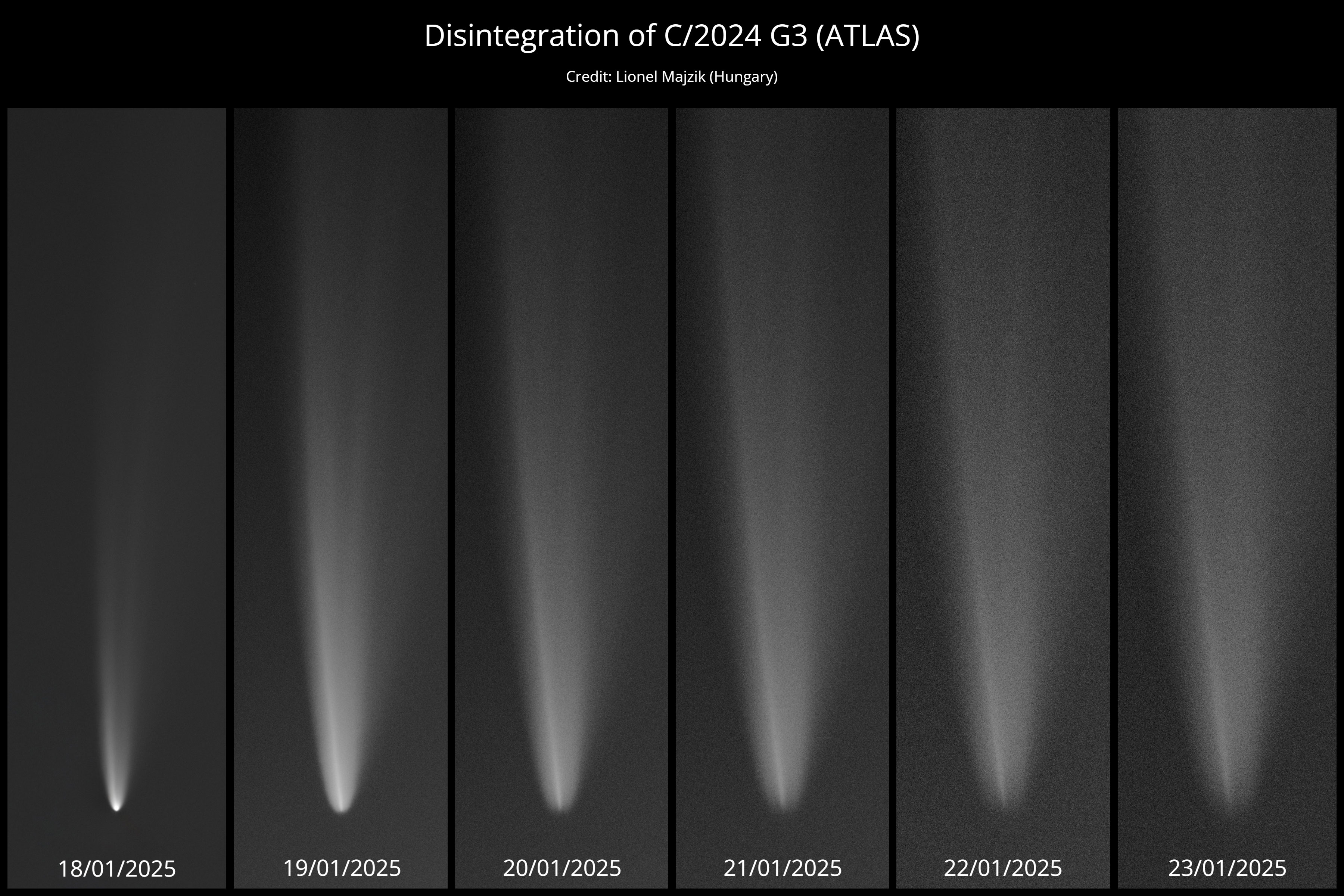
彗星G3アトラスに何が起こっているのでしょうか? 1月中旬に太陽に接近した後、彗星の頭部は次第に暗くなっていきました。1月下旬には、彗星C/2024 G3(アトラス)は頭部のない不思議な存在となっていましたが、地球の南半球の空では日没後も印象的な尾を見せ続けていました。写真は、チリのリオ・ウルタドで撮影された、1月の連続した夜に撮影された彗星G3アトラスの画像です。明らかに、彗星の頭部は、後期の日(右)よりも初期の日(左)の方が明るく、中心部が凝縮しています。主な理由は、頭部の中心にある氷と岩石の彗星の核が分裂したためと考えられます。彗星G3アトラスは、太陽に最も接近した際に水星の軌道のかなり内側を通過しました。この距離では、多くの彗星が熱によって破壊されます。彗星G3アトラスの散乱した残骸の一部は、太陽の周りを公転し続けます。ギャラリー:彗星G3アトラス
原文(English)
What's happening to Comet G3 ATLAS? After passing near the Sun in mid-January, the head of the comet has become dimmer and dimmer. By late January, Comet C/2024 G3 (ATLAS) had become a headless wonder -- even though it continued to show impressive tails after sunset in the skies of Earth's Southern Hemisphere. Pictured are images of Comet G3 ATLAS on successive January nights taken from Río Hurtado, Chile. Clearly, the comet's head is brighter and more centrally condensed on the earlier days (left) than on later days (right). A key reason is likely that the comet's nucleus of ice and rock, at the head's center, has fragmented. Comet G3 ATLAS passed well inside the orbit of planet Mercury when at its solar closest, a distance that where heat destroys many comets. Some of comet G3 ATLAS' scattering remains will continue to orbit the Sun. Gallery: Comet G3 ATLAS
\ この感動を宇宙仲間にシェア /
宇宙をXでシェア
© NASA / APOD