アビスコのパルヘリア
Parhelia at Abisko
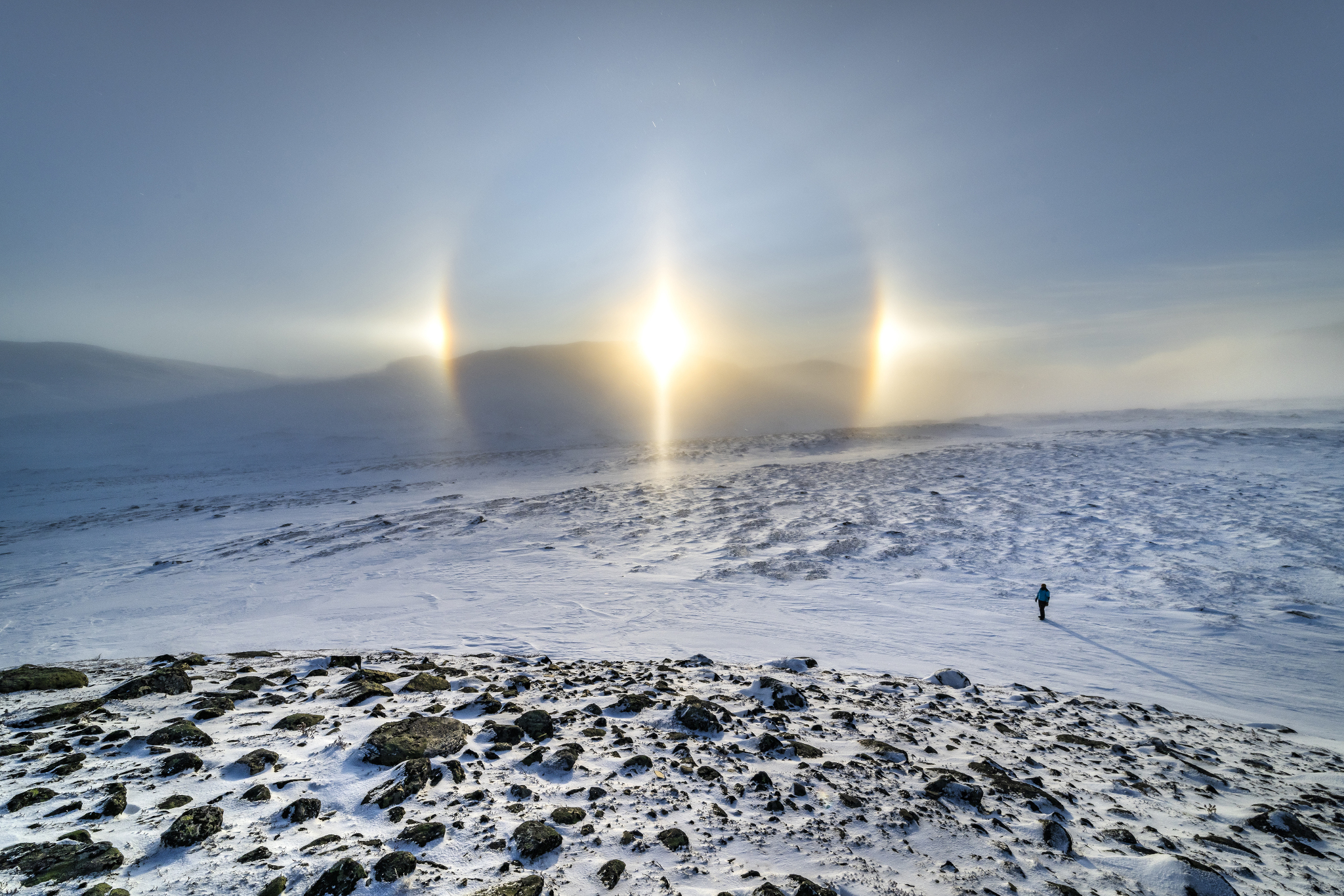
この非現実的な冬景色では、3 つの太陽が地平線に寄り添っているように見える。しかし、この印象的な光景は、地球の北スウェーデン、アビスコ国立公園周辺の山岳地帯を 2 月 3 日にスノーモービルで探検した際に撮影されたものである。地球の太陽の両側にある 2 つの明るい点は、幻日 (単数形は幻日) で、偽太陽または幻日とも呼ばれる。幻日は、もやのかかった大気中に浮遊する六角形の氷の結晶が太陽光を反射および屈折させることによって発生する。冬によく見られ、高緯度では明るい幻日が太陽の目に見える 22 度の氷のハローに沿って位置する。
原文(English)
Three suns seem to hug the horizon in this otherworldly winterscape. But the evocative scene was captured during a February 3rd snowmobile exploration of the mountainous region around Abisko National Park, northern Sweden, planet Earth. The two bright spots on either side of Earth's Sun are parhelia (singular parhelion), also known as mock suns or sun dogs. The parhelia are caused by hexagonal ice crystals suspended in the hazy atmosphere that reflect and refract sunlight. Commonly seen in winter and at high latitudes, the bright parhelia lie along the visible 22 degree ice halo of the Sun.
\ この感動を宇宙仲間にシェア /
宇宙をXでシェア
© planet Earth / APOD