LDN 1235:サメ星雲
LDN 1235: The Shark Nebula
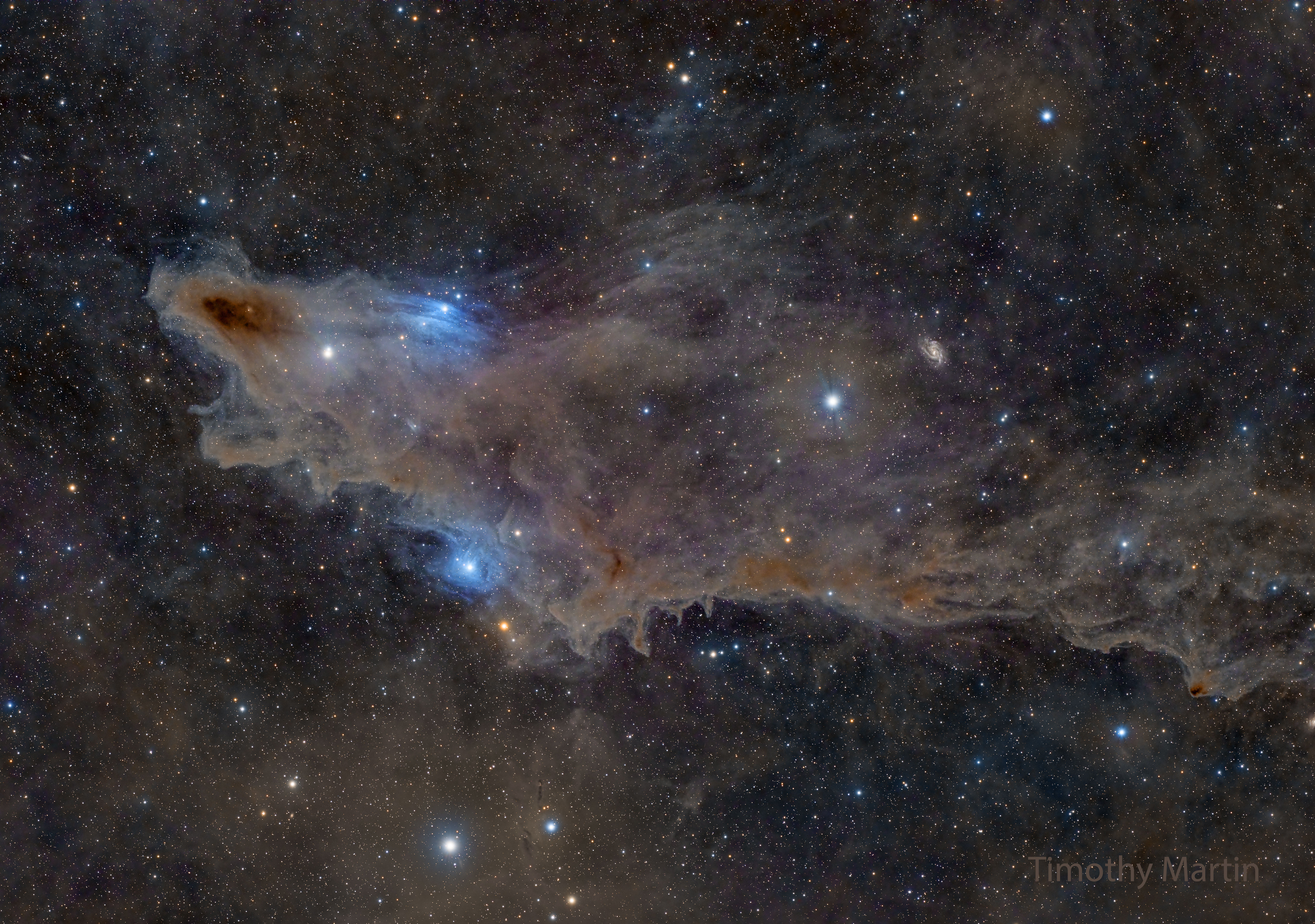
地球上には、サメ星雲を収容できるほど大きな海は存在しません。この捕食者の幻影は、星間ガスと塵だけで構成されているため、私たちに危険を及ぼすことはありません。ここに描かれているような暗い塵は、タバコの煙に似ており、巨大な星の冷たい大気中で生成されます。ガスを放出し、重力によって再凝縮した後、巨大な星は、高エネルギーの光と高速の恒星風を彫刻道具として、誕生した星雲に複雑な構造を刻み込むことがあります。星が生み出す熱は、濁った分子雲を蒸発させるだけでなく、周囲の水素ガスを拡散させて赤く輝かせます。崩壊の過程で、私たちは地球上の水雲のように、これらの巨大な雲を身近な存在として想像することを楽しむことができます。ヴァン・デン・ベルフ149番星雲や150番星雲のような小さな塵星雲も含め、サメ星雲(LDN 1235としてカタログ化されることもある)は、約15光年の広がりを持ち、エチオピア王の星座(ケフェウス座)の方向に約650光年離れたところに位置しています。宇宙を探検しよう:ランダムAPODジェネレーター
原文(English)
There is no sea on Earth large enough to contain the Shark nebula. This predator apparition poses us no danger as it is composed only of interstellar gas and dust. Dark dust like that featured here is somewhat like cigarette smoke and created in the cool atmospheres of giant stars. After expelling gas and gravitationally recondensing, massive stars may carve intricate structures into their birth cloud using their high energy light and fast stellar winds as sculpting tools. The heat they generate evaporates the murky molecular cloud as well as causing ambient hydrogen gas to disperse and glow red. During disintegration, we humans can enjoy imagining these great clouds as common icons, like we do for water clouds on Earth. Including smaller dust nebulae such as Van den Bergh 149 & 150, the Shark nebula, sometimes cataloged as LDN 1235, spans about 15 light years and lies about 650 light years away toward the constellation of the King of Aethiopia (Cepheus). Explore Your Universe: Random APOD Generator
\ この感動を宇宙仲間にシェア /
宇宙をXでシェア
© Timothy Martin / APOD