コメットC/2025 F2 スワン
Comet C/2025 F2 SWAN
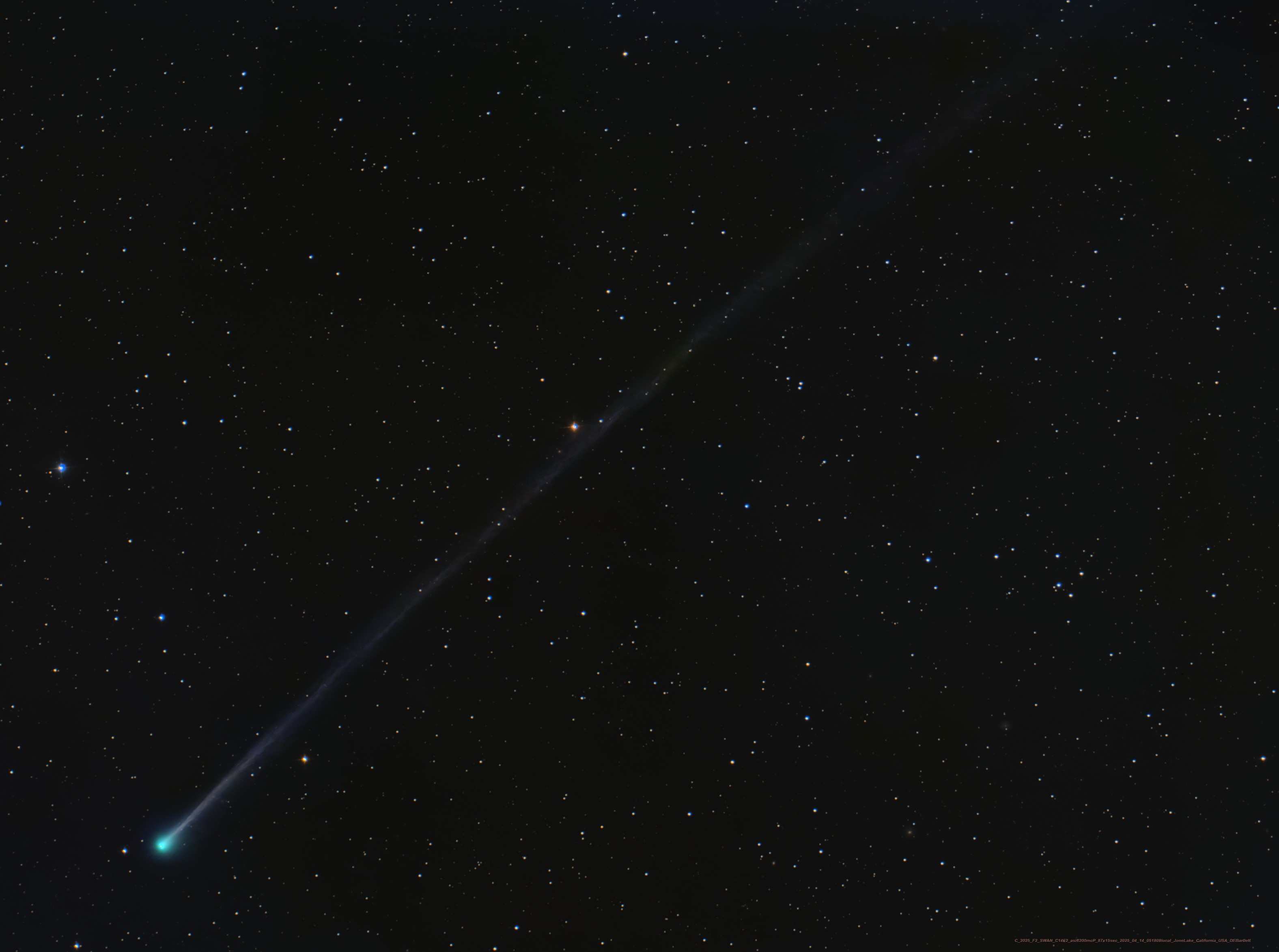
3月下旬、現在 C/2025 F2 SWAN と命名されている彗星は、太陽を観測する SOHO 宇宙船の太陽風異方性 (SWAN) カメラから公開されている画像データを調べている市民科学者のウラジミール・ベズグリー、マイケル・マティアッツォ、ロブ・マツソンによって独自に発見されました。この望遠鏡画像の左下には、太陽光で蛍光を発する二原子炭素分子の特徴である緑がかった色の SWAN 彗星のコマがあります。SWAN のかすかなイオンの尾は、視野を横切って右上に 2 度近く伸びています。この惑星間風景は、4 月 14 日にカリフォルニア州ジューン レイクから晴れて月明かりのある空の下で撮影されました。アンドロメダ座の星々を背景に見たこの彗星は、当時地球から約 10 光分の距離にありました。現在、北半球の朝の空で双眼鏡や小型望遠鏡の観測対象となっているこの彗星SWANは、5月1日に近日点、つまり太陽に最も接近する地点へと向かっています。これにより、遠く離れたオールトの雲からやってきたこの彗星は、内惑星である水星の軌道とほぼ同じくらい太陽に近づくことになります。
原文(English)
In late March, the comet now designated C/2025 F2 SWAN was found independently by citizen scientists Vladimir Bezugly, Michael Mattiazzo, and Rob Matson while examining publicly available image data from the Solar Wind ANisotropies (SWAN) camera on the sun-staring SOHO spacecraft. Comet SWAN's coma, its greenish color a signature of diatomic carbon molecules fluorescing in sunlight, is at lower left in this telescopic image. SWAN's faint ion tail extends nearly two degrees toward the upper right across the field of view. The interplanetary scene was captured in clear but moonlit skies from June Lake, California on April 14. Seen against background of stars toward the constellation Andromeda, the comet was then some 10 light-minutes from our fair planet. Now a target for binoculars and small telescopes in northern hemisphere morning skies this comet SWAN is headed for a perihelion, its closest approach to the Sun, on May 1. That will bring this visitor from the distant Oort cloud almost as close to the Sun as the orbit of inner planet Mercury.
\ この感動を宇宙仲間にシェア /
宇宙をXでシェア
© Dan Bartlett / APOD