可視光と赤外線で見るオリオン星雲
The Orion Nebula in Visible and Infrared
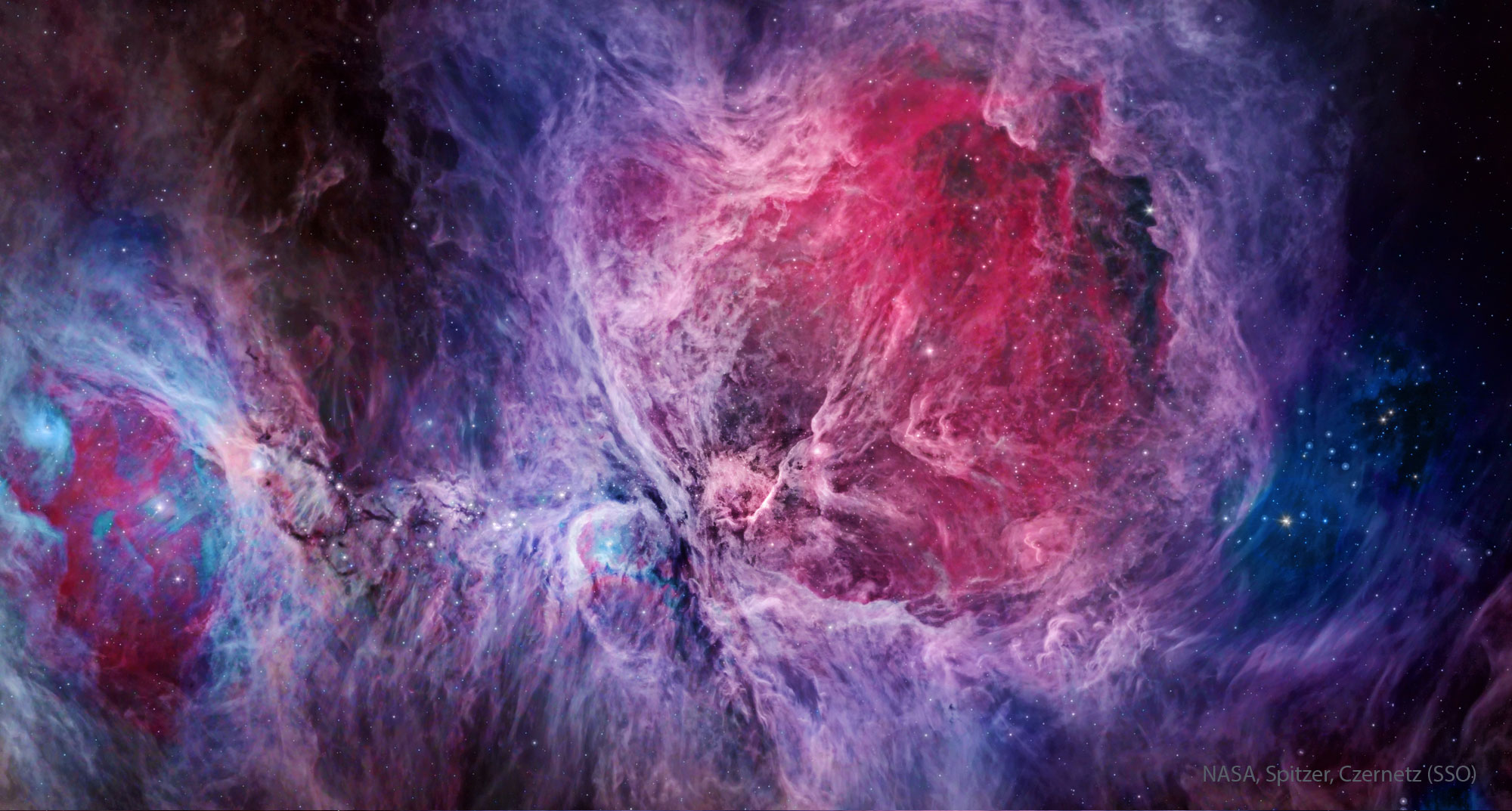
オリオン大星雲は色彩豊かな場所です。肉眼で見ると、オリオン座の小さなぼんやりとした斑点のように見えます。しかし、このような長時間露光の多波長画像では、オリオン星雲が若い星、高温ガス、暗黒の塵が活発に活動している様子が分かります。このデジタル合成画像には、可視光の3色だけでなく、NASAのスピッツァー宇宙望遠鏡が撮影した赤外線の4色も含まれています。オリオン星雲(M42)の大部分を支えているのは、星雲の中で最も明るい4つの星からなるトラペジウムです。見えるフィラメント状構造の多くは、実際には衝撃波、つまり高速で移動する物質が低速で移動するガスに遭遇する前線です。オリオン星雲は、約40光年にわたって広がり、太陽と同じ銀河の渦状腕に約1500光年離れた場所に位置しています。
原文(English)
The Great Nebula in Orion is a colorful place. Visible to the unaided eye, it appears as a small fuzzy patch in the constellation of Orion. Long exposure, multi-wavelength images like this, however, show the Orion Nebula to be a busy neighborhood of young stars, hot gas, and dark dust. This digital composite features not only three colors of visible light but four colors of infrared light taken by NASA's orbiting Spitzer Space Telescope as well. The power behind much of the Orion Nebula (M42) is the Trapezium - four of the brightest stars in the nebula. Many of the filamentary structures visible are actually shock waves - fronts where fast moving material encounters slow moving gas. The Orion Nebula spans about 40 light years and is located about 1500 light years away in the same spiral arm of our Galaxy as the Sun.
\ この感動を宇宙仲間にシェア /
宇宙をXでシェア
© Infrared: NASA,
Spitzer Space Telescope;
Visible:
Oliver Czernetz,
Siding Spring Obs. / APOD