ウェッブ宇宙望遠鏡で撮影された渦巻銀河NGC 2566
Spiral Galaxy NGC 2566 from Webb
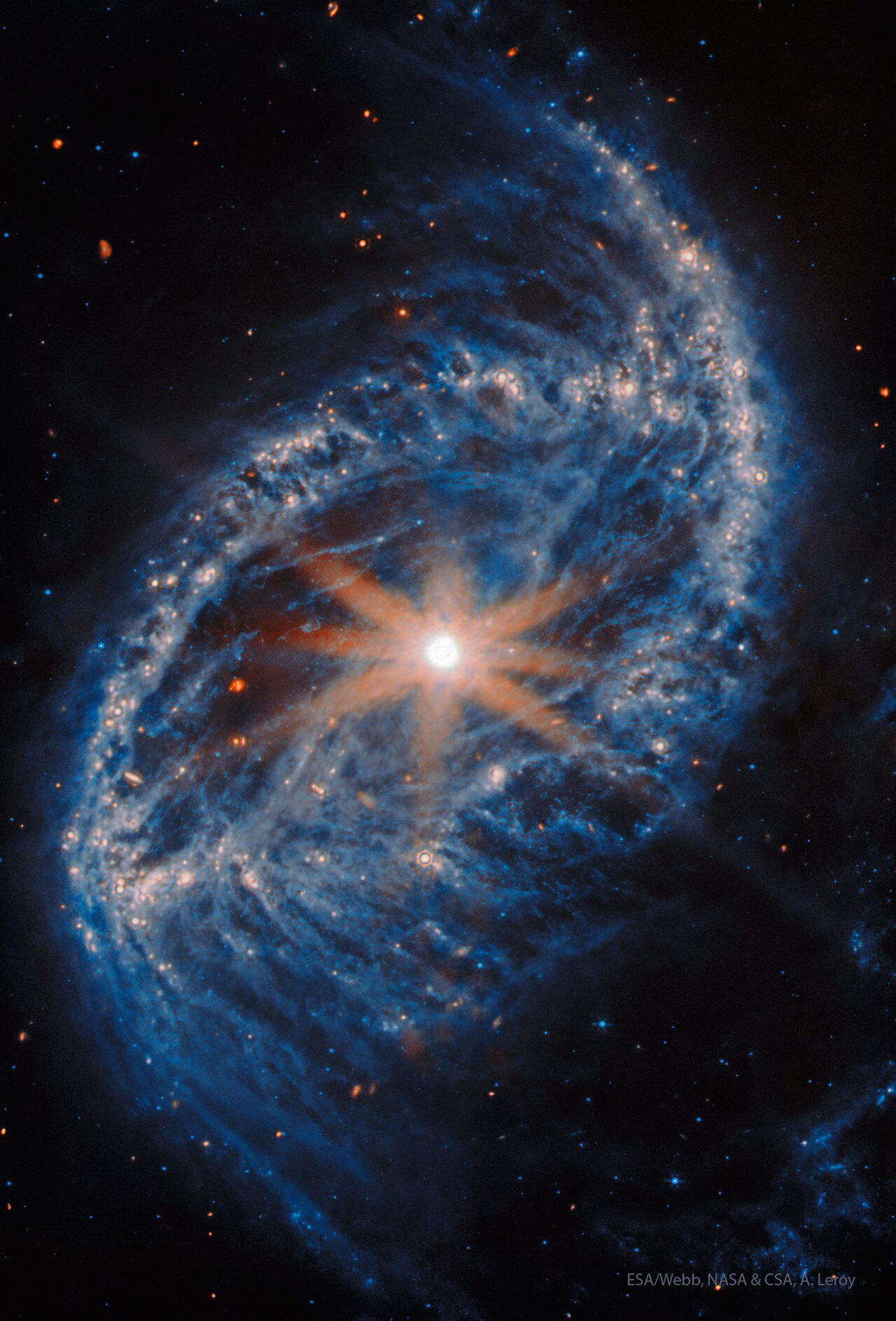
渦巻銀河 NGC 2566 の中心では何が起こっているのでしょうか? まず、特集されている赤外線画像で中心から出ているように見える 8 本の光線は実際には存在せず、ウェッブ宇宙望遠鏡自体の機械構造によって引き起こされる回折スパイクです。NGC 2566 の中心は明るいですが、異常とは考えられていません。これは、現在あまり活動的ではないものの、超大質量ブラックホールが存在する可能性が高いことを意味します。わずか 7600 万光年しか離れていないため、今日私たちが NGC 2566 から見ている光は、恐竜が地球を歩き回っていた時代に発せられたものです。この絵のように美しい銀河は、ウェッブやハッブルなどの地球の望遠鏡で星が形成される乱流のガスと塵の雲を分解できるほど近く、恒星進化の研究を可能にしています。天の川銀河とほぼ同じ大きさの NGC 2566 は、明るい中心棒と目立つ外側の渦状腕で知られています。
原文(English)
What’s happening in the center of spiral galaxy NGC 2566? First, the eight rays that appear to be coming out of the center in the featured infrared image are not real — they are diffraction spikes caused by the mechanical structure of the Webb space telescope itself. The center of NGC 2566 is bright but not considered unusual, which means that it likely contains a supermassive black hole, although currently not very active. At only 76 million light years away, the light we see from NGC 2566 today left when dinosaurs roamed the Earth. The picturesque galaxy is close enough so that Earthly telescopes, including Webb and Hubble, can resolve the turbulent clouds of gas and dust where stars can form and so allows study of stellar evolution. NGC 2566, similar in size to our Milky Way Galaxy, is notable for its bright central bar and its prominent outer spiral arms.
\ この感動を宇宙仲間にシェア /
宇宙をXでシェア
© NASA / APOD