月の表側
Lunar Nearside
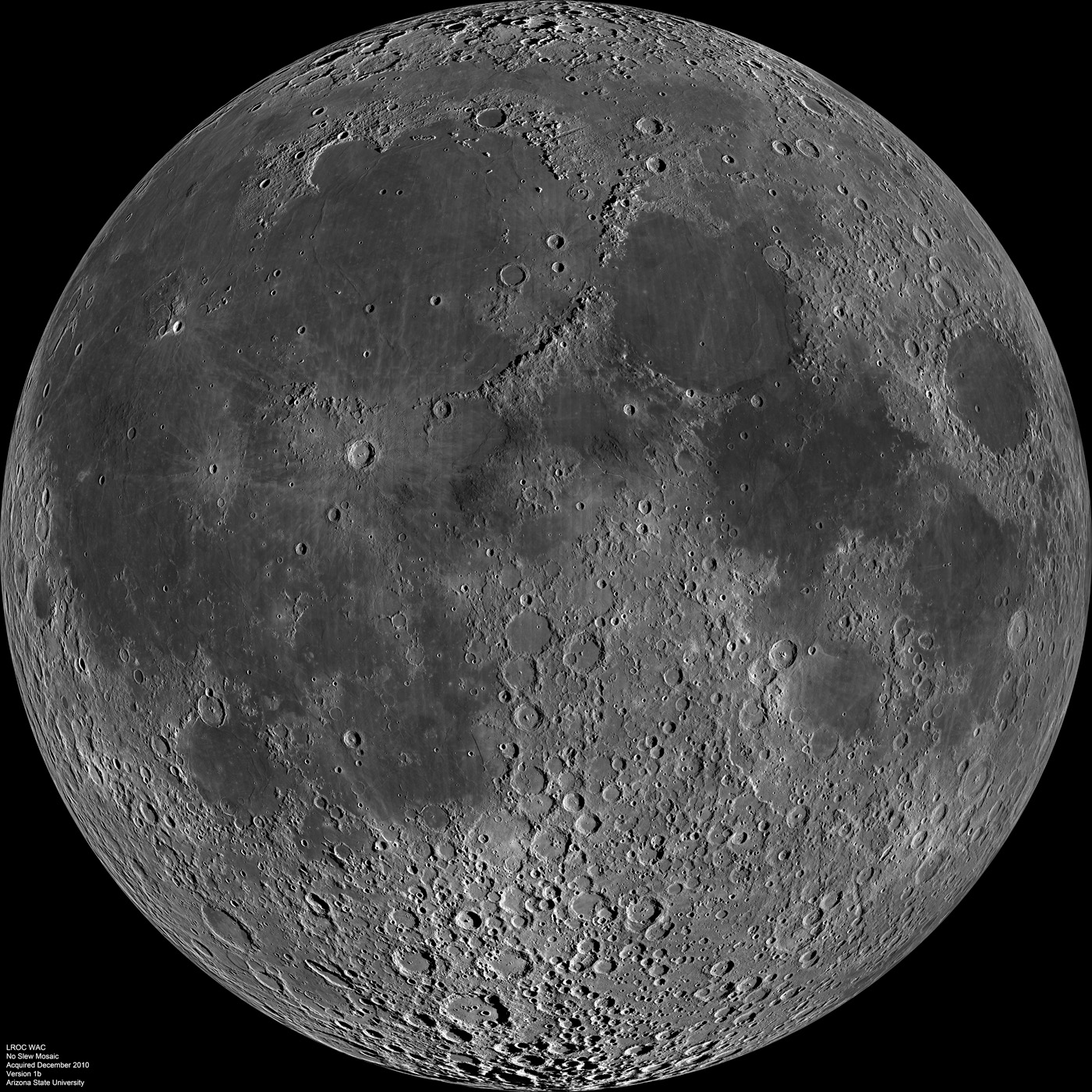
月周回探査機ルナー・リコネッサンス・オービターの広角カメラで撮影された約1,300枚の画像を用いて、おなじみの月の表側を捉えたこの壮大な画像が作られました。ところで、なぜ月の表側があるのでしょうか?月は自転と公転を約28日周期で行っています。この状態では潮汐固定されているため、同期回転によって常に片面、つまり表側が地球に面しています。その結果、高解像度モザイク画像に驚くほど詳細に写し出されている、滑らかで暗い月の海(実際には溶岩で満たされた衝突盆地)や険しい高地は、地球から天体観測をする人々にはよく知られています。お気に入りの月の海や大きなクレーターを見つけるには、このリンクをクリックするか、画像にカーソルを合わせてください。このモザイク画像の作成に使用されたLRO画像は、2010年12月の2週間にわたって撮影されたものです。
原文(English)
About 1,300 images from the Lunar Reconnaissance Orbiter spacecraft's wide angle camera were used to compose this spectacular view of a familiar face - the lunar nearside. But why is there a lunar nearside? The Moon rotates on its axis and orbits the Earth at the same rate, about once every 28 days. Tidally locked in this configuration, the synchronous rotation always keeps one side, the nearside, facing Earth. As a result, featured in remarkable detail in the full resolution mosaic, the smooth, dark, lunar maria (actually lava-flooded impact basins), and rugged highlands, are well-known to earthbound skygazers. To find your favorite mare or large crater, just follow this link or slide your cursor over the picture. The LRO images used to construct the mosaic were recorded over a two week period in December 2010.
\ この感動を宇宙仲間にシェア /
宇宙をXでシェア
© NASA / APOD