ミランダ再訪
Miranda Revisited
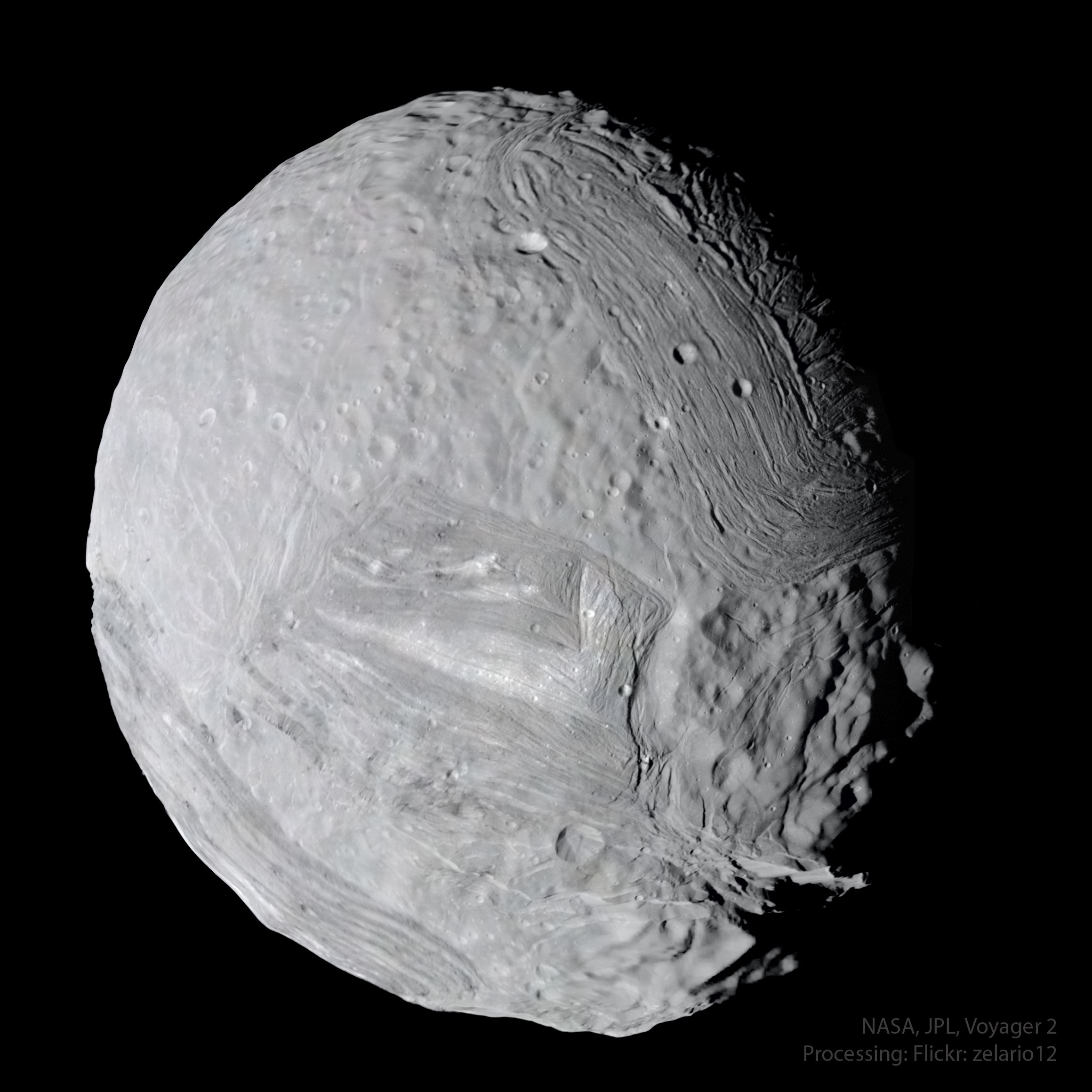
ミランダは実際、どのような惑星なのでしょうか?NASAのボイジャー2号が撮影した古い画像が最近合成・リマスターされ、天王星の直径500キロメートルの衛星の注目の画像が生まれました。1980年代後半、ボイジャー2号は天王星を通過し、クレーターが多く、亀裂が入り込み、異常に溝が深いこの衛星(シェイクスピアの「テンペスト」の登場人物にちなんで名付けられた)に接近しました。科学的には、惑星科学者たちは古いデータと鮮明な画像を用いて、ミランダの厳しい表面の特徴を形作った要因について新たな理論を立てています。有力な仮説は、ミランダの氷の表面の下にはかつて広大な液体の水の海があり、それがゆっくりと凍り始めている可能性があるというものです。ボイジャー2号の功績により、ミランダはエウロパ、タイタン、その他の氷衛星に加わり、太陽系における水、そしておそらくは微生物生命の探査に取り組んでいます。ジグソームーン:今日の天文パズル
原文(English)
What is Miranda really like? Visually, old images from NASA's Voyager 2 have been recently combined and remastered to result in the featured image of Uranus's 500-kilometer-wide moon. In the late 1980s, Voyager 2 flew by Uranus, coming close to the cratered, fractured, and unusually grooved moon -- named after a character from Shakespeare’s The Tempest. Scientifically, planetary scientists are using old data and clear images to theorize anew about what shaped Miranda's severe surface features. A leading hypothesis is that Miranda, beneath its icy surface, may have once hosted an expansive liquid water ocean which may be slowly freezing. Thanks to the legacy of Voyager 2, Miranda has joined the ranks of Europa, Titan, and other icy moons in the search for water, and, possibly, microbial life, in our Solar System. Jigsaw Moon: Astronomy Puzzle of the Day
\ この感動を宇宙仲間にシェア /
宇宙をXでシェア
© NASA / APOD