兄弟超新星残骸
Sibling Supernova Remnants
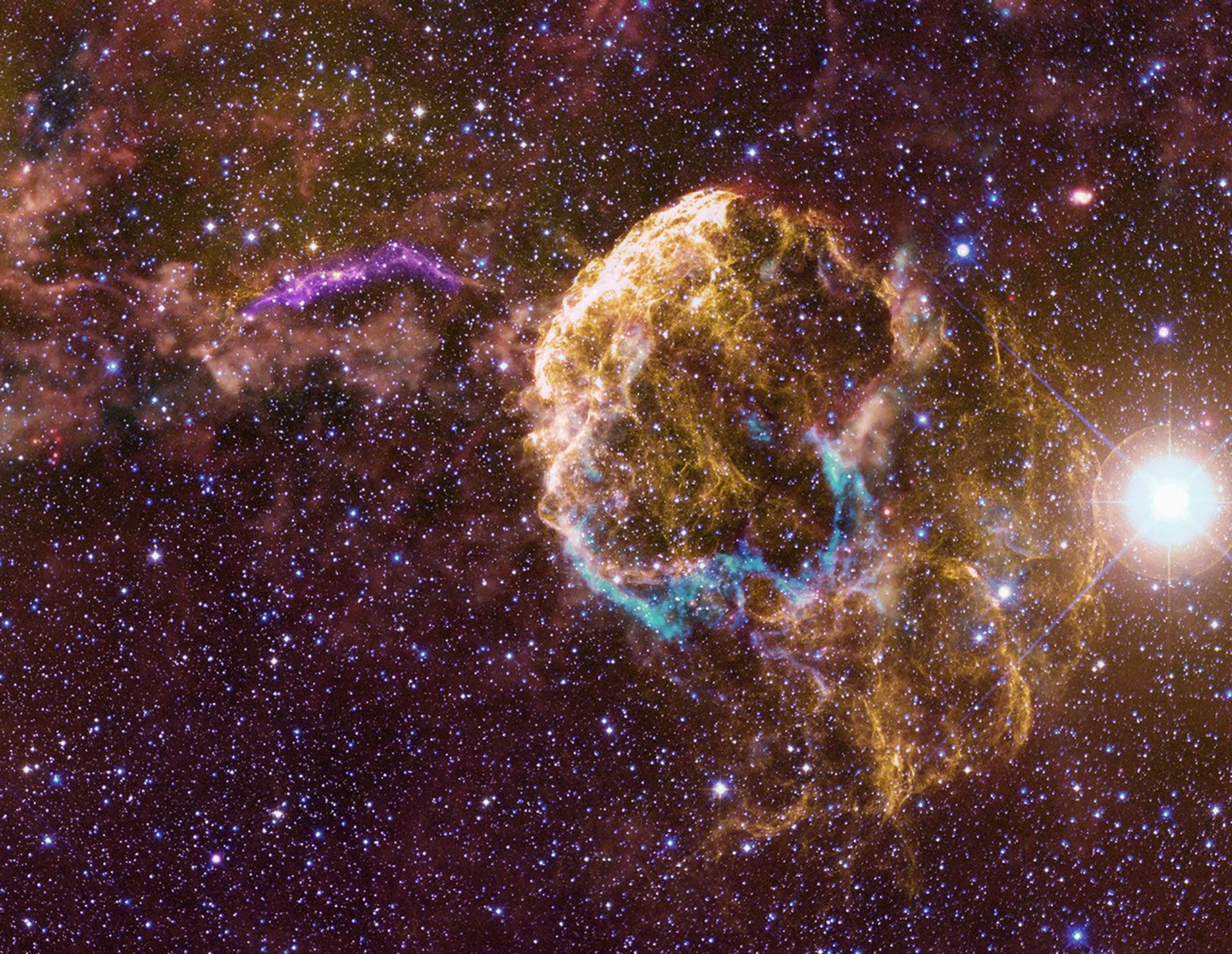
連星のうちの1つが超新星爆発を起こすとどうなるのでしょうか。この画像は、可視光線(黄色)、紫外線(紫)、赤外線(シアン、赤、オレンジ)を組み合わせて、約6,000光年離れた2つの超新星残骸とその周辺環境を示しています。若い方の残骸は、中央にある有名なクラゲ星雲(ほとんどが黄色)です。肉眼で見れば、満月よりも大きく見えるでしょう。紫で示されているフィラメントは、より古い重なり合った超新星残骸G189.6+3.3の一部です。新しい研究では、NASAのフェルミガンマ線宇宙望遠鏡のデータを使用して、その物語を組み立てました。天文学者たちは、連星系に2つの星があり、最初の星が超新星爆発を起こし、伴星をはじき飛ばし、伴星も数万年後に超新星爆発を起こし、今日見られる重なり合った超新星残骸ができたと考えています。右側の明るい星は、実はプロプスと呼ばれる三重星系です。
原文(English)
What happens when one of the stars in a binary goes supernova? This image combines visible (yellow), ultraviolet (purple) and infrared light (cyan, red and orange) to show two supernova remnants and their surrounding environment, about 6,000 light-years away. The younger one is the well-known Jellyfish Nebula in the center (mostly in yellow). If we could see it by eye, it would appear larger than the full moon in the sky. The filament shown in purple is part of an older, overlapping supernova remnant, G189.6+3.3. A new study used data from NASA's Fermi Gamma-ray Space Telescope to piece together their story. Astronomers believe that there were two stars in a binary system, then the first one exploded as a supernova, kicking away its companion, which also exploded as a supernova tens of thousands of years later, creating the superimposed supernova remnants we see today. The bright star on the right is actually a triple star system named Propus.
\ この感動を宇宙仲間にシェア /
宇宙をXでシェア
© NASA / APOD