らせん星雲に見られる奇妙な彗星の結び目
Curious Cometary Knots in the Helix Nebula
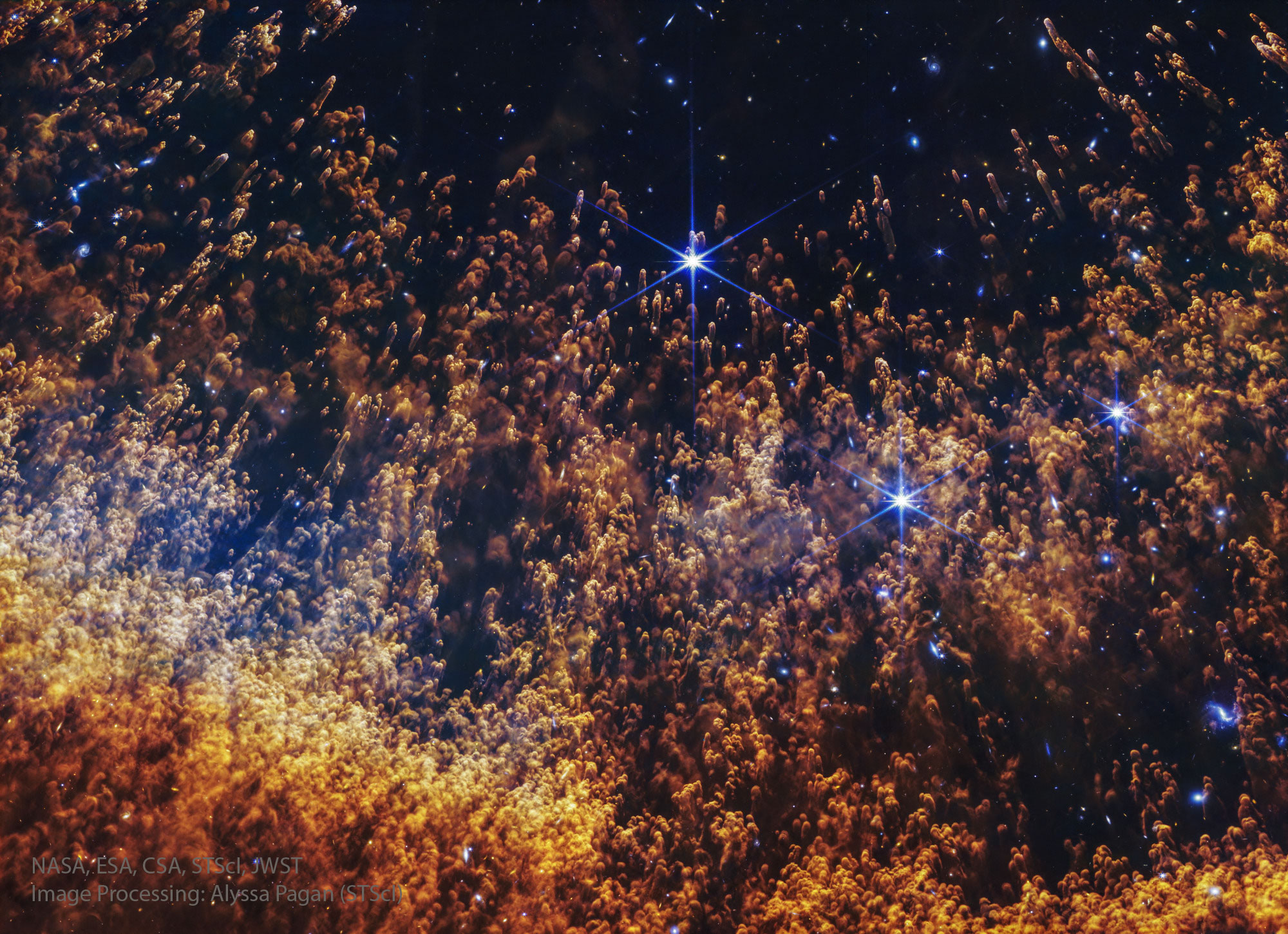
惑星状星雲に見られるガスと塵の異常な塊の原因は何でしょうか? リング星雲、ダンベル星雲、NGC 2392 にも見られるこれらの塊の存在は当初予測されておらず、その起源はまだよく理解されていません。ここに掲載されているのは、ジェームズ・ウェッブ宇宙望遠鏡によるヘリックス星雲の一部を捉えた魅力的な画像で、赤外線で非常に詳細な様子が示されています。彗星の塊は地球と同程度の質量を持ちますが、大きさは通常冥王星の軌道の数倍です。塊の断片化と進化に関する仮説の 1 つは、中心の進化する星の密度は低いがエネルギーの高い恒星風によって既存のガスが吹き飛ばされるというものです。ヘリックス星雲は、太陽のような星の寿命の終わりに形成された惑星状星雲の最も近い例の 1 つです。NGC 7293 という技術的な名称が付けられたヘリックス星雲は、みずがめ座の方向に約 650 光年離れたところにあります。オープンサイエンス:天体物理学ソースコードライブラリにある4,000以上のコードを閲覧しよう
原文(English)
What causes unusual knots of gas and dust in planetary nebulas? Seen also in the Ring Nebula, the Dumbbell Nebula and NGC 2392, the knots' existence was not initially predicted, and their origins are still not well understood. Pictured here is a fascinating image of part of the Helix Nebula by the James Webb Space Telescope showing tremendous detail in infrared light. The cometary knots have masses similar to the Earth but have sizes typically several times the orbit of Pluto. One hypothesis for the fragmentation and evolution of the knots includes existing gas being driven out by a less dense but highly energetic stellar wind of the central evolving star. The Helix Nebula is one of the closest examples of a planetary nebula created at the end of the life of a Sun-like star. Given a technical designation of NGC 7293, the Helix Nebula lies about 650 light-years away towards the constellation of Water Carrier (Aquarius). Open Science: Browse 4,000+ codes in the Astrophysics Source Code Library
\ この感動を宇宙仲間にシェア /
宇宙をXでシェア
© NASA / APOD