主にペルセウス座流星群
Mostly Perseids
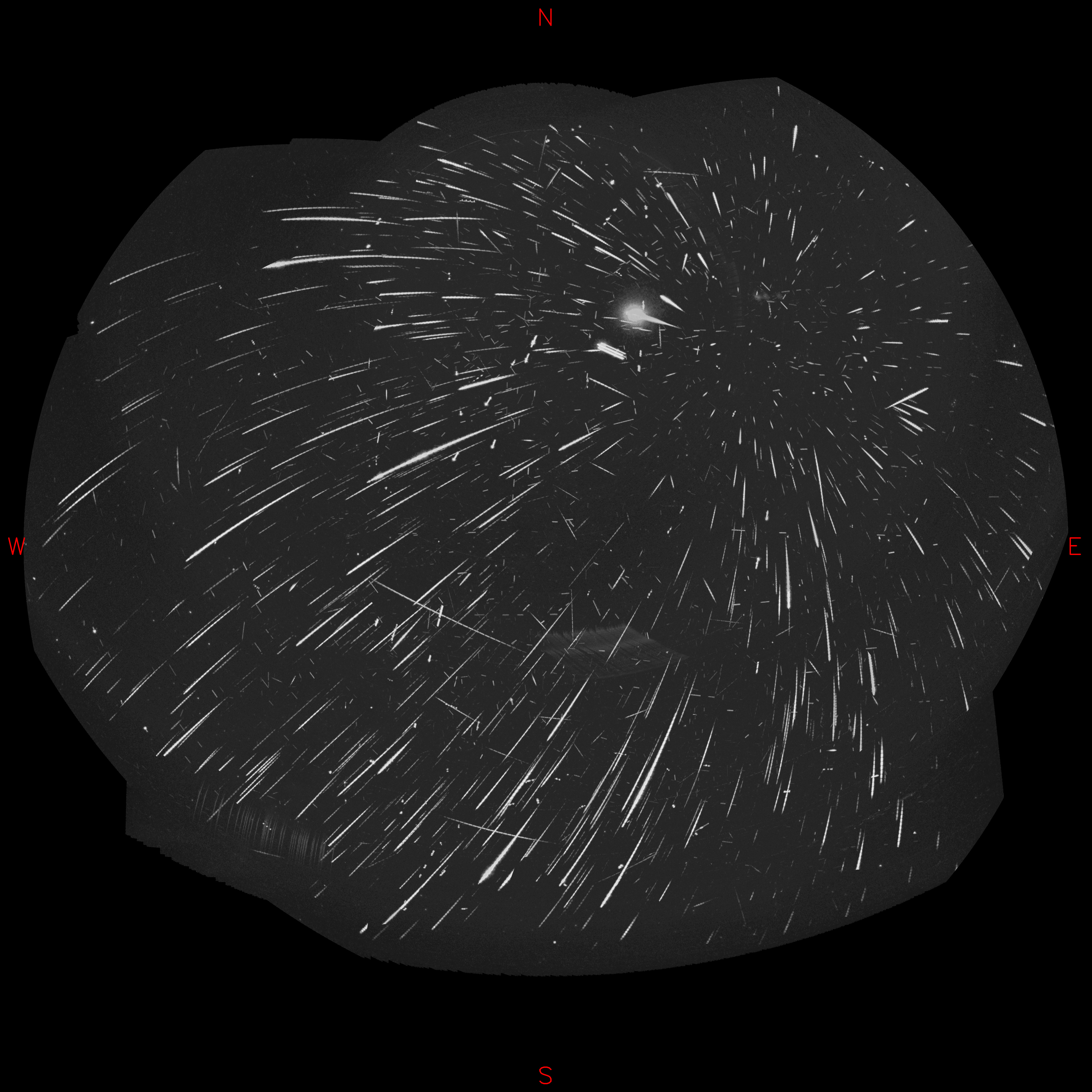
8月12日から13日の夜に記録されたこの画像は、チェコの天文台にある4台の流星観測専用カメラで撮影されたもので、位置合わせと合成により、一晩中全天を捉えた画像が作成されました。この夜、合計1,706個の流星が観測されました。これは2026年のペルセウス座流星群のピークと重なったため、ほとんどがペルセウス座流星群です。その圧倒的な数のおかげで、流星は簡単に見つけることができます。ペルセウス座流星群の流星の軌跡はすべて、右上の空の1つの放射点、つまり流星群の名前の由来となったペルセウス座の領域にたどり着くことが非常に明確です。しかし、放射点を見つけることで、活動がはるかに少ない他の流星群の流星も発見できます。たとえば、ペルセウス座流星群の流星の軌跡を横切るのが見られるのは、放射点がはくちょう座にある流星群、カッパ流星群の流星です。対日点複合体(みずがめ座付近で、空で太陽の反対側に位置する領域)もまた、弱いながらも流星の発生源として特定されている。
原文(English)
Recorded the night of August 12-13, images from four dedicated meteor-monitoring cameras at an astronomical observatory in Czechia were aligned and combined to create this all-night, all-sky view. On that night, the total count came to 1,706 meteors. And since that coincided with the peak activity of the 2026 Perseid Meteor Shower, most are perseids. Their overwhelming numbers make them easy to spot. Quite convincingly, perseid trails all trace back to a single radiant on the sky at the upper right, a region in the annual shower's eponymous constellation Perseus. But meteors belonging to other much less active showers can also revealed by finding their radiants too. For example, seen crossing the perseid trails are meteors from a shower whose radiant lies in Cygnus, known as Kappa Cygnids. The antihelion complex, a general region near Aquarius and opposite the Sun in the sky, is also identifiable as a weak source for meteors.
\ この感動を宇宙仲間にシェア /
宇宙をXでシェア
© Valašské Meziříčí Observatory / APOD