ハッブル宇宙望遠鏡が捉えた巨大な火星
Big Mars from Hubble
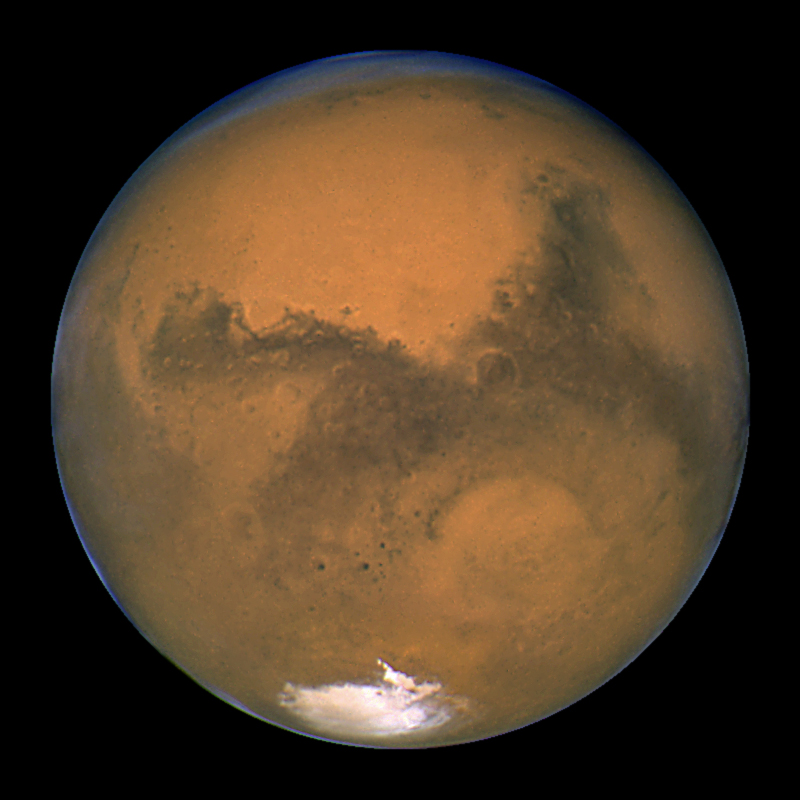
本日午前10時頃(協定世界時)、火星と地球が約6万年ぶりに最も接近します。火星は赤く輝き、日没直後の東の空で最も明るい天体となります。今夜から今週にかけて、世界中の多くのコミュニティが火星観測キャンペーン「Mars Watch 2003」を実施し、地元の望遠鏡で赤い惑星を観測します。上に掲載されているのは、地球を周回するハッブル宇宙望遠鏡が昨夜撮影した火星の画像です。この画像は、地球から撮影された火星の画像の中で最も詳細なものです。画像下部の白い南極冠、画像中央のすぐ右にある円形のホイヘンス・クレーター、右下にある大きな明るい円形のヘラス衝突盆地、多数の小さなクレーターが点在する惑星全体に広がる明るい高地、そして比較的なだらかな低地が広がる暗い領域などが確認できます。
原文(English)
At about 10 am Universal Time today, Mars and Earth will pass closer than in nearly 60,000 years. Mars, noticeably red, will be the brightest object in the eastern sky just after sunset. Tonight and through much of this week, many communities around the world are running a public Mars Watch 2003 campaign, where local telescopes will zoom in on the red planet. Pictured above is an image of Mars taken just last night from the Hubble Space Telescope in orbit around the Earth. This image is the most detailed view of Mars ever taken from Earth. Visible features include the south polar cap in white at the image bottom, circular Huygens crater just to the right of the image center, Hellas Impact Basin - the large light circular feature at the lower right, planet-wide light highlands dominated by many smaller craters and large sweeping dark areas dominated by relatively smooth lowlands.
\ この感動を宇宙仲間にシェア /
宇宙をXでシェア
© NASA / APOD