ミネラルムーン
The Mineral Moon
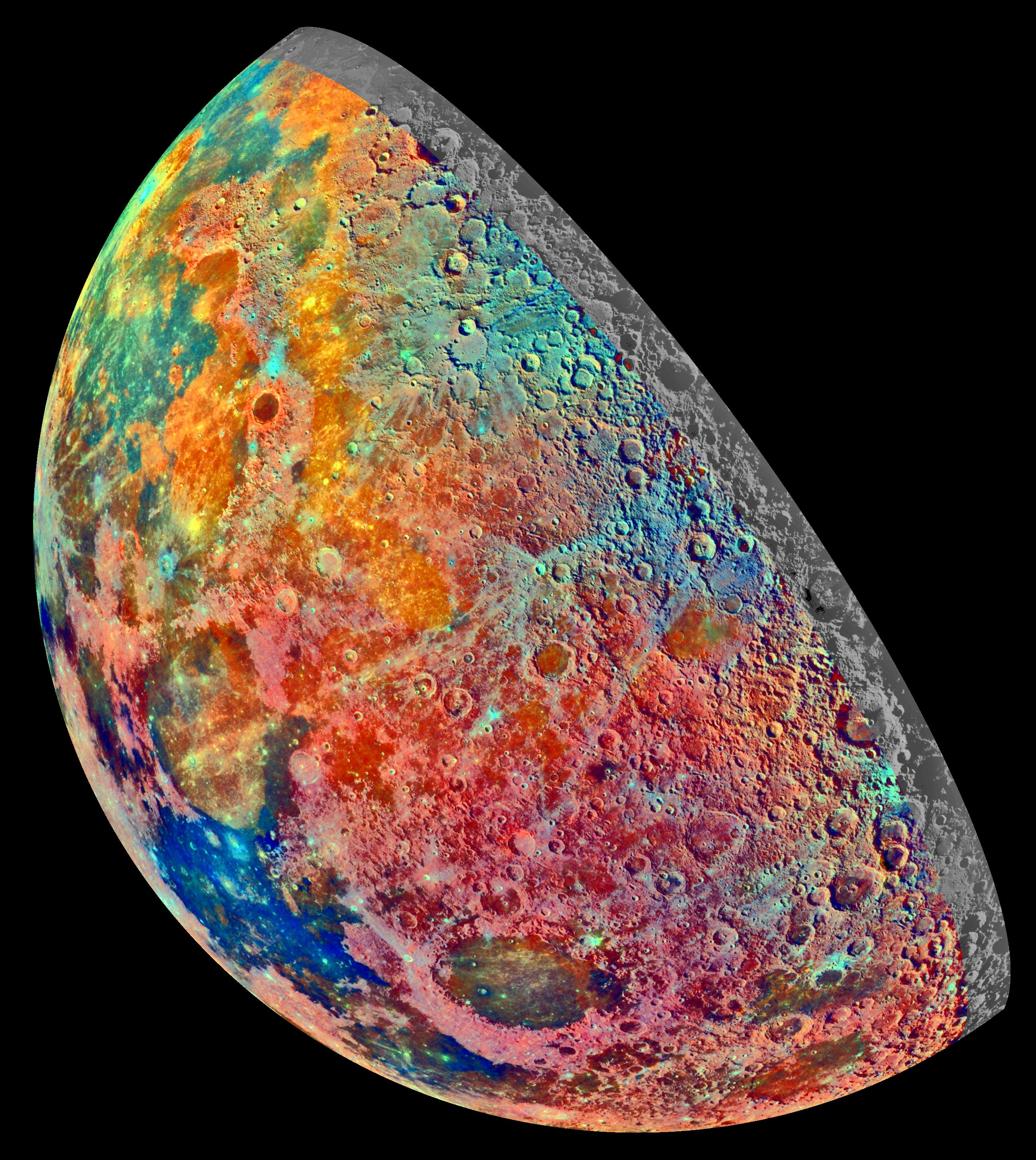
たとえ月が本当に緑色のチーズでできていたとしても、おそらくこれほど奇妙な見た目にはならないだろう。とはいえ、この53枚の画像のモザイクは、1992年に地球の大きな自然衛星の近くを通過した木星探査機ガリレオによって記録された。これらの画像は3つのスペクトルフィルターを通して記録され、誇張された擬似カラー方式で合成され、鉱物含有量の変化が反射光に微妙な色の違いを生み出すことから、月の表面の構成を調査するために使用された。地球に住む人にはおなじみの月の表側は左側だが、宇宙からの視点では、影の線近くの画像の上半分にある月の北極を見下ろしている。青からオレンジの色合いは火山溶岩流を示している。左下にある濃い青色の静かの海は、その上にある緑とオレンジの海よりもチタン含有鉱物が豊富だ。画像の下部近く、静かの海(Tranquillitatis)の右側には、暗い楕円形の危機の海(Mare Crisium)があり、その周囲は鮮やかなピンク色で囲まれており、月の高地の物質を示している。
原文(English)
ven if the Moon really were made of green cheese it probably wouldn't look this bizarre. Still, this mosaic of 53 images was recorded by the Jupiter-bound Galileo spacecraft as it passed near our own large natural satellite in 1992. The pictures were recorded through three spectral filters and combined in an exaggerated false-color scheme to explore the composition of the lunar surface as changes in mineral content produce subtle color differences in reflected light. Familiar to earthdwellers, the lunar near side is on the left, but the space-based view looks down on the Moon's north pole located in the upper half of the image near the shadow line. Blue to orange shades indicate volcanic lava flows. The dark blue Mare Tranquillitatis at the lower left is richer in titanium bearing minerals than the green and orange maria above it. Near the bottom of the image and to the right of Tranquillitatis is the dark oval-shaped Mare Crisium surrounded by shocking pink colors indicating material of the lunar highlands.
\ この感動を宇宙仲間にシェア /
宇宙をXでシェア
© NASA / APOD