フレアウェル AR 10486
Flare Well AR 10486
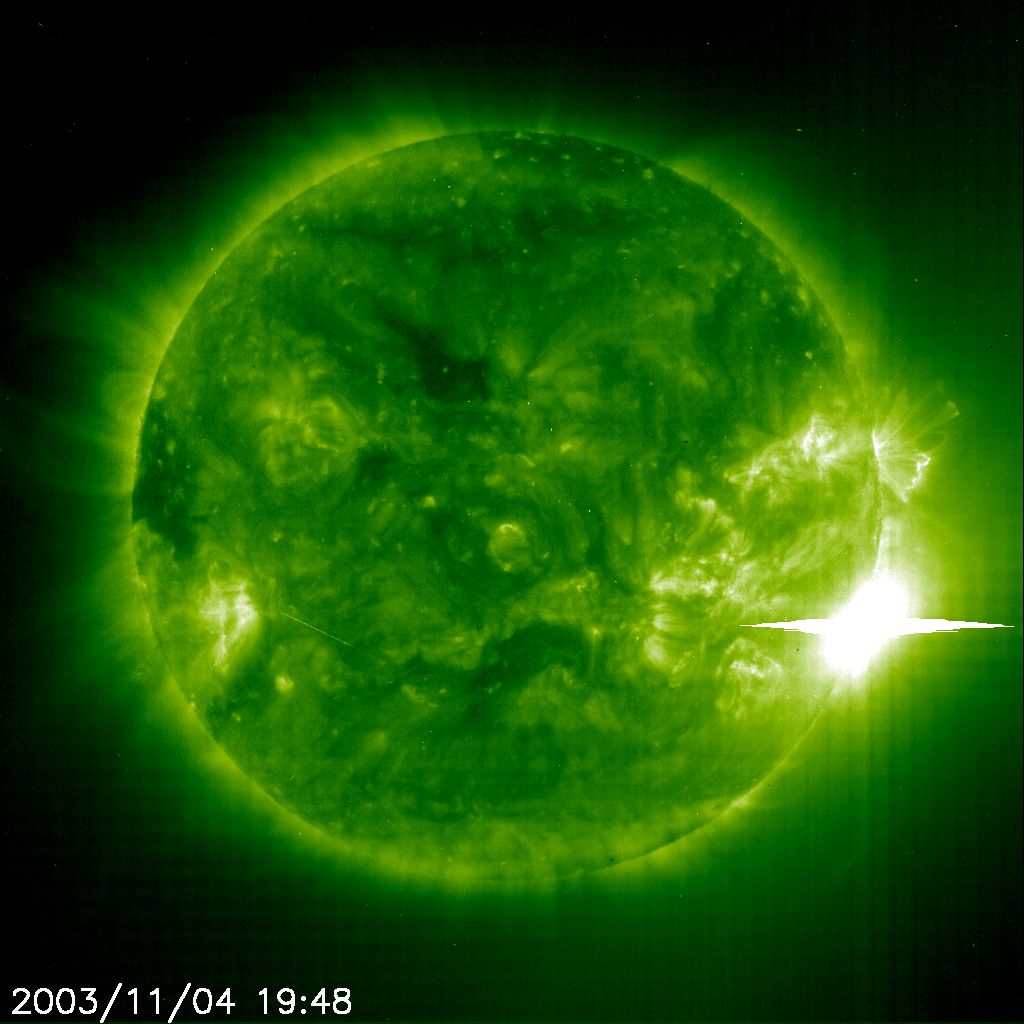
地球からはほとんど見えないほど遠く、太陽の西端を周回する巨大な黒点領域AR 10486が、11月4日火曜日の協定世界時19時50分頃、再び強烈な太陽フレアとそれに続く大規模なコロナ質量放出(CME)を噴出した。フレア自体は、太陽観測衛星SOHOのEITカメラによる極端紫外線画像の右下に写っている。EITカメラのピクセルや他の衛星の検出器を飽和させたこの巨大なXクラスのフレアは、1970年代以降に記録された中で最も強力なフレアの一つであり、AR 10486から過去2週間で3度目の歴史的な爆発となった。フレアからの高エネルギー粒子放射は相当な電波障害を引き起こしたが、関連するCMEは先週のCMEの直接的な影響とは異なり、磁気圏をかすめるため、極めて広範囲にわたるオーロラを引き起こすとは予想されていない。とりあえず、強力なAR 10486に別れを告げよう。今後2週間、太陽黒点領域は太陽の裏側に位置する。
原文(English)
Almost out of view from our fair planet, rotating around the Sun's western edge, giant sunspot region AR 10486 lashed out with another intense solar flare followed by a large coronal mass ejection (CME) on Tuesday, November 4th at about 1950 Universal Time. The flare itself is seen here at the lower right in an extreme ultraviolet image from the sun-staring SOHO spacecraft's EIT camera. Saturating the EIT camera pixels and detectors on other satellites, this giant X-class flare was among the most powerful ever recorded since the 1970s, the third such historic blast from AR 10486 within the last two weeks. While energetic particle radiation from the flare did cause substantial radio interference, the associated CME is not expected to trigger extremely widespread aurorae as it glances off the magnetosphere, unlike the direct hits from last week's CMEs. Say farewell to the mighty AR 10486, for now. For the next two weeks, the sunspot region will be on the Sun's far side.
\ この感動を宇宙仲間にシェア /
宇宙をXでシェア
© NASA / APOD