スターリングスターV838月
Startling Star V838 Mon
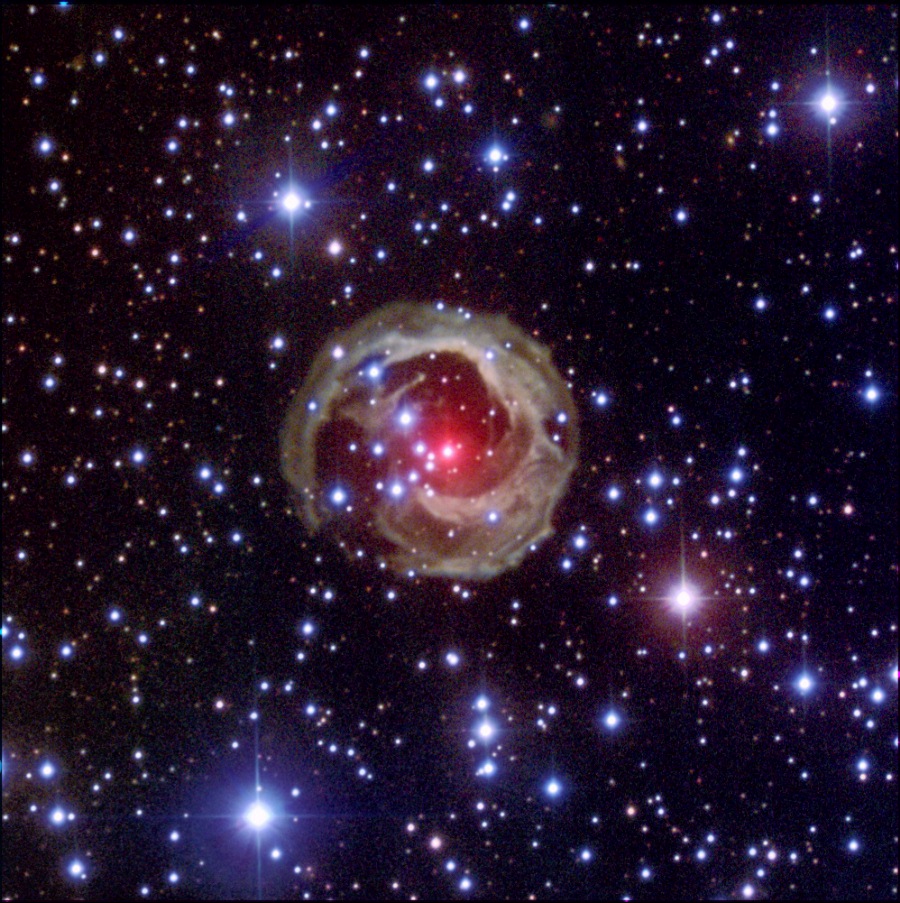
変光星V838 Monocerotisは、2002年1月に天文学者たちを驚かせた。これまでに知られているどの変光星とも異なる、劇的な爆発現象を起こしたのだ。地上観測機器とハッブル宇宙望遠鏡による数ヶ月にわたる綿密な観測の結果、V838 Monを取り巻く急速に変化する塵の星雲は、実は爆発による「光の反響」によって可視化されていることがすぐに明らかになった。驚くべきことに、爆発による光が既存の星周物質の層を通過する際に、周囲の星雲が「光速よりも速く」膨張しているように見えるのだ。星雲の見た目は数ヶ月の間に劇的に変化するが、実際の直径は少なくとも6光年にも及ぶ。V838 Monの爆発現象に対する適切な天体物理学的説明はまだ見つかっていないが、天文学者たちはこの謎の星の観測を続けている。この美しい画像は、10月21日に米国海軍天文台の1.55メートル望遠鏡で記録されたデータに基づいており、比較しやすいように、以前のハッブル宇宙望遠鏡の画像で使用された配色を採用している。
原文(English)
Variable star V838 Monocerotis startled astronomers in January of 2002, undergoing a dramatic outburst like no other variable star known. Followed closely by ground-based instruments and the Hubble Space Telescope over the following months, it was soon realized that the quickly evolving dusty nebula surrounding V838 Mon was in fact made visible by "light echoes" from the outburst. Remarkably, as light from the outburst plays across layers of pre-existing circumstellar material, it gives the surrounding nebulosity the illusion of expanding "faster than light". Though the nebula's visible appearance changes dramatically over a period of months, it is actually at least 6 light years in diameter. A good astrophysical explanation for V838 Mon's outbursting behavior is still unknown but astronomers continue to follow the mystery star. This gorgeous image, based on data recorded on October 21 with the US Naval Observatory's 1.55 meter telescope, adopts the color scheme used in previous Hubble images for easy comparison.
\ この感動を宇宙仲間にシェア /
宇宙をXでシェア
© NASA / APOD