ヘリオスの飛行
The Flight Of Helios
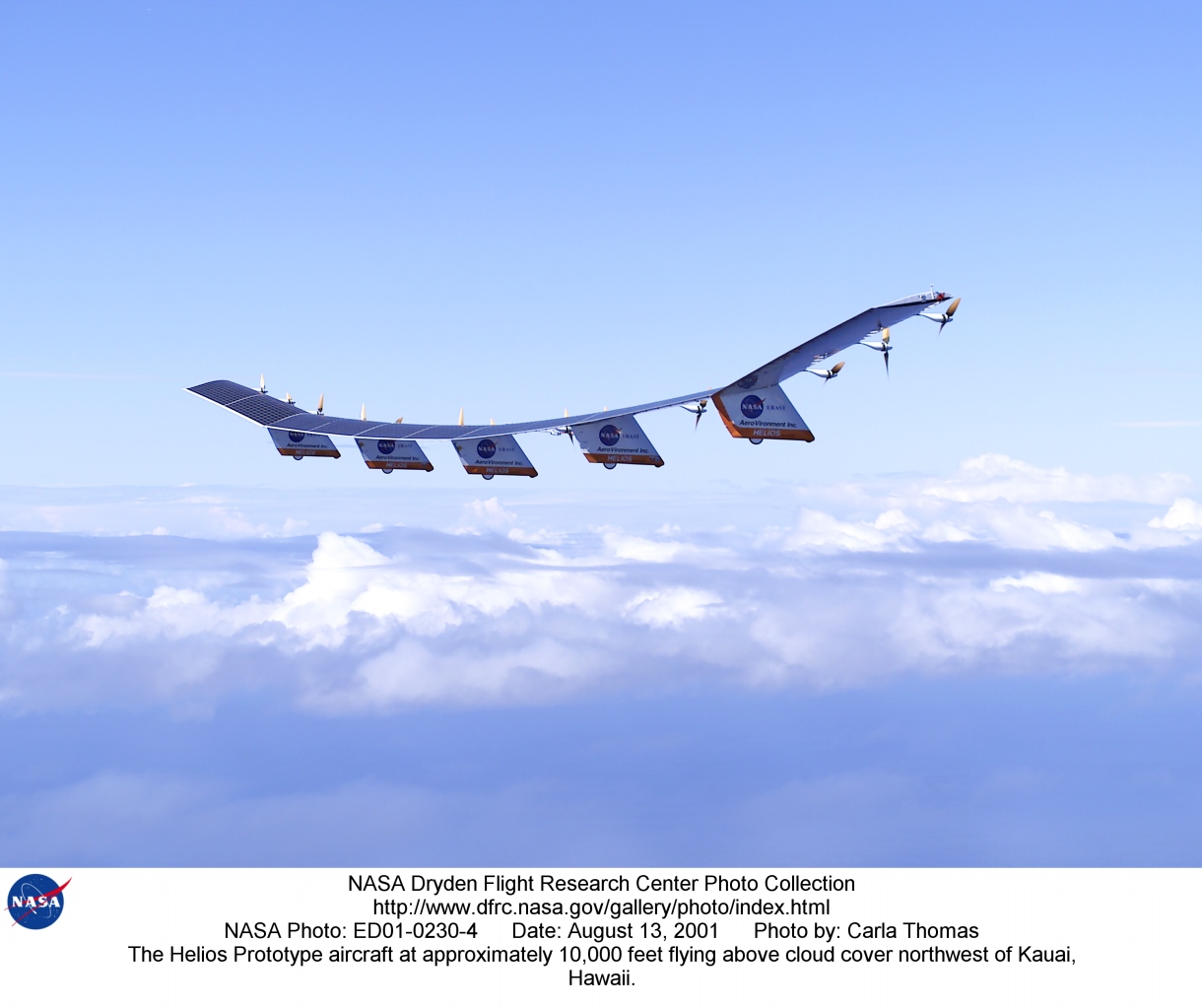
太陽光発電飛行の一例として、NASAのヘリオス機は、ライト兄弟の歴史的な飛行からほぼ100年後の1903年12月17日に飛行しました。2001年8月、ハワイ州カウアイ島の北西の空、高度10,000フィートで撮影されたこの遠隔操縦のヘリオスは、時速約25マイルで飛行しています。基本的に14個の電気モーターを備えた超軽量飛行翼機であるこの航空機は、エアロバイロメント社によって製造されました。太陽電池で覆われたヘリオスの印象的な247フィート幅の翼は、ボーイング747ジェット旅客機の翼幅と全長を上回りました。日中に上昇したこの試作機は、最終的に高度100,000フィート弱に達し、ロケット動力を用いない飛行の記録を更新しました。ヘリオスは技術実証機として開発されたが、地球表面から10万フィート上空の極めて希薄な大気中での飛行は、火星の大気圏における翼のある航空機の飛行条件にも近いものだった。
原文(English)
An example of solar-powered flight, NASA's Helios aircraft flew almost one hundred years after the Wright brothers' historic flight on December 17, 1903. Pictured here at 10,000 feet in in skies northwest of Kauai, Hawaii in August 2001, the remotely piloted Helios is traveling at about 25 miles per hour. Essentially an ultralight flying wing with 14 electric motors, the aircraft was built by AeroVironment Inc. Covered with solar cells, Helios' impressive 247 foot wide wing exceeded the wing span and even overall length of a Boeing 747 jet airliner. Climbing during daylight hours, the prototype aircraft ultimately reached an altitude just short of 100,000 feet, breaking records for non-rocket powered flight. Helios was intended as a technology demonstrator, but in the extremely thin air 100,000 feet above Earth's surface, the flight of Helios also approached conditions for winged flight in the atmosphere of Mars.
\ この感動を宇宙仲間にシェア /
宇宙をXでシェア
© NASA / APOD