N159とパピヨン星雲
N159 and the Papillon Nebula
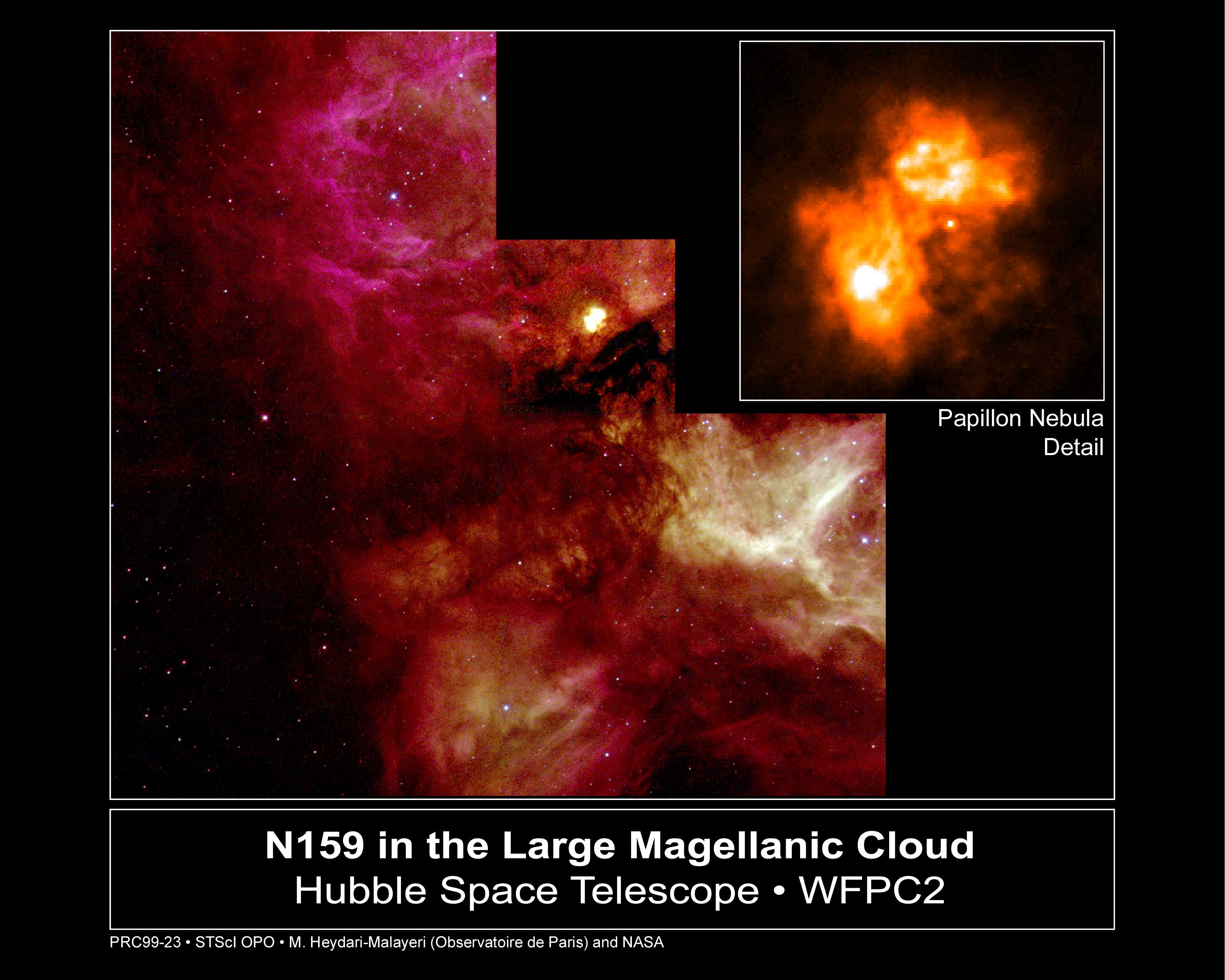
ハッブル宇宙望遠鏡は、巨大な星を探す中で、またしても壮大な星形成領域を観測しました。N159として知られるこの星雲は、150光年以上にわたって広がり、約17万光年離れた隣の大マゼラン雲銀河に位置しています。上の画像には、明るい生まれたばかりの星、暗い塵のフィラメント、そして赤く輝く水素ガスが写っています。その名もパピヨン星雲(フランス語で蝶)は、挿入図で強調されている、珍しい中心部のコンパクトな雲です。パピヨン星雲が双極形をしている理由は現在不明ですが、目に見えない大質量星と厚いガス円盤の存在を示唆している可能性があります。
原文(English)
In a search for massive stars, the Hubble Space Telescope has peered into yet another spectacular region of star formation. This nebula, known as N159, spans over 150 light-years and is located in the neighboring Large Magellanic Cloud galaxy, about 170,000 light years distant. Visible in the above picture are bright newborn stars, dark filaments of dust, and red-glowing hydrogen gas. The aptly named Papillon Nebula (French for butterfly), is the unusual central compact cloud, highlighted in the inset. Reasons for the bipolar shape of the Papillon Nebula are currently unknown, but might indicate the presence of unseen high-mass stars and a thick gaseous disk.
\ この感動を宇宙仲間にシェア /
宇宙をXでシェア
© NASA / APOD