二つの世界、一つの太陽
Two Worlds, One Sun
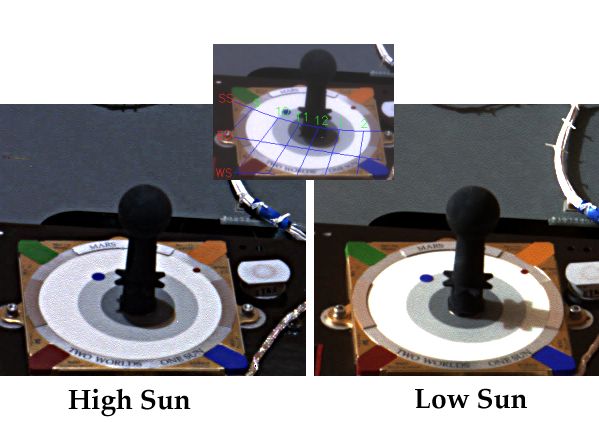
「二つの世界、一つの太陽」は、スピリット探査車のカメラ校正ターゲットに刻まれた言葉です。探査車の後部デッキに設置されたこのターゲットは、日時計としても機能し、学生たちは火星のスピリット着陸地点の太陽時を測定できます。上の画像は、この日時計(マーズダイアル)の例です。左側の画像は、現地時間の正午頃に撮影されたもので、火星の空高くにある太陽の影響を示しています。右側の画像は、午後遅く、太陽が空低くなっている時に撮影されたもので、マーズダイアルの高さ3.5センチメートルの中央支柱が長い影を落としています。学生たちは、コンピューターで生成されたグリッドオーバーレイに基づいて、中央の挿入画像における現地時間を現地太陽時午後12時17分頃と特定しました。マーズダイアルの文字盤は、天文学アーティストのジョン・ロンバーグが他のチームメンバーと協力してデザインしました。マーズダイアルのアイデアは、ビル・ナイ(サイエンス・ガイ)の発案だったことをご存知でしたか?
原文(English)
Two Worlds, One Sun, is the legend emblazoned on the Spirit rover's camera calibration target. Resting on the rover's rear deck, it also doubles as a sundial, allowing students to determine the solar time at Spirit's landing site on Mars. Examples of the sundial or Marsdial are shown above where the left image, captured near local noon, shows the effect of the Sun high in the martian sky. The right image from later in the afternoon with the Sun lower in the sky, shows a long shadow cast by the Marsdial's 3.5 centimeter high central post. Based on the computer generated grid overlay, students determined the local time in the central inset image to be about 12:17 pm local solar time. The face of the Marsdial was designed by astronomy artist Jon Lomberg in collaboration with other team members. Did you know, the Marsdial idea was a brainchild of Bill Nye, the Science Guy? Now you know ...
\ この感動を宇宙仲間にシェア /
宇宙をXでシェア
© NASA / APOD