SN1987Aの宇宙真珠
SN1987A's Cosmic Pearls
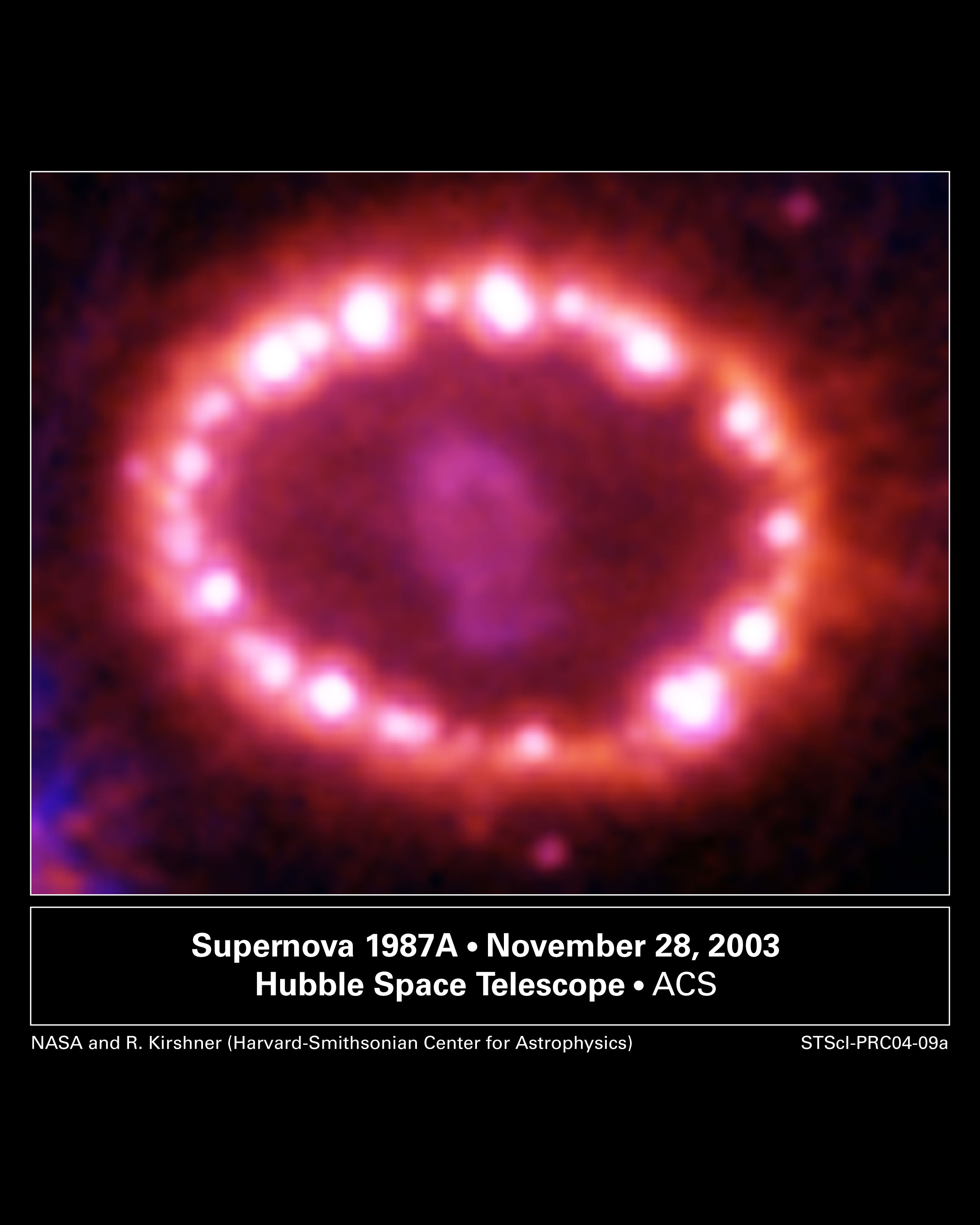
1987年2月、現代において観測された中で最も明るい恒星爆発、超新星SN1987Aからの光が地球に到達しました。ハッブル宇宙望遠鏡の高性能カメラ(ACS)で2003年11月に撮影されたこの画像は、爆発から16年以上経った後の爆発現場を示しています。このスナップショットは、超新星の衝撃波が既存の1光年幅の物質の環に引き続き影響を与え、生まれたばかりの中心超新星残骸が膨張し続けていることを示しています。宇宙のネックレスの真珠のように、衝撃波によって物質が数百万度まで加熱されて生成された明るいホットスポットが1990年代半ばに環上に現れ始め、それ以来天文学者によってスペクトル全体にわたって追跡されています。超新星SN1987Aは、約17万光年離れた隣の銀河である大マゼラン雲に位置しています。つまり、太陽の約20倍の質量を持つ恒星の核崩壊と爆発という爆発現象は、1987年2月の17万年前に起こったということになる。
原文(English)
In February 1987, light from the brightest stellar explosion seen in modern times reached Earth -- supernova SN1987A. This Hubble Space Telescope image from the sharp Advanced Camera for Surveys taken in November 2003 shows the explosion site over 16 years later. The snap shot indicates that the supernova blast wave continues to impact a pre-existing, one light-year wide ring of material, and the nascent central supernova remnant continues to expand. Like pearls on a cosmic necklace, bright hot spots produced as the blast wave heats material up to millions of degrees began to appear on the ring in the mid 1990s and have been followed across the spectrum by astronomers ever since. Supernova SN1987A lies in the Large Magellanic Cloud, a neighboring galaxy some 170,000 light-years away. That really does mean that the explosive event - the core collapse and detonation of a star about 20 times as massive as the Sun - occurred 170,000 years before February 1987.
\ この感動を宇宙仲間にシェア /
宇宙をXでシェア
© NASA / APOD