ジュリアス・シーザーと閏日
Julius Caesar and Leap Days
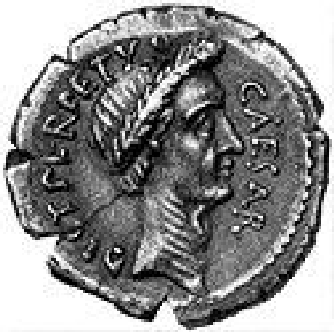
本日2月29日は閏日です。閏日は比較的まれな出来事です。紀元前46年、ユリウス・カエサル(上図は彼が自ら鋳造した硬貨に描かれている)は、4年に一度閏日を追加する暦法を制定しました。アレクサンドリアの天文学者ソシゲネスの助言に基づき、カエサルは地球の1年が365日よりわずかに長いという事実を補うためにこの閏日を導入しました。現代の感覚で言えば、地球が太陽の周りを一周するのにかかる時間は、地球が太陽に対して365回自転するのにかかる時間よりわずかに長いのです(実際には、現在では約365.24219回の自転が必要であることが分かっています)。そのため、暦年が365日であれば、実際の1年と4年に一度約1日ずれてしまうことになります。そうなると、7月(ユリウス・カエサルの死後に名付けられた)は北半球の冬に重なってしまうでしょう。4年に一度閏日を設けることで、暦年のずれは大幅に軽減されるのです。このユリウス暦は1582年まで使用されていましたが、グレゴリウス13世教皇がさらに微調整を加え、閏日は末尾が「OO」の年(ただし400で割り切れる場合を除く)には設けないようにしました。現在一般的に使用されているのは、このグレゴリオ暦です。
原文(English)
Today, February 29th, is a leap day - a relatively rare occurrence. In 46 BC, Julius Caesar, pictured above in a self-decreed minted coin, created a calendar system that added one leap day every four years. Acting on advice by Alexandrian astronomer Sosigenes, Caesar did this to make up for the fact that the Earth's year is slightly more than 365 days. In modern terms, the time it takes for the Earth to circle the Sun is slightly more than the time it takes for the Earth to rotate 365 times (with respect to the Sun -- actually we now know this takes about 365.24219 rotations). So, if calendar years contained 365 days they would drift from the actual year by about 1 day every 4 years. Eventually July (named posthumously for Julius Caesar himself) would occur during the northern hemisphere winter! By adopting a leap year with an extra day every four years, the calendar year would drift much less. This Julian Calendar system was used until the year 1582 when Pope Gregory XIIIprovided further fine-tuning when he added that leap days should not occur in years ending in "OO", unless divisible by 400. This Gregorian Calendar system is the one in common use today.
\ この感動を宇宙仲間にシェア /
宇宙をXでシェア
© NASA / APOD