炎星雲のクローズアップ
Flame Nebula Close-Up
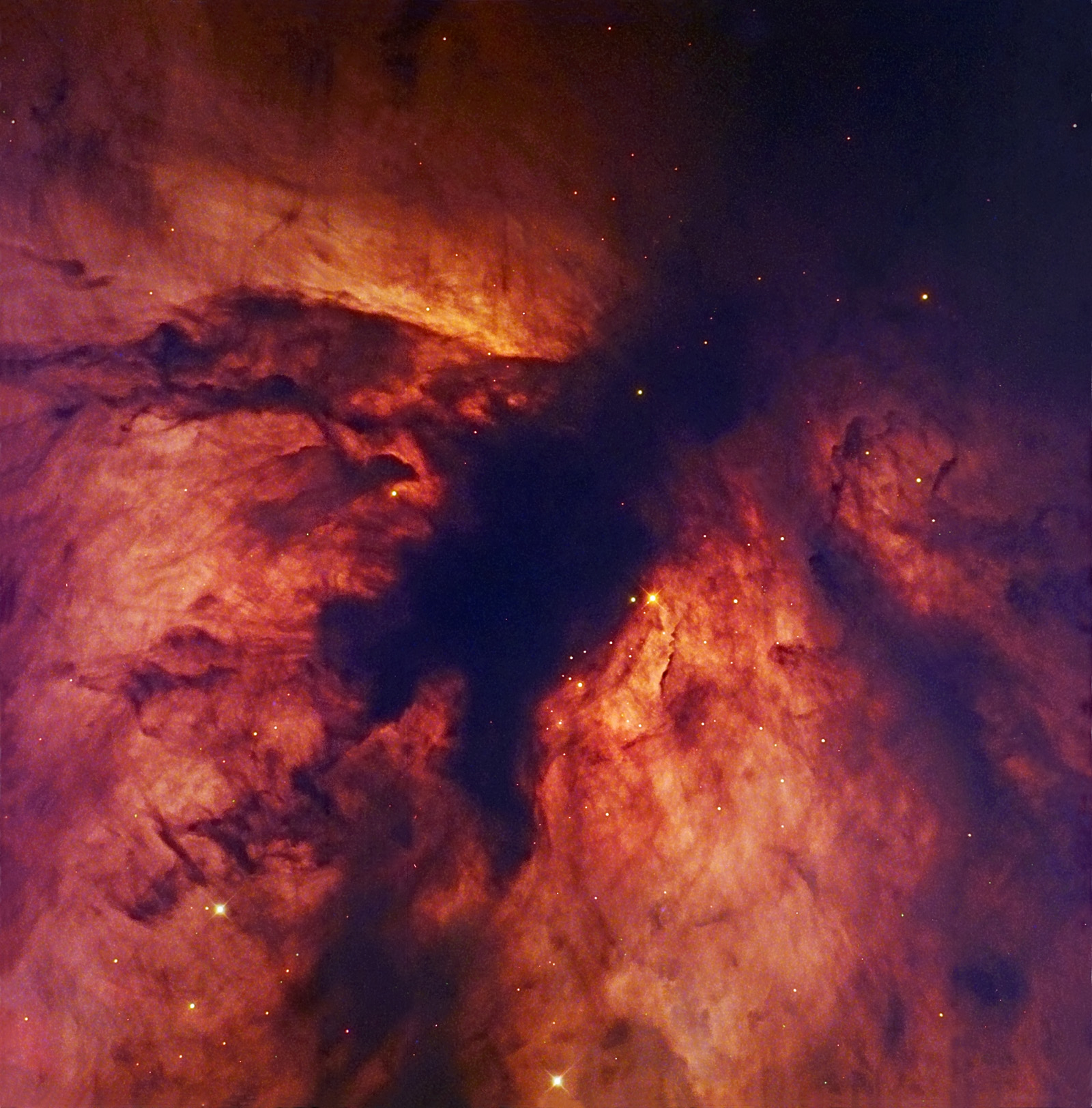
もちろん、炎星雲は燃えているわけではありません。NGC 2024としても知られるこの星雲の印象的な赤みがかった色は、約1500光年離れた巨大なオリオン分子雲複合体の端にある水素原子の輝きによるものです。水素原子は電離、つまり電子を剥ぎ取られており、原子と電子が再結合する際に輝きます。では、何が水素原子を電離させるのでしょうか?このクローズアップ画像では、吸収性の星間塵の暗い帯が水素の輝きを背景にシルエットとして際立っており、実際には炎星雲のエネルギーの真の源を光学望遠鏡から隠しています。暗い帯の背後には、遮蔽する塵を通して赤外線波長で見える、高温の若い星の集団があります。その星団にある若い大質量星が、炎星雲の水素ガスを電離させる高エネルギーの紫外線放射の発生源である可能性が高いのです。
原文(English)
Of course, the Flame Nebula is not on fire. Also known as NGC 2024, the nebula's suggestive reddish color is due to the glow of hydrogen atoms at the edge of the giant Orion molecular cloud complex some 1,500 light-years away. The hydrogen atoms have been ionized, or stripped of their electrons, and glow as the atoms and electrons recombine. But what ionizes the hydrogen atoms? In this close-up view, a dark lane of absorbing interstellar dust stands out in silhouette against the hydrogen glow and actually hides the true source of the Flame Nebula's energy from optical telescopes. Behind the dark lane lies a cluster of hot, young stars, seen at infrared wavelengths through the obscuring dust. A young, massive star in that cluster is the likely source of energetic ultraviolet radiation that ionizes the hydrogen gas in the Flame Nebula.
\ この感動を宇宙仲間にシェア /
宇宙をXでシェア
© Robert Gendler,
Jan-Erik Ovaldsen / APOD