オリオン座の弾丸柱
Bullet Pillars in Orion
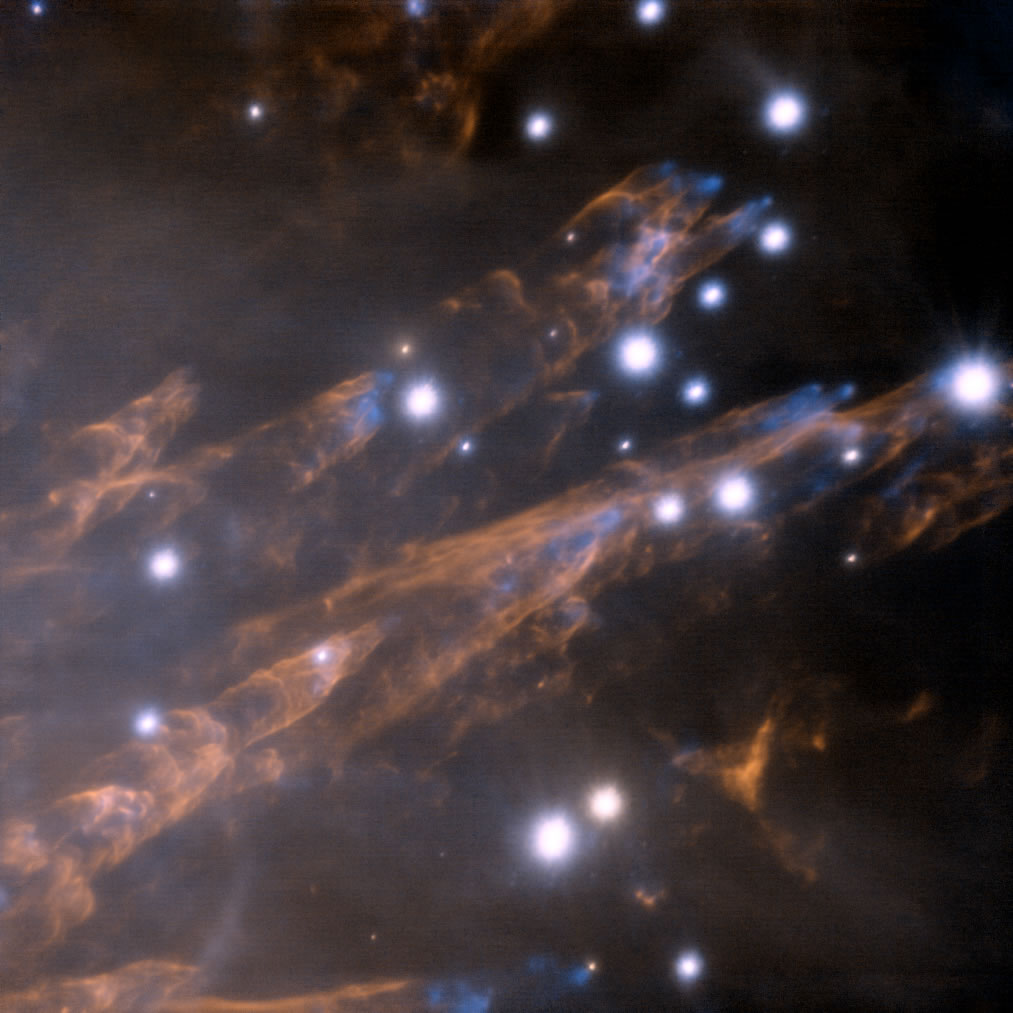
オリオン星雲からガスの弾丸が噴出しているのはなぜでしょうか?まだ誰も確信していません。1983年に初めて発見されたこれらの弾丸は、実際には太陽系ほどの大きさで、IRc2と呼ばれる中心源から秒速約400kmで移動しています。弾丸の年齢は、速度とIRc2からの距離から推定でき、非常に若く、通常は1000年未満です。弾丸がオリオン星雲の内部を突き抜ける際、少量の鉄ガスによって弾丸の先端が青く光り、各弾丸は加熱された水素ガスの光で輝く管状の柱を残します。上の画像は、ジェミニ北望遠鏡の補償光学技術によって、オリオン星雲の弾丸がかつてないほど詳細に捉えられたものです。オリオン星雲(M42)は、私たちに最も近い主要な星形成領域であり、変化する塵、ガス、明るい星で満たされています。オリオン星雲は地球から約1500光年離れた場所に位置し、オリオン座の方向から肉眼で見ることができます。
原文(English)
Why are bullets of gas shooting out of the Orion Nebula? Nobody is yet sure. First discovered in 1983, each bullet is actually about the size of our Solar System, and moving at about 400 km/sec from a central source dubbed IRc2. The age of the bullets, which can be found from their speed and distance from IRc2, is very young -- typically less than 1,000 years. As the bullets rip through the interior of the Orion Nebula, a small percentage of iron gas causes the tip of each bullet to glow blue, while each bullet leaves a tubular pillar that glows by the light of heated hydrogen gas. Pictured above, the Orion bullets were captured in unprecedented detail by the adaptive optics technology of the Gemini North telescope. M42, the Orion Nebula, is the closest major star forming region to us and filled with changing dust, gas, and bright stars. The Orion Nebula, is located about 1,500 light years away and can be seen with the unaided eye toward the constellation of Orion.
\ この感動を宇宙仲間にシェア /
宇宙をXでシェア
© Gemini Observatory / APOD