グリーゼの地表から見た日の出 581c
Sunrise from the Surface of Gliese 581c
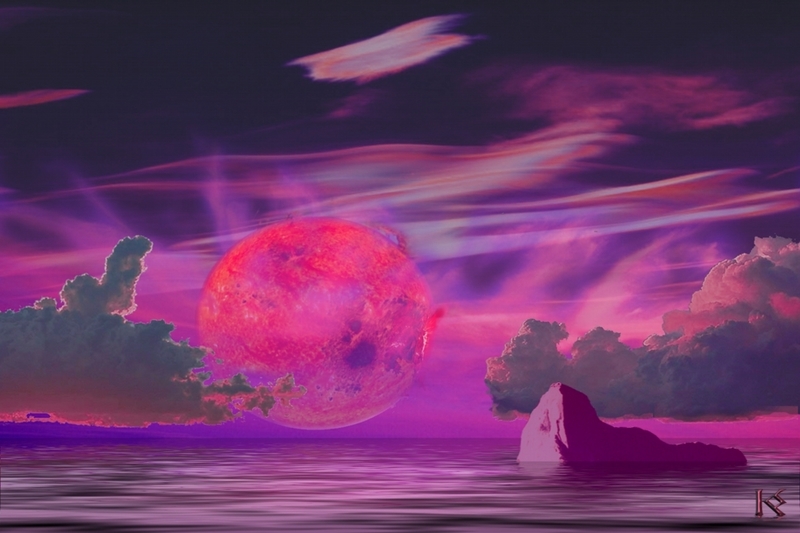
グリーゼ581cでは日の出はどのように見えるでしょうか? 上の図は、その想像図の一つです。グリーゼ581cは、これまでに発見された中で最も地球に似た惑星で、地球からわずか20光年しか離れていません。中心にある赤色矮星は小さく、太陽よりも赤いですが、周回する惑星の一つが最近、表面に液体の水が存在しうるハビタブルゾーンにあることが発見されました。この惑星は地球とは大きく異なり、水星よりもはるかに地球に近い軌道を周回し、質量は地球の5倍ですが、海だけでなく、海によって可能になる生命が存在する可能性のある候補となっています。将来の観測で液体の水が確認されれば、グリーゼ581cは、地球から星間旅行をする人々にとって、ふさわしい目的地または中継地点となるかもしれません。上の図は、赤色矮星グリーゼ581が、惑星グリーゼ581cの穏やかな海の上空の雲を突き抜けて昇る様子を描いた架空の図です。
原文(English)
How might a sunrise appear on Gliese 581c? One artistic guess is shown above. Gliese 581c is the most Earth-like planet yet discovered and lies a mere 20 light-years distant. The central red dwarf is small and redder than our Sun but one of the orbiting planets has recently been discovered to be in the habitable zone where liquid water could exist on its surface. Although this planet is much different from Earth, orbiting much closer than Mercury and containing five times the mass of Earth, it is now a candidate to hold not only oceans but life enabled by the oceans. Were future observations to confirm liquid water, Gliese 581c might become a worthy destination or way station for future interstellar travelers from Earth. Drawn above in the hypothetical, the red dwarf star Gliese 581 rises through clouds above a calm ocean of its planet Gliese 581c.
\ この感動を宇宙仲間にシェア /
宇宙をXでシェア
© Karen Wehrstein / APOD