マクノート彗星の鉄の尾
The Iron Tail of Comet McNaught
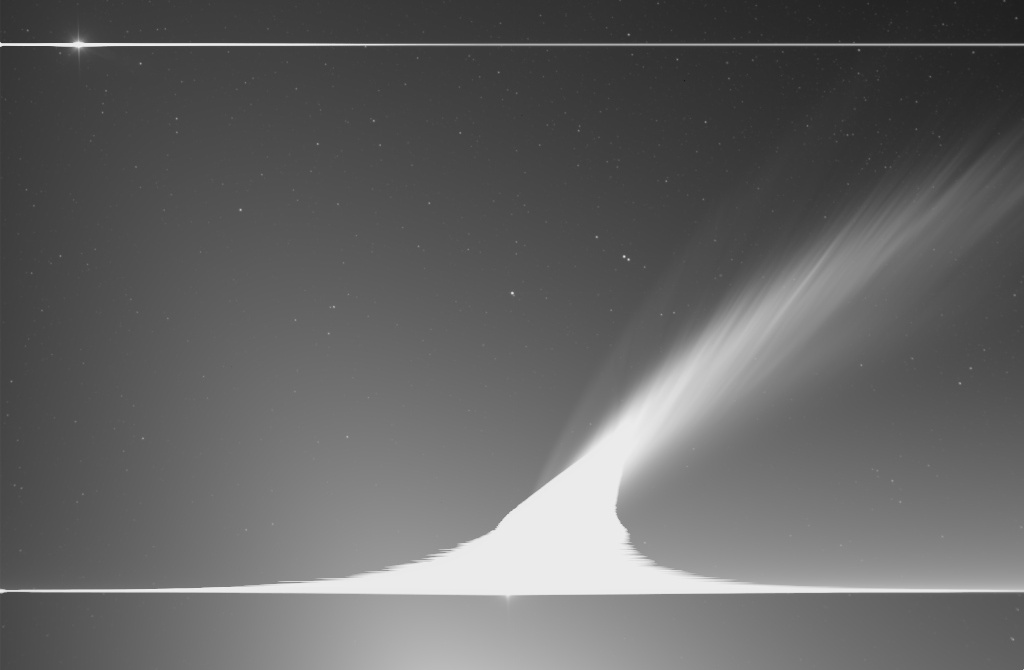
今年初め、地球の空でひときわ輝いていたマクノート彗星が、STEREO A探査機からこの画像に捉えられています。マクノート彗星のコマは非常に明るく、視野の下部に長い水平の縞模様として広がっています。左上隅付近にある輝く金星も、デジタル画像に深刻な水平の傷を作り出しています。しかし、高感度カメラは、視野の右上に向かって3000万キロメートル以上伸びる領域に沿って、マクノート彗星の有名な塵の尾の縞模様を正確に記録しています。塵の尾のすぐ左にある、より淡い弧状の尾は、当初、太陽風によって彗星から運ばれた帯電原子によって形成される一般的なイオンの尾の例と考えられていました。しかし、詳細なモデリングにより、この尾は実際には太陽光の圧力によって押し出された中性鉄原子によるものであることが示されました。これは、彗星から検出された初めての中性鉄の尾です。鉄原子は、鉄硫黄鉱物であるトロイライト(FeS)を含む彗星核由来の塵粒子に由来すると考えられている。
原文(English)
Outstanding in planet Earth's sky early this year, Comet McNaught is captured in this view from the STEREO A spacecraft. McNaught's coma is so bright, it blooms into the long horizontal stripe at the bottom of the field. Brilliant Venus, near the top left corner, also produces a severe horizontal blemish in the digital image. But the sensitive camera does accurately record the striations in McNaught's famous dust tail along a region stretching over 30 million kilometers toward the top right of the field of view. A separate, fainter, arching tail just to the left of the dust tail was initially thought to be an example of a common ion tail, formed by electrically charged atoms carried away from the comet by the solar wind. However, detailed modeling indicates that tail is actually due to neutral iron atoms pushed out by the pressure of sunlight -- the first ever detected neutral iron tail from a comet. The iron atoms are thought to originate in dust grains from the comet nucleus that contain the iron-sulfur mineral troilite (FeS).
\ この感動を宇宙仲間にシェア /
宇宙をXでシェア
© NASA / APOD