W5のスターたちの世代
Generations of Stars in W5
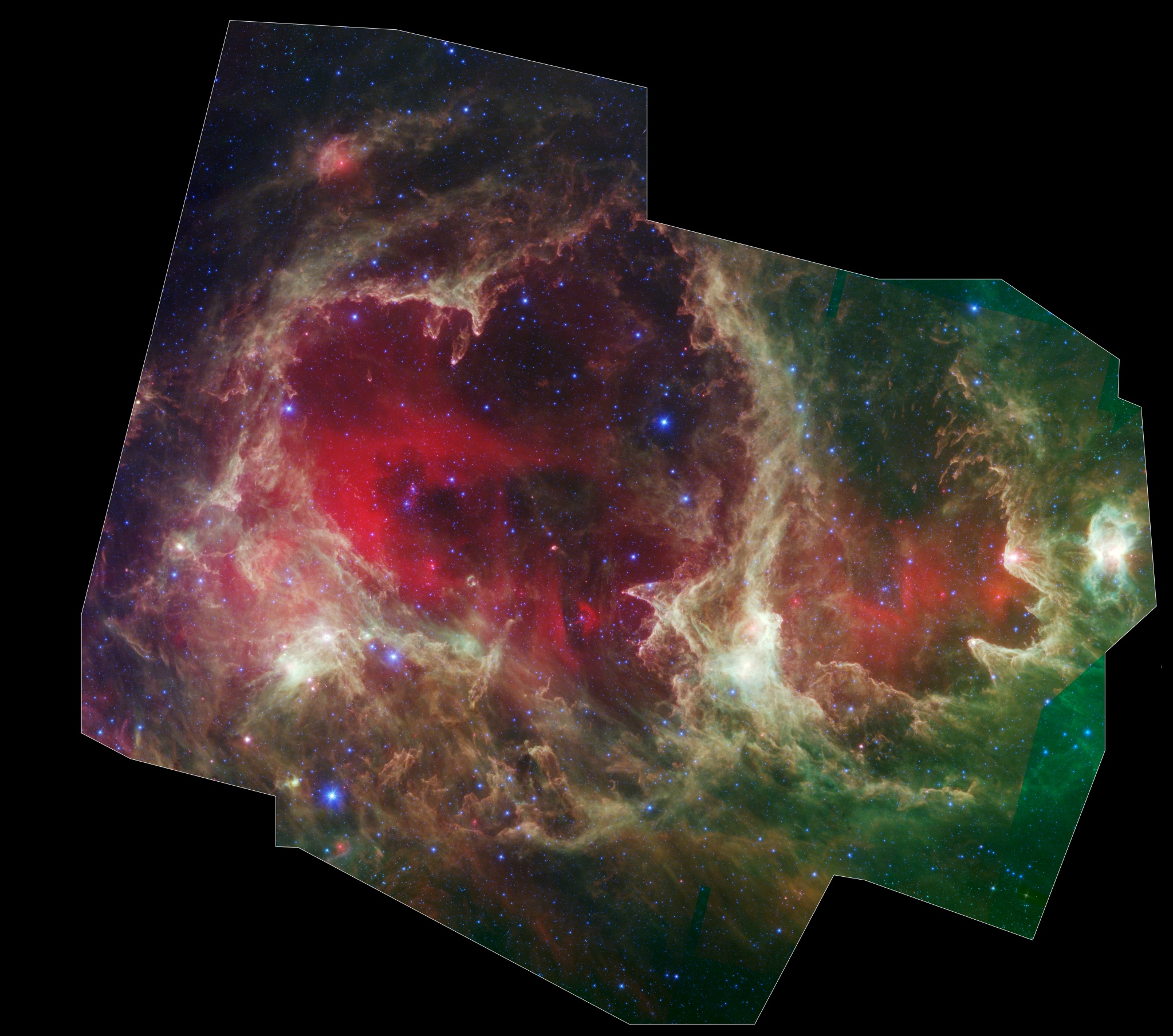
巨大な星形成領域W5は、直径200光年以上、地球から約6,500光年離れたカシオペヤ座に位置しています。スピッツァー宇宙望遠鏡によるこの印象的な赤外線画像のモザイクでは、W5の冷たいガスと塵の彫刻のような雲が幻想的な形を形成しているように見えます。実際、右側の領域には、以前は「創造の山」と呼ばれていた構造が含まれています。新たな証拠は、W5領域で連続する世代の星が、誘発された星形成の拡大パターンで形成されたことを示しています。より古い、初期の世代の星は巨大な空洞の中央付近に集まっているように見え、より若い星は縁付近に見られます。古い中心の星からの風と放射線は、周囲の星間物質を削り取って圧縮し、より外側のより若い、後の世代の星を生み出す崩壊を引き起こしたと考えられます。擬似カラー画像では、空洞内に残っている加熱された塵が赤く見え、最も若い星は白っぽい領域で形成されています。 W5はIC 1848としても知られており、IC 1805とともに、一般的に「ハート星雲」と「ソウル星雲」と呼ばれる複雑な領域の一部を形成している。
原文(English)
Giant star forming region W5 is over 200 light-years across and about 6,500 light-years away in the constellation Cassiopeia. W5's sculpted clouds of cold gas and dust seem to form fantastic shapes in this impressive mosaic of infrared images from the Spitzer Space Telescope. In fact, the area on the right includes the structures previously dubbed the Mountains of Creation. New evidence indicates that successive generations of stars formed in the W5 region in an expanding pattern of triggered star formation. The older, earlier generations of stars seem to cluster near the middle of the enormous cavities, with younger stars seen near the rims. Winds and radiation from the older, central stars likely carve out and compress surrounding interstellar material, triggering the collapse that gave rise to younger, later generations of stars farther out. In the false-color image, heated dust still within the cavities appears red, while the youngest stars are forming in the whitish areas. W5 is also known as IC 1848, and together with IC 1805 it is part of a complex region popularly dubbed the Heart and Soul Nebulae.
\ この感動を宇宙仲間にシェア /
宇宙をXでシェア
© NASA / APOD