暗くなった空
A Darkened Sky
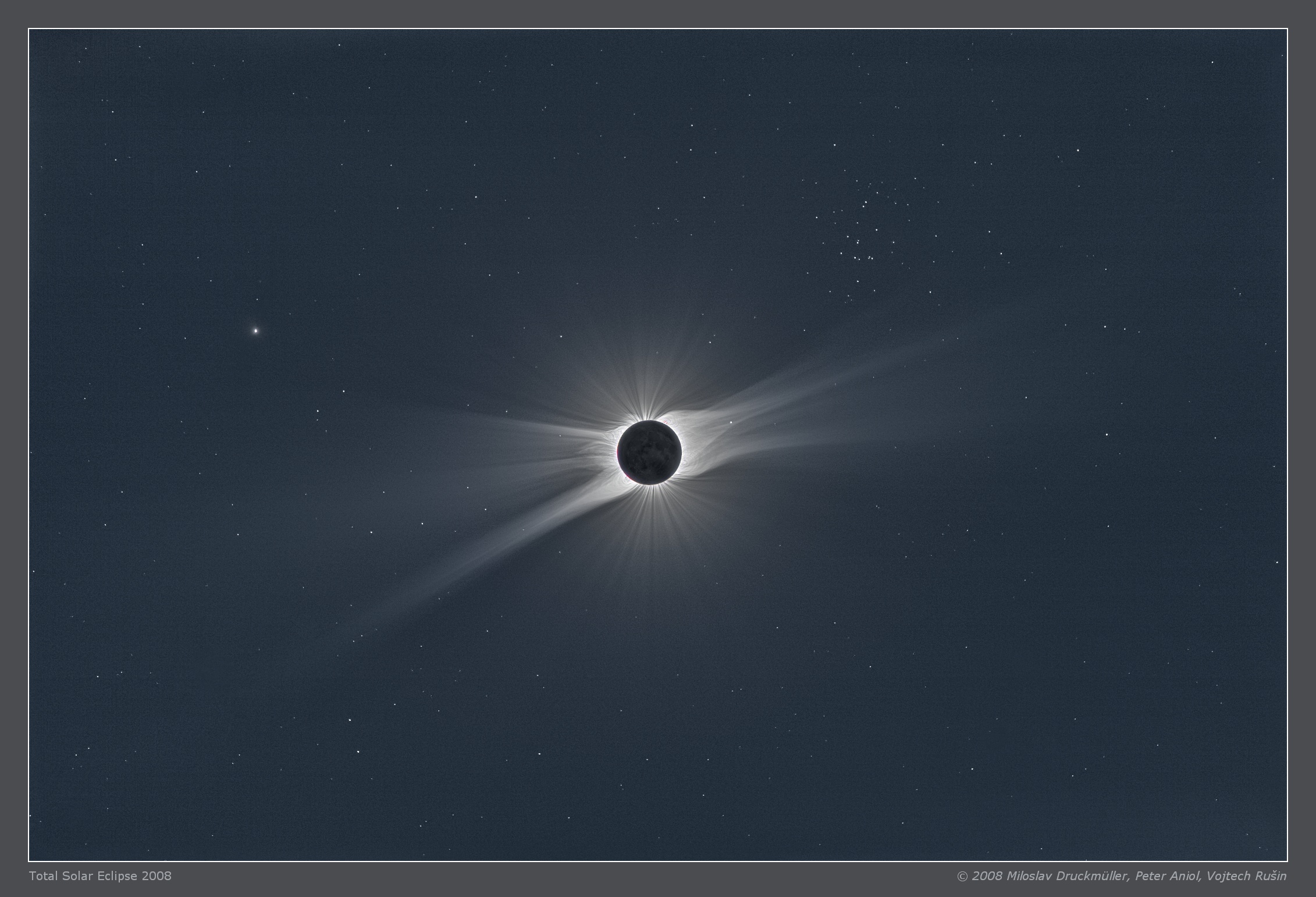
8月1日、皆既日食の経路に沿って、昼間の空が一瞬暗くなった。モンゴルからこの地球中心の天体現象を観測していた写真家ミロスラフ・ドゥルックミュラーは、月が明るい太陽円盤を覆い隠し、空を暗くする様子を2台のカメラで複数枚撮影した。この最終的な合成写真は、露光時間が1/125秒から8秒までの55枚のフレームで構成されている。月と太陽の相対位置は皆既日食のピークに対応しており、視野は約12度に及ぶ。左側には明るい水星が写っているが、シルエットになった月の右上には、かに座のプレセペ星団(M44またはプレセペ星団としても知られる)をはじめとする多くの星も見える。驚くべきことに、ほぼ完璧な条件と幅広い露光時間のおかげで、合成写真には月の表面が写り込み、繊細な太陽コロナが太陽半径の約20倍の距離まで捉えられている。実際、この合成画像は、日食中に肉眼で見ることができた範囲を超える明るさの範囲を示している。
原文(English)
For a moment on August 1st, the daytime sky grew dark along the path of a total solar eclipse. While watching the geocentric celestial event from Mongolia, photographer Miloslav Druckmuller recorded multiple images with two separate cameras as the Moon blocked the bright solar disk and darkened the sky. This final composition consists of 55 frames ranging in exposure time from 1/125 to 8 seconds. It spans nearly 12 degrees, with the relative position of the Moon and Sun corresponding to mid-eclipse. On the left is bright planet Mercury, but many stars are also visible, including the Praesepe star cluster (also known as M44 or the Beehive cluster) in Cancer, above and to the right of the silhouetted Moon. Remarkably, the nearly perfect conditions and wide range in individual exposures allow the composite picture to register the lunar surface and follow the delicate solar corona out to a distance of nearly 20 times the radius of the Sun. In fact, the composite presents a range in brightness beyond what the eye could see during the eclipse.
\ この感動を宇宙仲間にシェア /
宇宙をXでシェア
© Miloslav
Druckmuller / APOD