カッシーニ探査機がエンケラドゥスの氷の噴煙を通過
Cassini Passes Through Ice Plumes of Enceladus
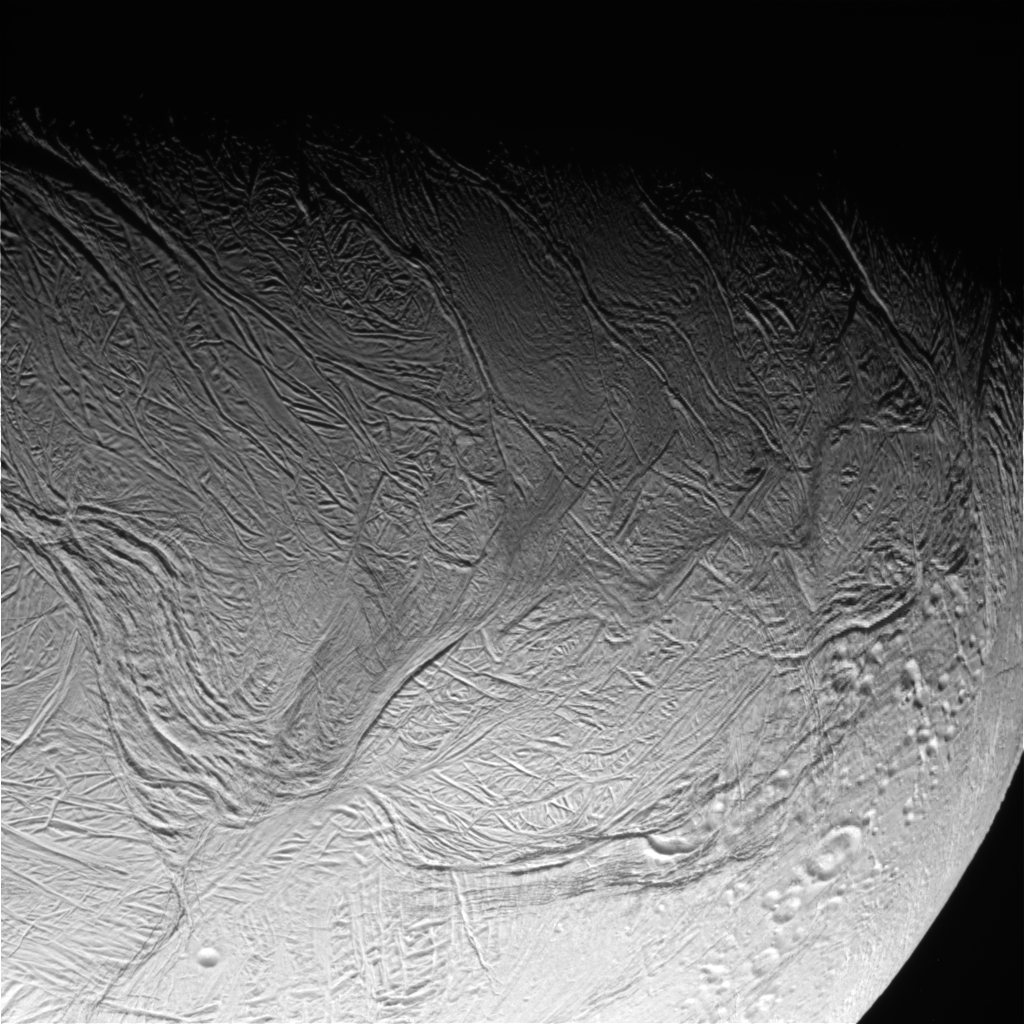
エンケラドゥスの氷の噴煙にはどのような不純物が含まれているのでしょうか?この疑問に答えるため、探査機カッシーニは先週、土星の氷の噴煙を噴出する衛星エンケラドゥスから30キロメートル以内まで接近しました。史上最接近となるこの時、カッシーニはエンケラドゥスの通常の表面から噴出される粒子を嗅ぎ分け、化学データを取得しようと試みました。また、氷の噴出孔を直接通過し、サンプルを採取しました。水氷が主成分の噴煙や表面の噴出物に含まれる不純物の手がかりをデータから探す作業が進められています。今回のフライバイの主な目的は粒子分析でしたが、いくつかの興味深い画像も得られています。例えば、上の画像には、画像中央を垂直に走る珍しい灰色の光沢が見られますが、これは表面の峡谷から噴出する水蒸気かもしれません。その他、上の画像には、クレーターのない氷の溝が広がる広大な平原、画像の左側に広がる昼夜の境界線、そして上部付近に比較的多くのクレーターが存在する領域が見られます。カッシーニ探査機は今月末頃、エンケラドゥスの近くを低空飛行し、画像撮影を行う予定だ。
原文(English)
What telling impurities taint the ice plumes of Enceladus? To help answer this question, the robotic Cassini spacecraft dove last week to within 30 kilometers of Saturn's ice-plume emitting moon. At this closest-ever approach, Cassini attempted to sniff and obtain chemical data on particles ejected from Enceladus' regular surface, while at other times Cassini flew right through -- and sampled -- ice geysers directly. Searches in the data for impurity clues in the water-ice dominated plumes and surface ejecta are progressing. Although the main purpose of this flyby was particle analysis, several interesting images are emerging. Visible in the above image, for example, is an unusual gray sheen running vertically up the image center that might be water vapor escaping from surface canyons. Other notable features visible above include vast plains of craterless icy grooves, the day-night terminator across the image left, and an area near the top comparatively rich in craters. Cassini is scheduled to buzz by Enceladus in an imaging run near the end of this month.
\ この感動を宇宙仲間にシェア /
宇宙をXでシェア
© NASA / APOD