M45:プレアデス星団
M45: The Pleiades Star Cluster
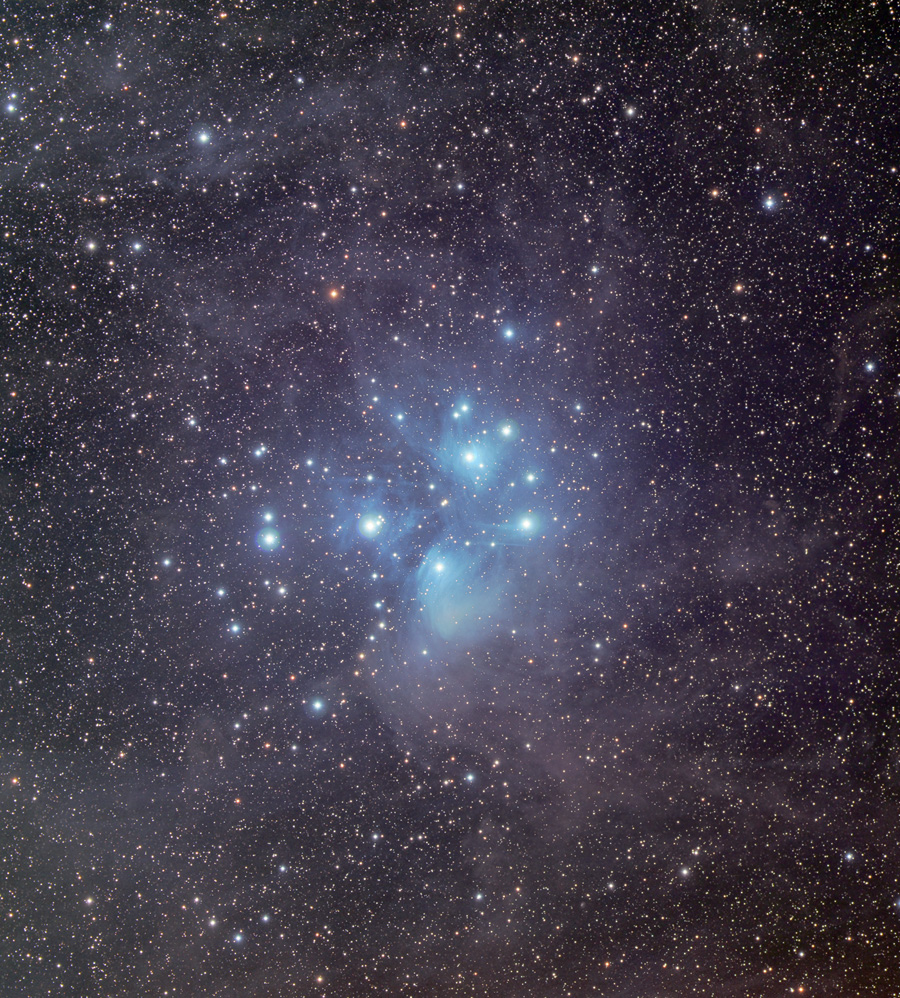
おそらく空で最も有名な星団であるプレアデス星団は、光害のひどい都市の奥深くからでも双眼鏡なしで見ることができます。セブンシスターズやM45としても知られるプレアデス星団は、最も明るく、最も近い散開星団の1つです。プレアデス星団には3,000個以上の星があり、地球から約400光年離れており、直径はわずか13光年です。有名な望遠鏡と自動車の会社が、この星団の名前を借用しています。上の写真では、明るい星団の星々を取り囲む青い反射星雲がはっきりと見て取れます。プレアデス星団には、低質量で暗い褐色矮星も発見されています。
原文(English)
Perhaps the most famous star cluster on the sky, the Pleiades can be seen without binoculars from even the depths of a light-polluted city. Also known as the Seven Sisters and M45, the Pleiades is one of the brightest and closest open clusters. The Pleiades contains over 3,000 stars, is about 400 light years away, and only 13 light years across. A prominent telescope and car company has borrowed the star cluster's name. Quite evident in the above photograph are the blue reflection nebulae that surround the brighter cluster stars. Low mass, faint, brown dwarfs have also been found in the Pleiades.
\ この感動を宇宙仲間にシェア /
宇宙をXでシェア
© Phillip L. Jones
VisualUniverse.org / APOD