NGC 604:巨大な星形成領域からのX線画像
NGC 604: X-rays from a Giant Stellar Nursery
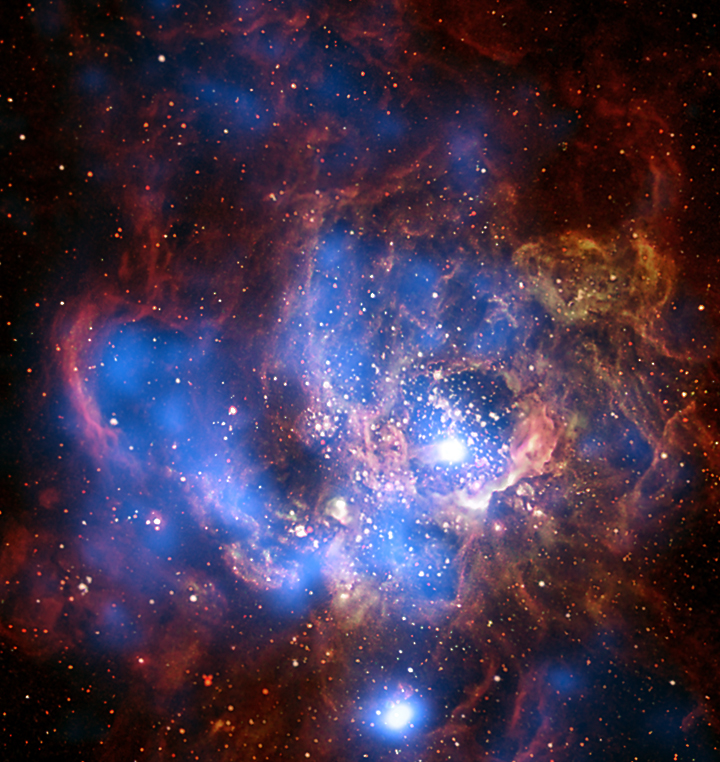
約300万光年離れた近くの渦巻銀河M33にある巨大な星形成領域NGC 604は、直径約1,300光年、オリオン星雲の約100倍の大きさです。実際、局所銀河群内の星形成領域の中で、NGC 604は、大マゼラン雲のタランチュラ星雲としても知られる30 Doradusに次いで2番目に大きいものです。チャンドラX線観測衛星のX線データ(青色)とハッブル宇宙望遠鏡の光学データを合成したこの宇宙時代のカラー画像は、NGC 604の洞窟のような泡と空洞が、高温で希薄なX線放射ガスで満たされていることを示しています。興味深いことに、NGC 604自体は、比較的低温のガスの壁によって隔てられています。星雲の西側(右側)では、約200個の若い大質量星の集団から放出される強力な恒星風によって、物質がX線温度まで加熱されている可能性が高いことが観測されている。一方、東側では、X線で満たされた空洞はより古いようで、大質量星の進化の終盤に起こった超新星爆発がその形成に寄与していると考えられる。
原文(English)
Some 3 million light-years distant in nearby spiral galaxy M33, giant stellar nursery NGC 604 is about 1,300 light-years across, or nearly 100 times the size of the Orion Nebula. In fact, among the star forming regions within the Local Group of galaxies, NGC 604 is second in size only to 30 Doradus, also known as the Tarantula Nebula in the Large Magellanic Cloud. This space-age color composite of X-ray data (in blue hues) from the Chandra Observatory, and Hubble optical data shows that NGC 604's cavernous bubbles and cavities are filled with a hot, tenuous, X-ray emitting gas. Intriguingly, NGC 604 itself is divided by a wall of relatively cool gas. On the western (right) side of the nebula, measurements indicate that material is likely heated to X-ray temperatures by the energetic winds from a cluster of about 200 young, massive stars. On the eastern side the X-ray filled cavities seem to be older, suggesting supernova explosions from the end of massive star evolution contribute to their formation.
\ この感動を宇宙仲間にシェア /
宇宙をXでシェア
© NASA / APOD