NGC 6888:三日月星雲
NGC 6888: The Crescent Nebula
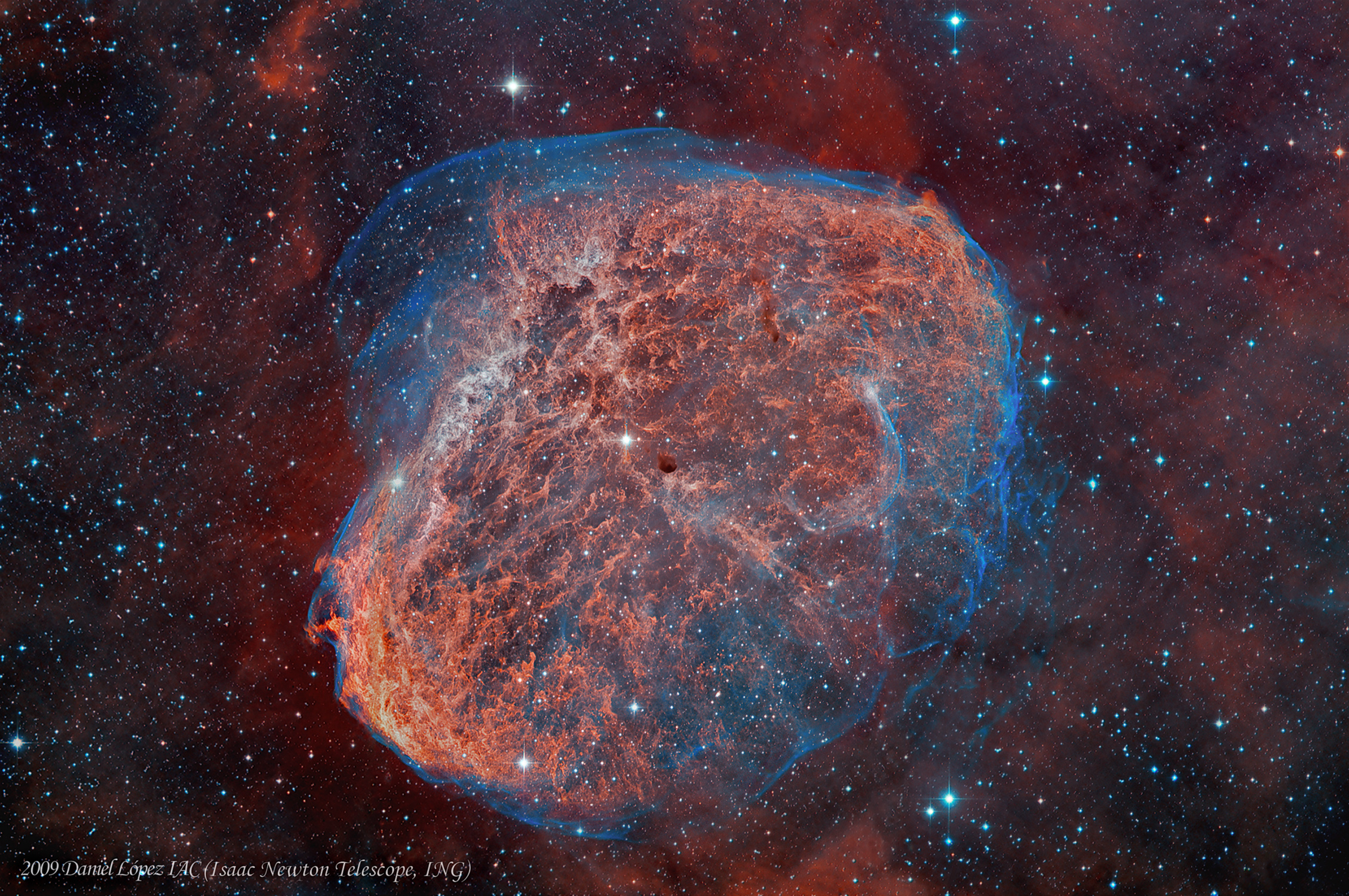
NGC 6888、別名三日月星雲は、中心にある明るく巨大な恒星からの恒星風によって吹き飛ばされた、直径約25光年の宇宙の泡です。この美しい星雲の画像は、カナリア諸島のロケ・デ・ロス・ムチャチョス天文台にあるアイザック・ニュートン望遠鏡で撮影されたものです。合成カラー画像と、恒星風によって吹き飛ばされた星雲内の水素原子と酸素原子からの光を分離する狭帯域データを組み合わせています。酸素原子は、詳細な褶曲やフィラメントを包み込むように見える青緑色の色合いを生み出しています。NGC 6888の中心星は、ウォルフ・ライエ星(WR 136)に分類されます。この星は強い恒星風によって外層を放出しており、1万年ごとに太陽の質量に相当する物質を放出しています。星雲の複雑な構造は、この強い恒星風が、以前の段階で放出された物質と相互作用した結果であると考えられます。驚異的な速度で燃料を燃焼し、恒星としての寿命の終わりに近づいているこの星は、最終的には壮大な超新星爆発を起こして最期を迎えるだろう。星雲が豊富な星座であるはくちょう座に位置するNGC 6888は、地球から約5000光年離れている。
原文(English)
NGC 6888, also known as the Crescent Nebula, is a cosmic bubble about 25 light-years across, blown by winds from its central, bright, massive star. This beautiful portrait of the nebula is from the Isaac Newton Telescope at Roque de los Muchachos Observatory in the Canary Islands. It combines a composite color image with narrow band data that isolates light from hydrogen and oxygen atoms in the wind-blown nebula. The oxygen atoms produce the blue-green hue that seems to enshroud the detailed folds and filaments. NGC 6888's central star is classified as a Wolf-Rayet star (WR 136). The star is shedding its outer envelope in a strong stellar wind, ejecting the equivalent of the Sun's mass every 10,000 years. The nebula's complex structures are likely the result of this strong wind interacting with material ejected in an earlier phase. Burning fuel at a prodigious rate and near the end of its stellar life this star should ultimately go out with a bang in a spectacular supernova explosion. Found in the nebula rich constellation Cygnus, NGC 6888 is about 5,000 light-years away.
\ この感動を宇宙仲間にシェア /
宇宙をXでシェア
© Daniel López / APOD