水星の二重環構造の盆地
A Double Ringed Basin on Mercury
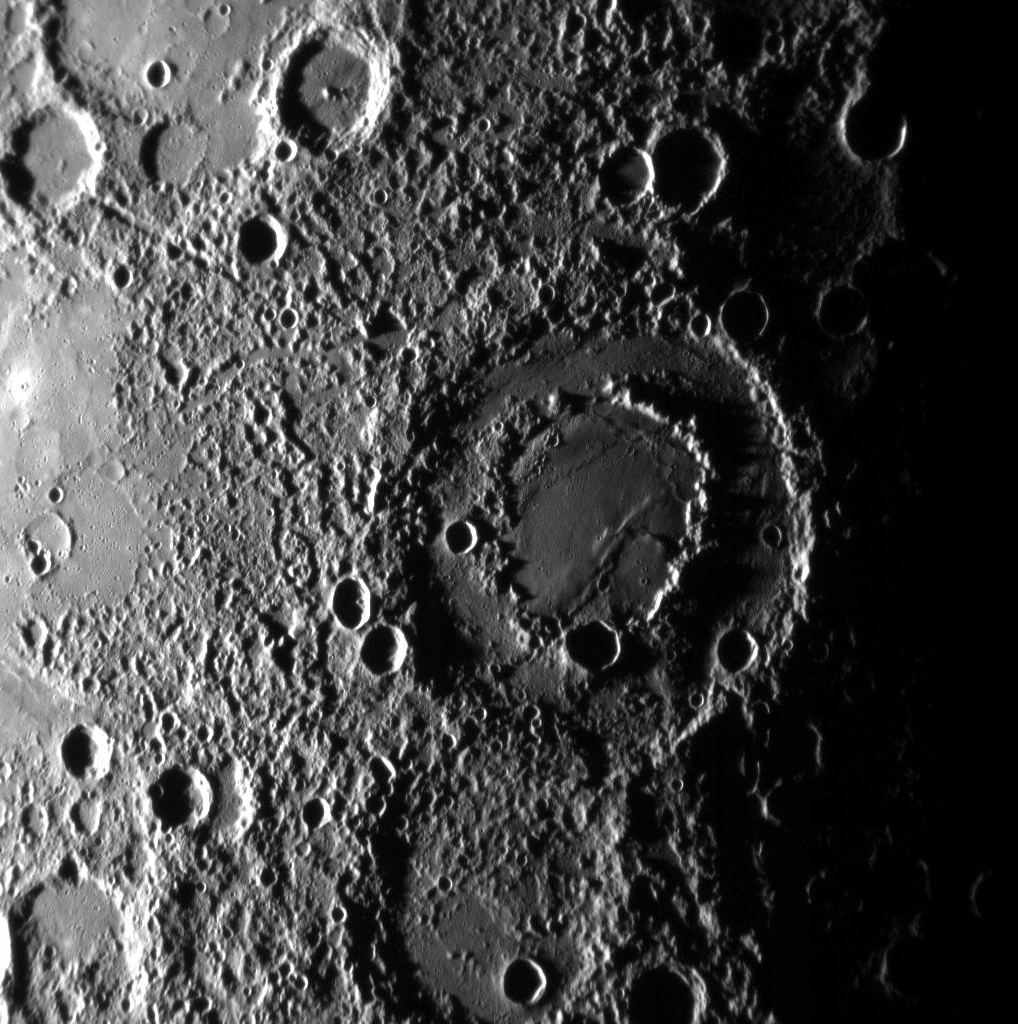
水星の二重環盆地の滑らかな底面は何が原因なのでしょうか?誰も確信していません。この珍しい地形は160キロメートルに及び、先週、ロボット探査機MESSENGERが太陽系最内惑星である水星を周回した際に撮影されました。二重環や多重環の盆地は稀ですが、過去には火星、金星、地球、そして地球の月でも撮影されています。水星自体にも、巨大なカロリス盆地、レンブラント盆地、そして謎めいたラディトラディ盆地など、いくつかの二重環盆地が存在します。惑星や衛星にある大きな多重環盆地のほとんどは、単一の小惑星または彗星の破片による強い衝突によって形成されます。上記の二重環盆地の興味深い特徴の一つは、盆地の中心部が環の間の領域よりもはるかに滑らかに見えることです。おそらく、内部の底面は後の火山活動によって滑らかになったのでしょう。しかし、衝突時に物質が溶けて流れ出したことで底面が滑らかになった可能性もあります。 MESSENGERは水星への最後のフライバイを完了しましたが、2011年3月に再び水星に戻り、周回軌道への投入を試みます。注:このAPODのテキストは更新されています。
原文(English)
What caused the smooth floor inside the double ringed basin on Mercury? No one is sure. The unusual feature spans 160 kilometers and was imaged during the robotic MESSENGER spacecraft's swing past our Solar System's innermost planet last week. Double and multiple ringed basins, although rare, have also been imaged in years past on Mars, Venus, Earth, and Earth's Moon. Mercury itself has several doubles, including huge Caloris basin, Rembrandt basin, and enigmatic Raditladi basin. Most large multiple ringed basins on planets and moons are caused initially by a forceful impact by a single asteroid or comet fragment. One interesting feature of the above-imaged double ring is that the basin center appears much smoother than the region between the rings. Possibly, the internal floor was smoothed by later volcanic activity. Also possible, however, is that the floor was smoothed by melting and flowing of material upon impact. MESSENGER has now completed its last flyby of Mercury but will return and attempt to enter orbit in 2011 March. Note: The text of this APOD has been updated.
\ この感動を宇宙仲間にシェア /
宇宙をXでシェア
© NASA / APOD