ターゲットクレーターカベウス
Target Crater Cabeus
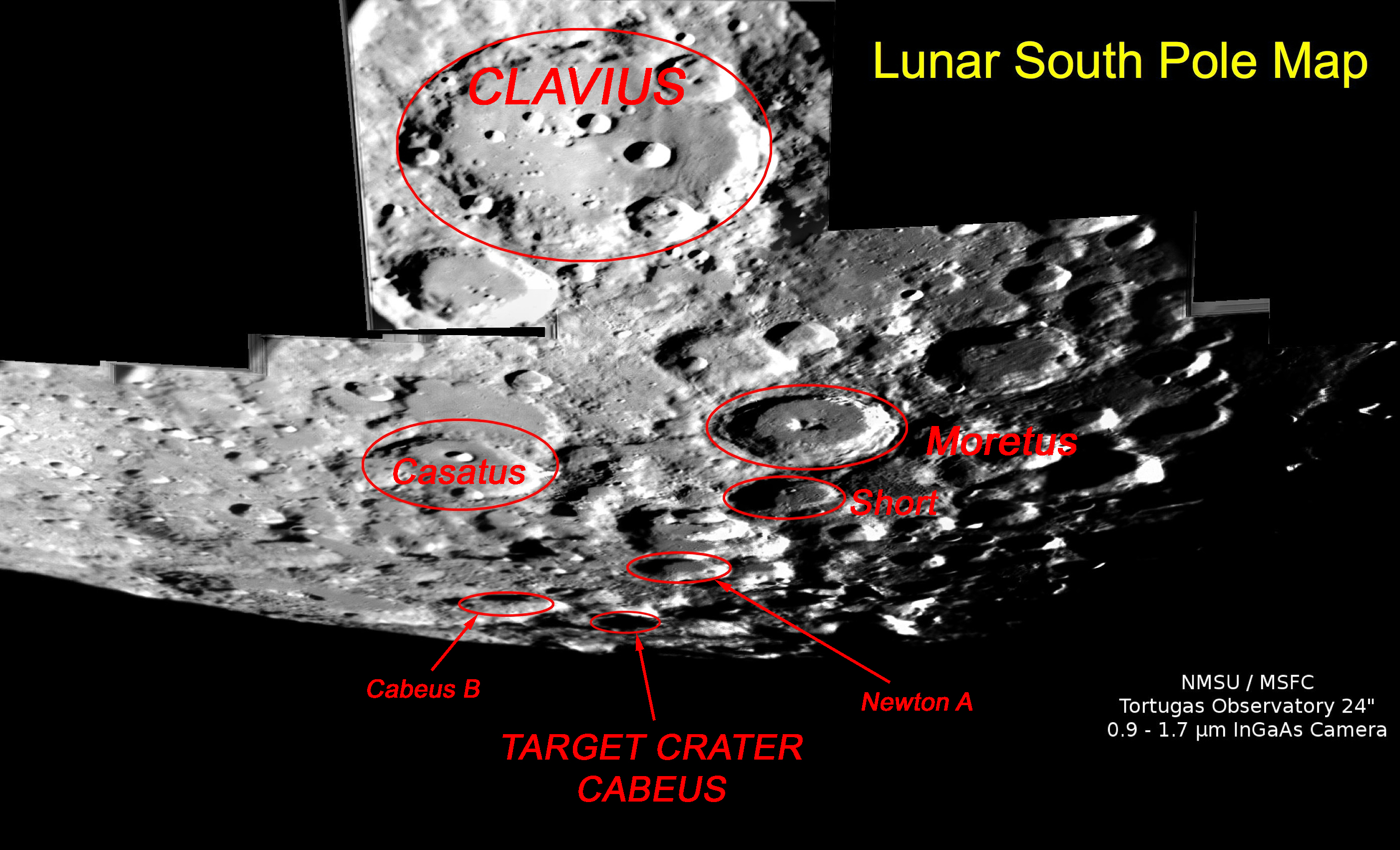
月の南極から約100キロメートル離れた、直径100キロメートルのクレーター、カベウスは、明日月へ衝突する予定の2機のLCROSSミッション宇宙船の目標です。このモザイク画像では、影になっているクレーターが大きく短縮されて見えますが、これは地上望遠鏡から見たこの地域の代表的な画像です。衝突によって、クレーターの壁の上空に太陽光に向かって広がる、もくもくと立ち昇る破片の噴煙が発生し、水の存在を示す兆候が現れる可能性があるとされています。最初に衝突するのは、ミッションのセントール上段ロケットで、協定世界時11時30分(東部夏時間午前7時30分)です。観測機器を搭載したLCROSS母船は、衝突の様子を撮影した後、発生した破片の噴煙の中を飛行し、クレーター底から吹き飛ばされた物質を分析します。最初の衝突から4分後、LCROSS母船自体がカベウスに衝突します。噴煙は直径約10インチ以上の望遠鏡で観測できると予想されており、タイミングは北米西部と太平洋の月観測者にとって好都合です。 NASAはまた、10月9日午前6時15分(東部夏時間)/午前3時15分(太平洋夏時間)から、NASA TVでLCROSSミッションの生中継映像を放送する予定だ。
原文(English)
About 100 kilometers from the Moon's South Pole, 100 kilometer wide crater Cabeus is the target for two LCROSS mission spacecraft on course to impact the Moon tomorrow. The shadowed crater is strongly foreshortened in this mosaic, a representative view of the region for earthbound telescopes. The impacts are intended to create billowing debris plumes extending into the sunlight above the crater walls, that could reveal signs of water. First to impact will be the mission's Centaur upper stage rocket at 11:30 UT (7:30am EDT). The instrumented LCROSS mothership will image the impact and then fly through the resulting debris plume analyzing the material blasted from the crater floor. Four minutes after the first impact, the LCROSS mothership itself will crash into Cabeus. The plumes are expected to be visible in telescopes about 10 inches in diameter or larger, with the timing favoring Moon watchers in western North America and the Pacific. NASA also plans to broadcast live footage from the LCROSS mission on NASA TV starting at 6:15am EDT / 3:15am PDT on October 9.
\ この感動を宇宙仲間にシェア /
宇宙をXでシェア
© NASA / APOD