NGC 253:塵の島宇宙
NGC 253: Dusty Island Universe
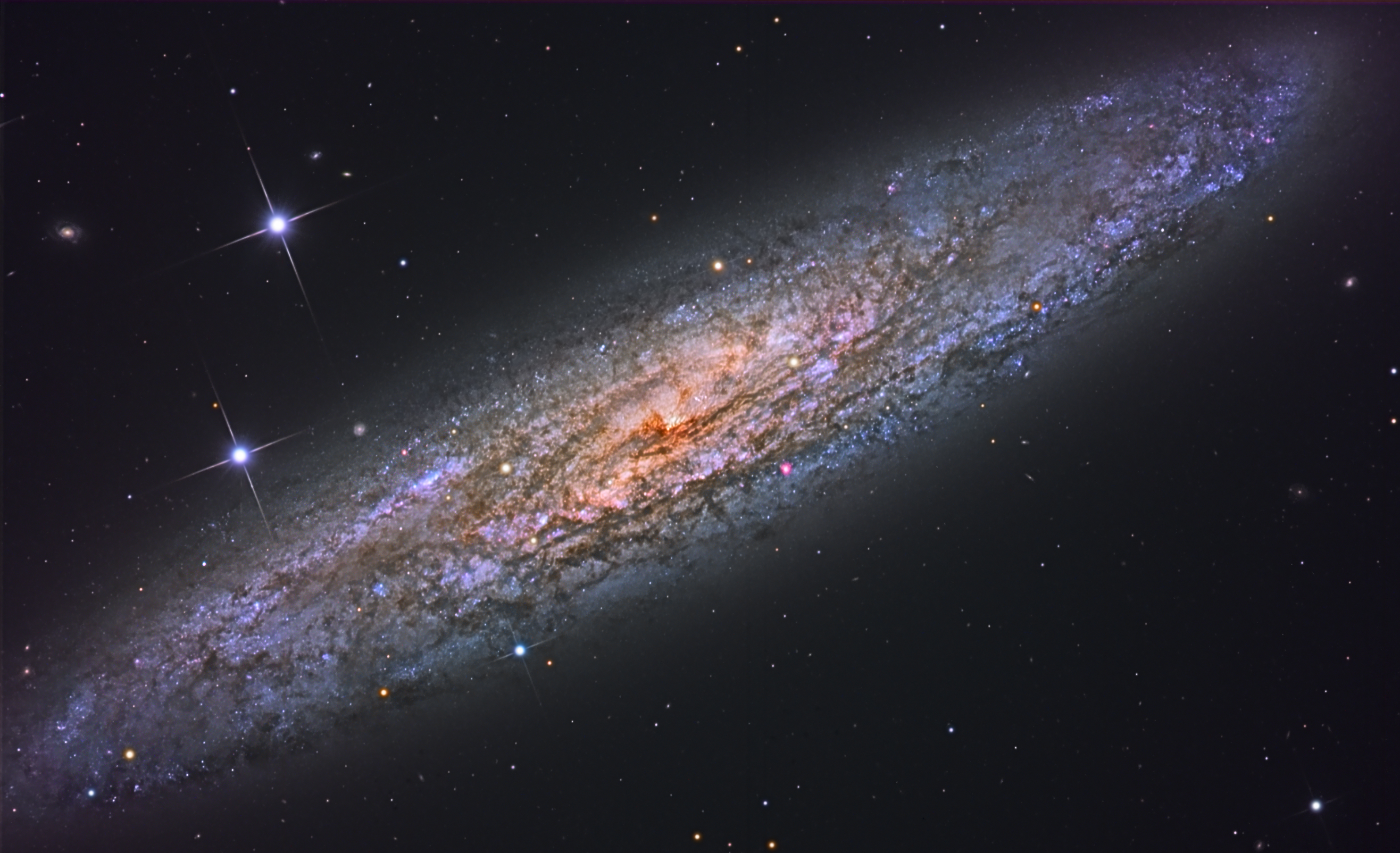
輝くNGC 253銀河は、観測可能な最も明るい渦巻銀河の1つであり、最も塵の多い銀河の1つでもあります。小型望遠鏡で見ると銀貨のような形をしていることから「銀貨銀河」と呼ばれることもあれば、南天の星座である彫刻座の領域内にあることから「彫刻座銀河」と呼ばれることもあります。1783年に数学者で天文学者のキャロライン・ハーシェルによって初めて発見されたこの塵の多い宇宙は、わずか1000万光年先にあります。直径約7万光年のNGC 253は、彫刻座銀河群の中で最大の銀河であり、私たちの銀河群に最も近い銀河です。この処理されたカラー画像では、渦巻状の塵の帯に加えて、若い星団や星形成領域が点在する銀河円盤から、印象的な塵の触手が立ち上がっているように見えます。高い塵含有量は活発な星形成を伴い、NGC 253はスターバースト銀河と呼ばれています。 NGC 253は、高エネルギーX線とガンマ線の強力な発生源としても知られており、これは銀河中心付近にある巨大なブラックホールが原因と考えられている。
原文(English)
Shiny NGC 253 Galaxy, is one of the brightest spiral galaxies visible, and also one of the dustiest. Some call it the Silver Dollar Galaxy for its appearance in small telescopes, or just the Sculptor Galaxy for its location within the boundaries of the southern constellation Sculptor. First swept up in 1783 by mathematician and astronomer Caroline Herschel, the dusty island universe lies a mere 10 million light-years away. About 70 thousand light-years across, NGC 253 is the largest member of the Sculptor Group of Galaxies, the nearest to our own Local Group of Galaxies. In addition to its spiral dust lanes, striking tendrils of dust seem to be rising from a galactic disk laced with young star clusters and star forming regions in this processed color image. The high dust content accompanies frantic star formation, giving NGC 253 the designation of a starburst galaxy. NGC 253 is also known to be a strong source of high-energy x-rays and gamma rays, likely due to massive black holes near the galaxy's center.
\ この感動を宇宙仲間にシェア /
宇宙をXでシェア
© Star Shadows Remote
Observatory / APOD