HUDF赤外線:銀河の夜明け
HUDF Infrared: Dawn of the Galaxies
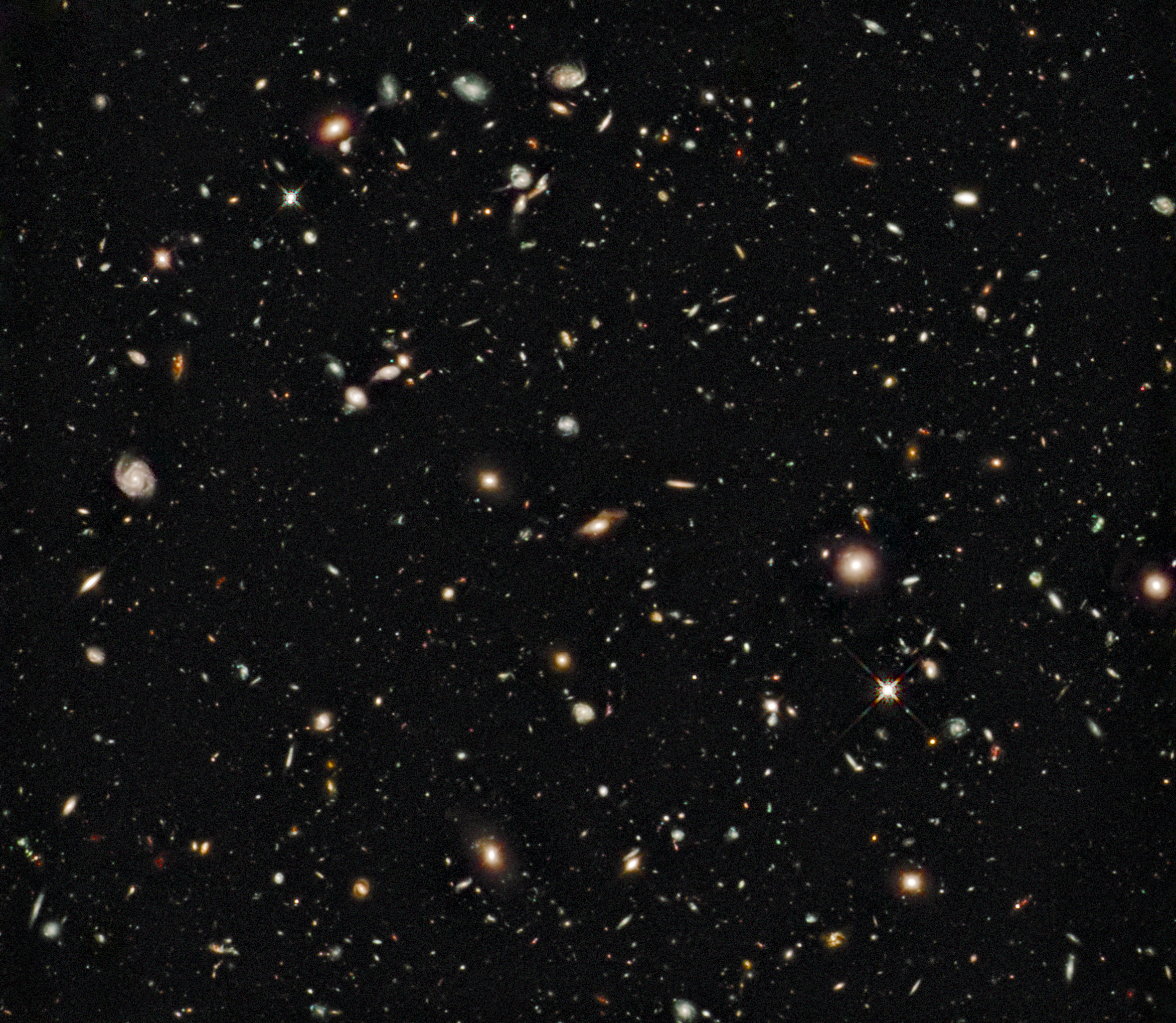
銀河はいつ形成されたのか?それを調べるために、2004年に光学光ハッブル超深宇宙観測(HUDF)と同じ領域で、これまでで最も深い近赤外線画像が撮影されました。この新しい画像は、改修されたハッブル宇宙望遠鏡に新しく設置された広視野カメラ3によってこの夏に撮影されました。上の画像で確認されたかすかな赤い斑点は、おそらく赤方偏移8を超える距離にあります。したがって、これらの銀河は、宇宙が現在の年齢の数パーセントのときに存在していた可能性が高く、最初のクラスの銀河のメンバーである可能性が高いです。いくつかの大きな現代の銀河は、遠方の銀河のカラフルな前景を形成しています。HUDF09チームによる分析によると、これらの初期の銀河の少なくとも一部には、星間塵がほとんどありませんでした。この初期のクラスの低光度銀河には、宇宙に残っている通常の物質の大部分を冷たいガスから熱い電離プラズマに変える光を放出する高エネルギーの星が含まれていたと考えられます。
原文(English)
When did galaxies form? To help find out, the deepest near-infrared image of the sky ever has been taken of the same field as the optical-light Hubble Ultra Deep Field (HUDF) in 2004. The new image was taken this summer by the newly installed Wide Field Camera 3 on the refurbished Hubble Space Telescope. Faint red smudges identified on the above image likely surpass redshift 8 in distance. These galaxies therefore likely existed when the universe was only a few percent of its present age, and may well be members of the first class of galaxies. Some large modern galaxies make a colorful foreground to the distant galaxies. Analyses by the HUDF09 team indicate that at least some of these early galaxies had very little interstellar dust. This early class of low luminosity galaxies likely contained energetic stars emitting light that transformed much of the remaining normal matter in the universe from a cold gas to a hot ionized plasma.
\ この感動を宇宙仲間にシェア /
宇宙をXでシェア
© NASA / APOD