土星周回探査機カッシーニから見た氷の衛星テティス
Ice Moon Tethys from Saturn-Orbiting Cassini
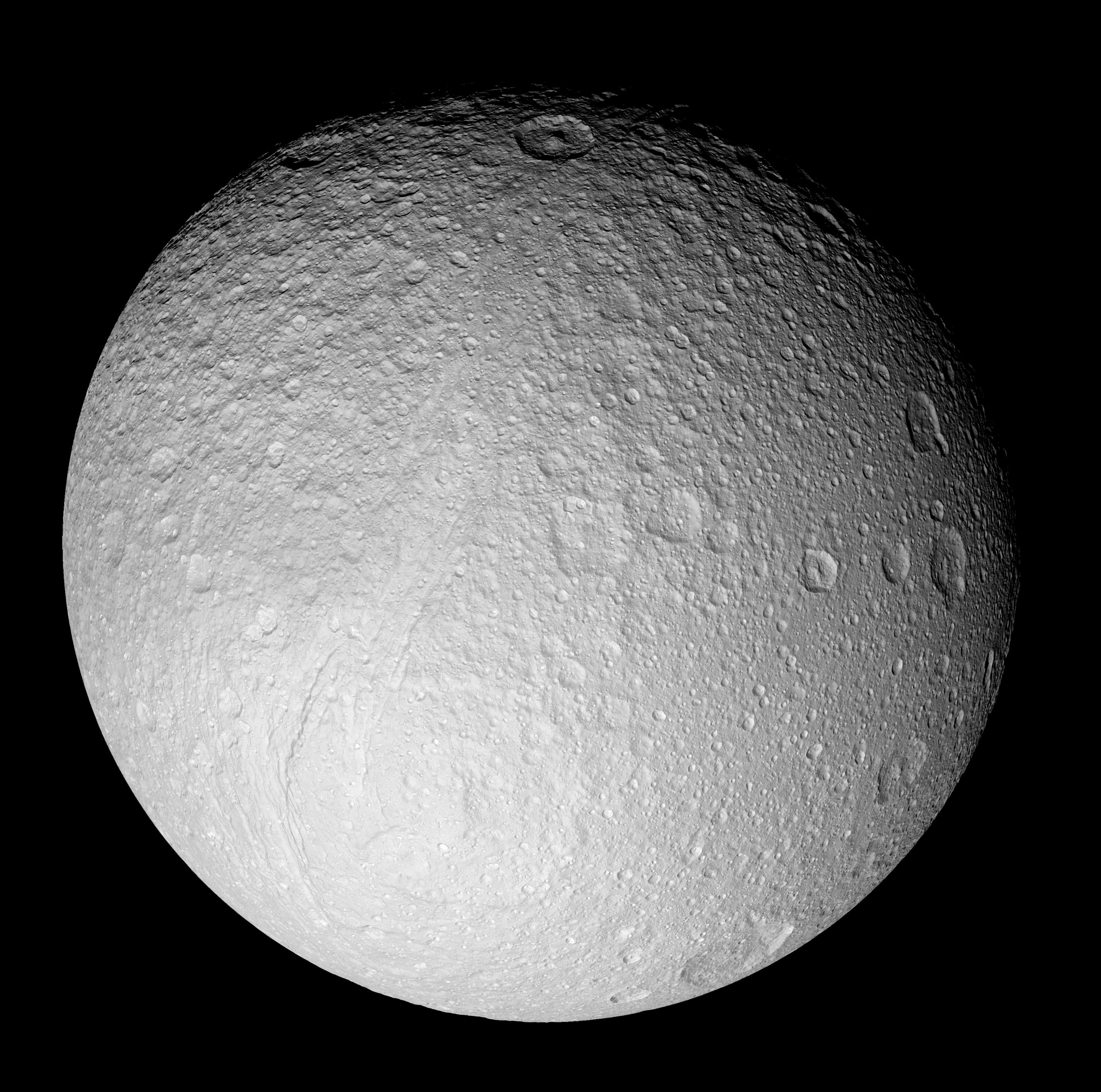
土星の衛星テティスの特異な表面はどのようなプロセスによって形成されたのでしょうか。その解明のため、NASAは2005年に探査機カッシーニをこの謎めいた氷の衛星のすぐそばに送り込みました。上の画像は、これまでに撮影されたテティスの表面全体の高解像度画像の1つです。テティスの広範囲にわたる白い色は、土星の拡散したE環から衛星に絶えず降り注ぐ新鮮な氷の粒子によって作られていると考えられています。これらの粒子は、土星の衛星エンケラドゥスによって放出されたものです。しかし、テティスの特異なクレーターパターンのいくつかは、まだ十分に理解されていません。テティスの南極の上の画像を詳しく調べると、中央から斜めに下に向かって走る大きな裂け目、イタカ峡谷が見えます。この巨大な峡谷の形成に関する有力な理論は、テティスの内部の海が凍結したときに衛星全体に広がる巨大な表面の亀裂に基づいています。もしそうなら、テティスにはかつて内部海が存在していた可能性があり、それは現在エンケラドゥスの地表下に存在すると一部の人が仮説を立てている地下海に似ているかもしれない。古代の生命がそこに凍りついているのだろうか? 新しいミラー:APODがブラジルからポルトガル語で(再び)利用可能になりました
原文(English)
What processes formed the unusual surface of Saturn's moon Tethys? To help find out, NASA sent the robotic Cassini spacecraft right past the enigmatic ice moon in 2005. Pictured above is one of the highest resolution images of an entire face of Tethys yet created. The pervasive white color of Tethys is thought to be created by fresh ice particles continually falling onto the moon from Saturn's diffuse E-ring -- particles expelled by Saturn's moon Enceladus. Some of the unusual cratering patterns on Tethys remain less well understood, however. Close inspection of the above image of Tethys' south pole will reveal a great rift running diagonally down from the middle: Ithaca Chasma. A leading theory for the creation of this great canyon is anchored in the tremendous moon-wide surface cracking that likely occurred when Tethys' internal oceans froze. If so, Tethys may once have harbored internal oceans, possibly similar to the underground oceans some hypothesize to exist under the surface of Enceladus today. Might ancient life be frozen down there? New Mirror: APOD now available (again) in Portuguese from Brazil
\ この感動を宇宙仲間にシェア /
宇宙をXでシェア
© NASA / APOD