百武彗星が地球に接近
Comet Hyakutake Passes the Earth
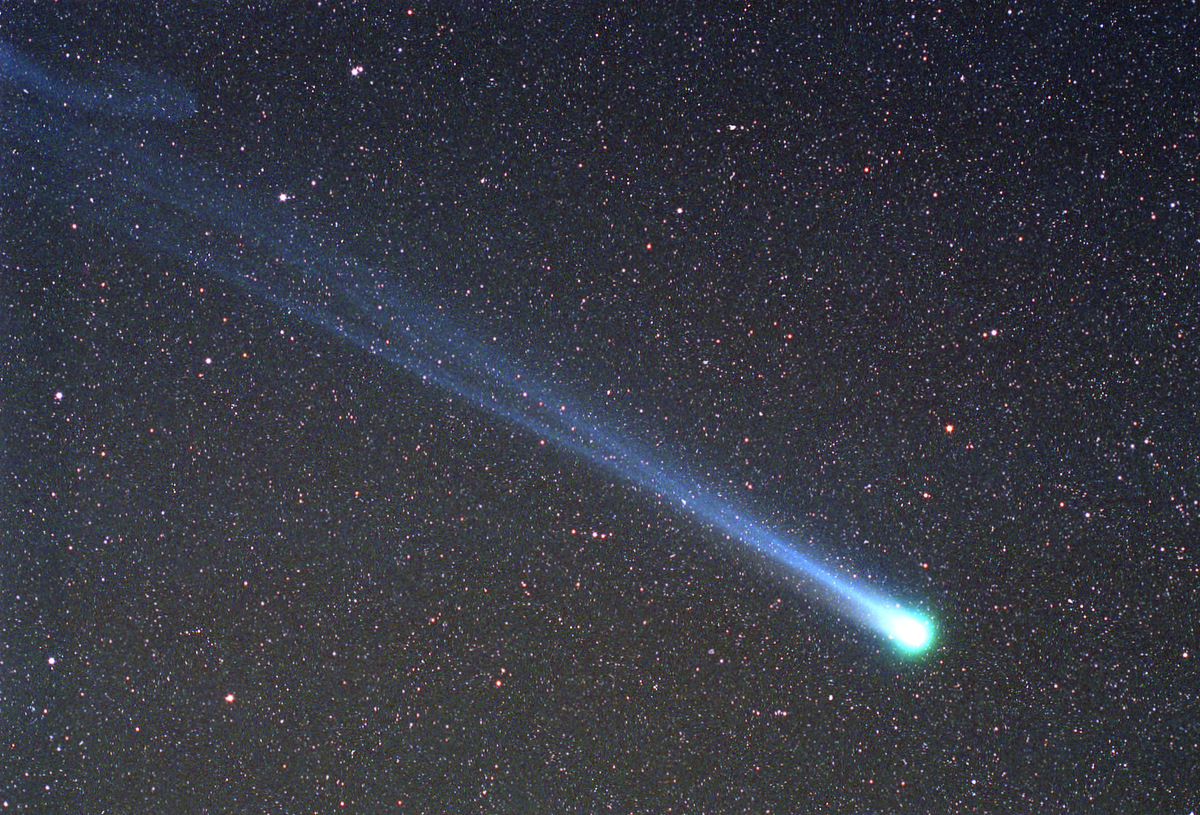
1996年、予想外に明るい彗星が地球に接近しました。発見から2か月足らずで、百武彗星(C/1996 B2)は3月下旬に地球から太陽までの距離のわずか10分の1の距離まで接近しました。当時、百武彗星は「1996年の大彗星」と呼ばれ、過去20年間で地球の空を彩った最も明るい彗星となりました。百武彗星は、1万7000年前にテントや洞窟に住んでいた最初の人類の一人であった可能性のある石器時代のマドレーヌ文化の人々によって、前回の接近時に目撃された可能性があります。上の写真は、1996年3月26日に最も接近した時の百武彗星の様子で、北斗七星と小熊座を含む遠くの星野の手前で、百武彗星の長いイオンと塵の尾が左方向に流れているのが見えます。一番左の青いイオンの尾は、最近磁気的な断絶現象を起こしたようです。右端には、彗星の緑がかったコマが、直径約5キロメートルと推定される溶けかけた汚れた氷の密度の高い核を覆い隠している。数か月後、百武彗星は太陽系外縁部への長い旅を始めた。巨大な惑星の重力によって軌道が逸れるため、百武彗星が戻ってくるのは約10万年後と予想されている。新ミラー:ルーマニアからルーマニア語版APODが利用可能になりました
原文(English)
In 1996, an unexpectedly bright comet passed by planet Earth. Discovered less than two months before, Comet C/1996 B2 Hyakutake came within only 1/10th of the Earth-Sun distance from the Earth in late March. At that time, Comet Hyakutake, dubbed the Great Comet of 1996, became the brightest comet to grace the skies of Earth in 20 years. During its previous visit, Comet Hyakutake may well have been seen by the stone age Magdalenian culture, who 17,000 years ago were possibly among the first humans to live in tents as well as caves. Pictured above near closest approach as it appeared on 1996 March 26, the long ion and dust tails of Comet Hyakutake are visible flowing off to the left in front of a distant star field that includes both the Big and Little Dippers. On the far left, the blue ion tail appears to have recently undergone a magnetic disconnection event. On the far right, the comet's green-tinted coma obscures a dense nucleus of melting dirty ice estimated to be about 5 kilometers across. A few months later, Comet Hyakutake began its long trek back to the outer Solar System. Because of being gravitationally deflected by massive planets, Comet Hyakutake is not expected back for about 100,000 years. New Mirror: APOD now available in Romanian from Romania
\ この感動を宇宙仲間にシェア /
宇宙をXでシェア
© Doug Zubenel / APOD