ハッブル宇宙望遠鏡が捉えた珍しい渦巻銀河M66
Unusual Spiral Galaxy M66 from Hubble
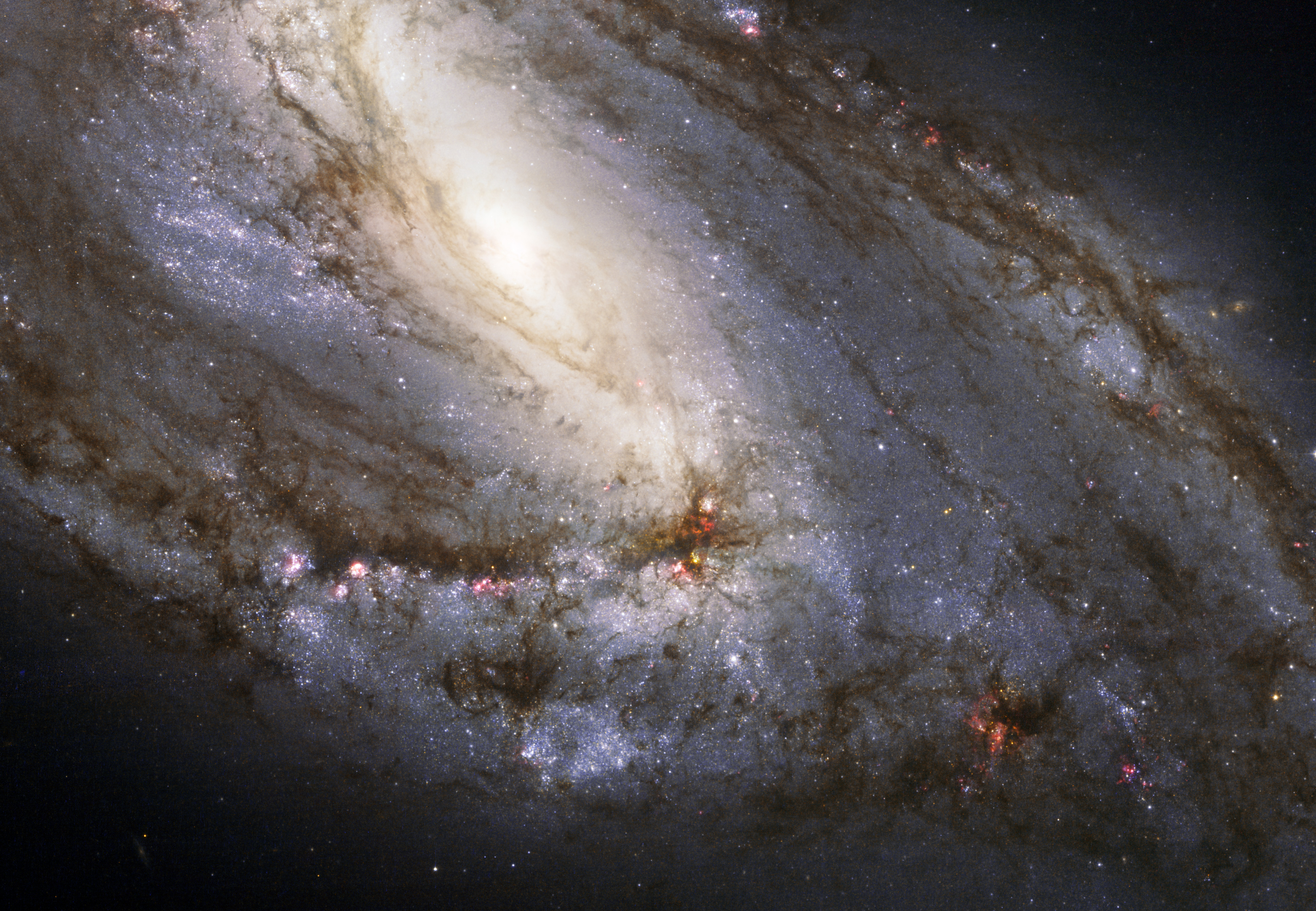
渦巻銀河M66はなぜ対称ではないのでしょうか? 通常、ガス、塵、新しく形成された星の密度波が渦巻銀河の中心を囲み、ほぼ対称な銀河を形成します。M66の渦状腕の差異と核の見かけ上のずれは、おそらく過去の近接相互作用と、近くの銀河M65とNGC 3628の潮汐重力によって引き起こされたものです。上の写真の渦巻銀河M66は、約10万光年にわたって広がり、約3500万光年離れており、しし座トリプレットとして知られるグループの中で最大の銀河です。多くの渦巻銀河と同様に、M66の長く複雑なダストレーンは、渦状腕を照らす明るい星や星雲と絡み合っているのが見られます。
原文(English)
Why isn't spiral galaxy M66 symmetric? Usually density waves of gas, dust, and newly formed stars circle a spiral galaxy's center and create a nearly symmetric galaxy. The differences between M66's spiral arms and the apparent displacement of its nucleus are all likely caused by previous close interactions and the tidal gravitational pulls of nearby galaxy neighbors M65 and NGC 3628. Spiral galaxy M66, pictured above, spans about 100,000 light years, lies about 35 million light years distant, and is the largest galaxy in a group known as the Leo Triplet. Like many spiral galaxies, the long and intricate dust lanes of M66 are seen intertwined with the bright stars and nebulas that light up the spiral arms.
\ この感動を宇宙仲間にシェア /
宇宙をXでシェア
© NASA / APOD