クレーター湖上空の流星
Meteor Over Crater Lake
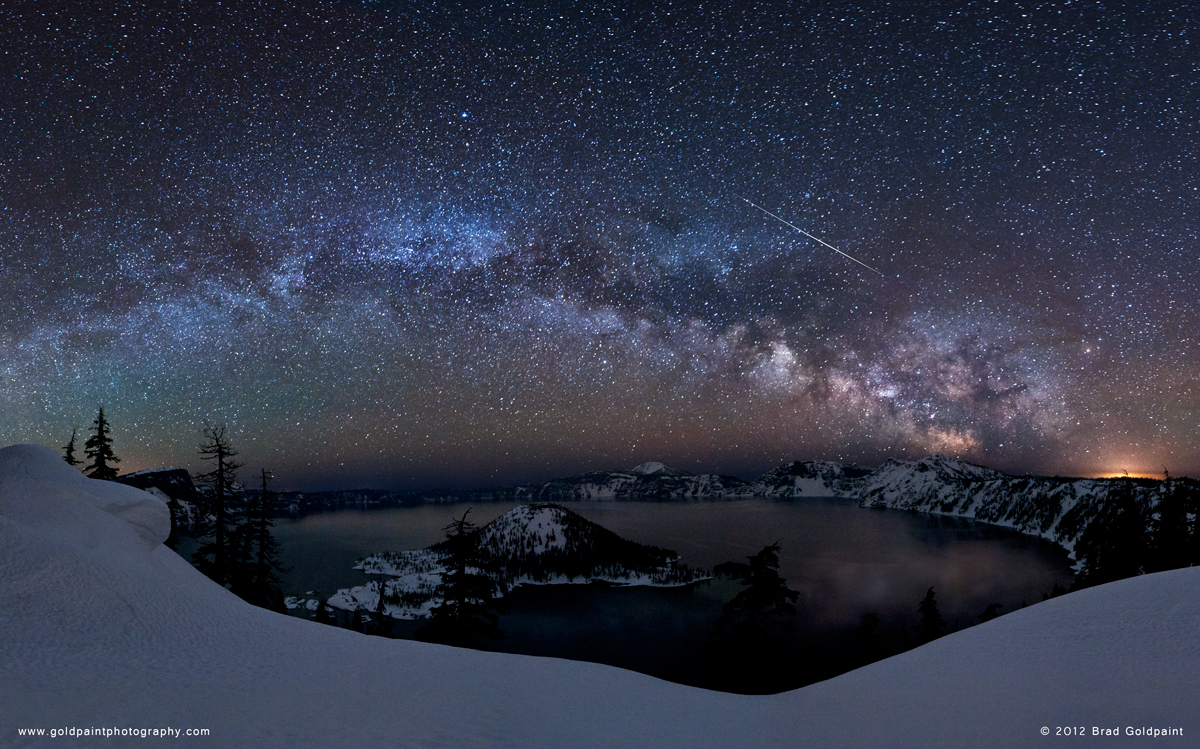
見ましたか? 流星群のときによくある質問の 1 つは、流星が閃光を放つまでの時間が、頭を回す時間よりも短いことが多いからです。しかし、明るい流星が横切るのを見て、それらがかつて別の世界の小さな小石だったことを知ることは、たとえ観察パートナーがすべての特別な体験を共有できなかったとしても、すべてを価値あるものにするかもしれません。ここ数日ピークを迎えたこと座流星群は、月のない暗い空のおかげで、場所によっては 1 時間あたり 30 個もの流星が見えるようになりました。先週撮影された 9 枚の写真を合成した上の画像では、明るいこと座流星が、アメリカ合衆国オレゴン州の美しいクレーター湖の上空を流れています。前景は雪で覆われ、静かな湖の後ろには、私たちの故郷の銀河の雄大な中心帯が弧を描いています。今年の他の流星群としては、8月中旬のペルセウス座流星群と11月中旬のしし座流星群があり、どちらも2012年の明るい月の眩しさを避けることが期待されている。
原文(English)
Did you see it? One of the more common questions during a meteor shower occurs because the time it takes for a meteor to flash is typically less than the time it takes for a head to turn. Possibly, though, the glory of seeing bright meteors shoot across and knowing that they were once small pebbles on another world might make it all worthwhile, even if your observing partner(s) could not share in every particular experience. Peaking over the past few days, a dark moonless sky allowed the Lyrids meteor shower to exhibit as many as 30 visible meteors per hour from some locations. A bright Lyrid meteor streaks above picturesque Crater Lake in Oregon, USA, in the above composite of nine exposures taken last week. Snow covers the foreground, while the majestic central band of our home galaxy arches well behind the serene lake. Other meteor showers this year include the Perseids in mid-August and the Leonids in mid-November, both expected to also dodge the glare of a bright Moon in 2012.
\ この感動を宇宙仲間にシェア /
宇宙をXでシェア
© Brad Goldpaint
(Goldpaint Photography) / APOD