フェルミ周転円:ベラパルサーの軌跡
Fermi Epicycles: The Vela Pulsar's Path
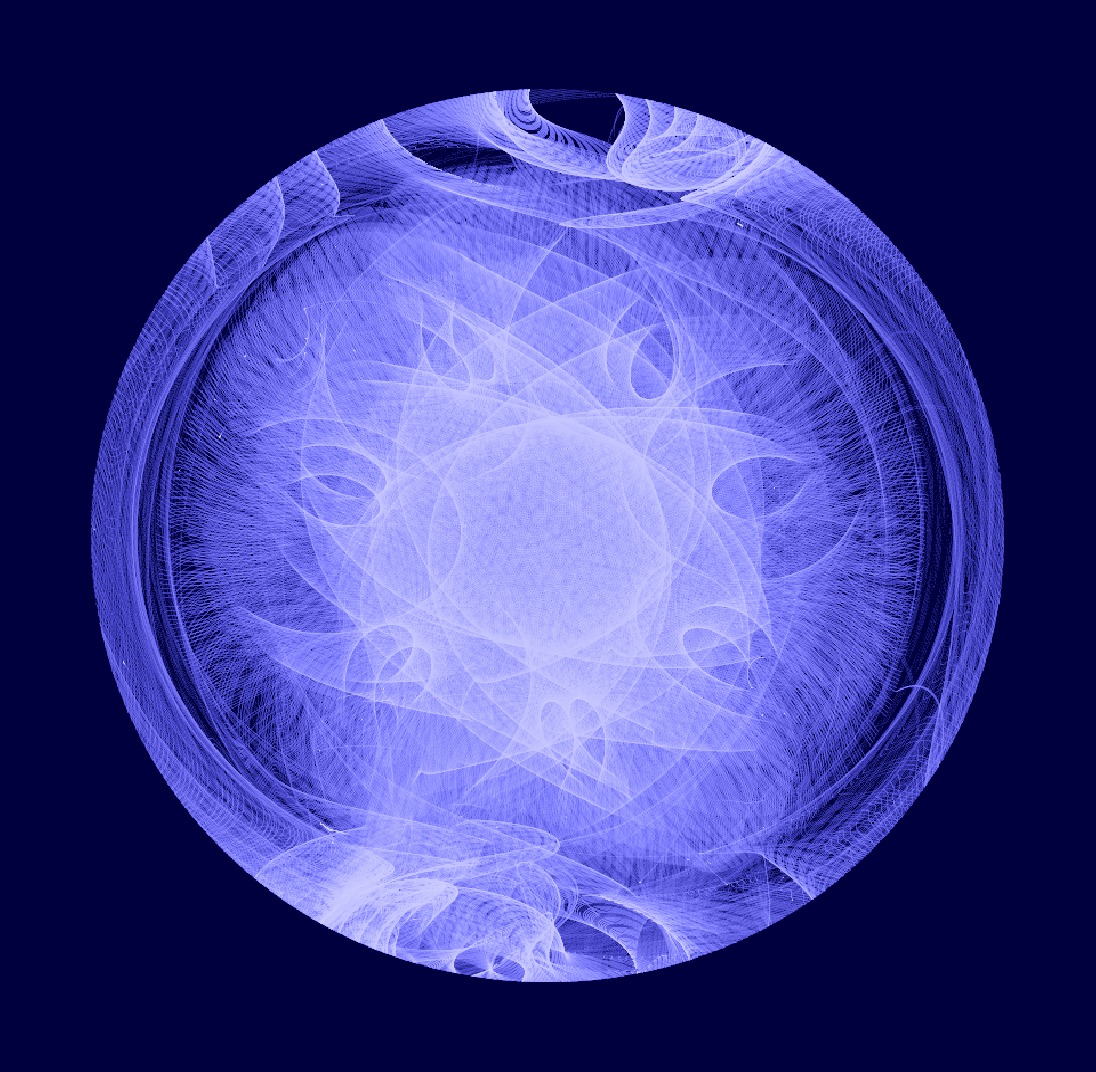
宇宙を極めて高エネルギーで観測するため、フェルミガンマ線宇宙望遠鏡は95分ごとに地球を周回しています。設計上、この望遠鏡は大面積望遠鏡(LAT)で空を観測するために、交互に北と南に揺れます。また、太陽電池パネルが常に太陽に向いて発電できるように機体を回転させ、軌道軸はコマのように歳差運動をし、54日ごとに1回転します。これらの複数の周期の結果、ガンマ線源の軌跡は、この魅惑的なベラパルサーの軌跡のように、望遠鏡の視点から複雑なパターンを描きます。LAT機器の視野を中心とするこの図は180度に及び、2008年8月から2010年8月までのベラの位置を追跡しています。中心付近の集中は、ベラがその期間の大部分でLATの感度領域にあったことを示しています。天の川銀河内の巨大な恒星の死の爆発によって誕生したベラパルサーは、1秒間に11回転する中性子星であり、ガンマ線空で最も明るく持続的に輝く天体として観測されている。
原文(English)
ring the cosmos at extreme energies, the Fermi Gamma-ray Space Telescope orbits planet Earth every 95 minutes. By design, it rocks to the north and then to the south on alternate orbits in order to survey the sky with its Large Area Telescope (LAT). The spacecraft also rolls so that solar panels are kept pointed at the Sun for power, and the axis of its orbit precesses like a top, making a complete rotation once every 54 days. As a result of these multiple cycles the paths of gamma-ray sources trace out complex patterns from the spacecraft's perspective, like this mesmerising plot of the path of the Vela Pulsar. Centered on the LAT instrument's field of view, the plot spans 180 degrees and follows Vela's position from August 2008 through August 2010. The concentration near the center shows that Vela was in the sensitive region of the LAT field during much of that period. Born in the death explosion of a massive star within our Milky Way galaxy, the Vela Pulsar is a neutron star spinning 11 times a second, seen as the brightest persistent source in the gamma-ray sky.
\ この感動を宇宙仲間にシェア /
宇宙をXでシェア
© NASA / APOD