満月の出
Full Moonrise
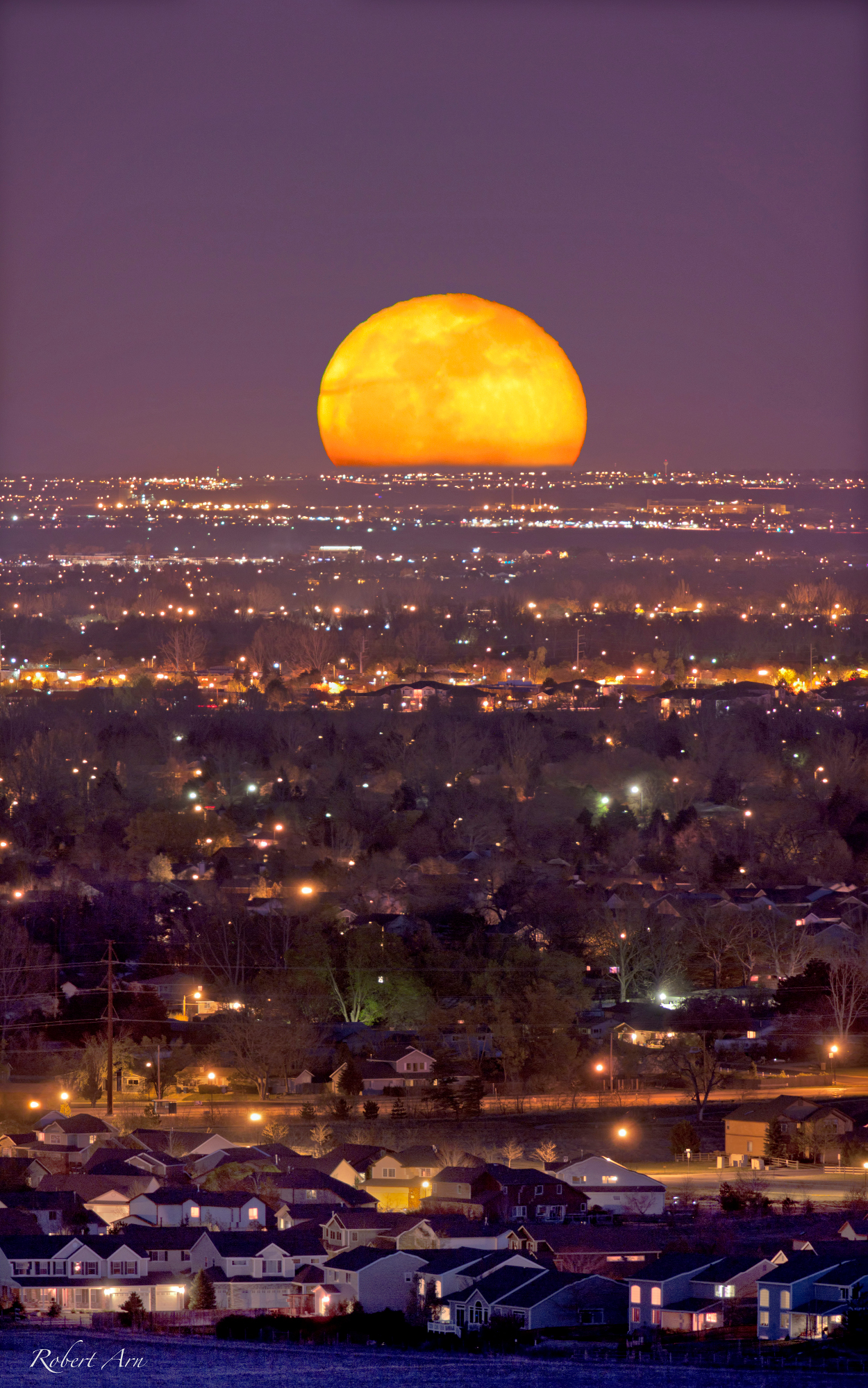
今夜の満月は、日没とともに昇り、見逃すことはまずないでしょう。驚くべきことに、満月(5月6日午前3時36分 UT)は、月の軌道上で地球に最も近い地点である近地点に達してから2分も経たないうちに起こり、2012年で最も大きな満月となります。近地点満月は、楕円軌道上で最も遠い地点である遠地点付近の満月よりも約14%大きく、30%明るく見えるでしょう。しかし、比較すると、4月の満月(コロラド州フォートコリンズ郊外で撮影されたこの望遠写真に写っている)と比べると、大きさは1%未満で、明るさはほぼ同じです。4月の満月では、満月と近地点の間隔は約21時間でした。もちろん、5月の近地点満月を見逃してしまった場合は、カレンダーにメモしておきましょう。近地点に近い満月を次に見られるのは、来年の6月23日です。
原文(English)
Rising as the Sun sets, tonight's Full Moon could be hard to miss. Remarkably, its exact full phase (May 6 03:36 UT) will occur less than two minutes after it reaches perigee, the closest point to Earth in the Moon's orbit, making it the largest Full Moon of 2012. The Full Perigee Moon will appear to be some 14 percent larger and 30 percent brighter than a Full Moon near apogee, the most distant point in the elliptical lunar orbit. In comparison, though, it will appear less than 1 percent larger and almost as bright as April's Full Moon, captured in this telephoto image rising over suburban Fort Collins, Colorado, USA. For that lunation, Full Moon and perigee were about 21 hours apart. Of course, if you manage to miss May's Full Perigee Moon, make a note on your calendar. Your next chance to see a Full Moon close to perigee, will be next year on June 23.
\ この感動を宇宙仲間にシェア /
宇宙をXでシェア
© Robert Arn / APOD