タランチュラ星雲における星形成
Star Formation in the Tarantula Nebula
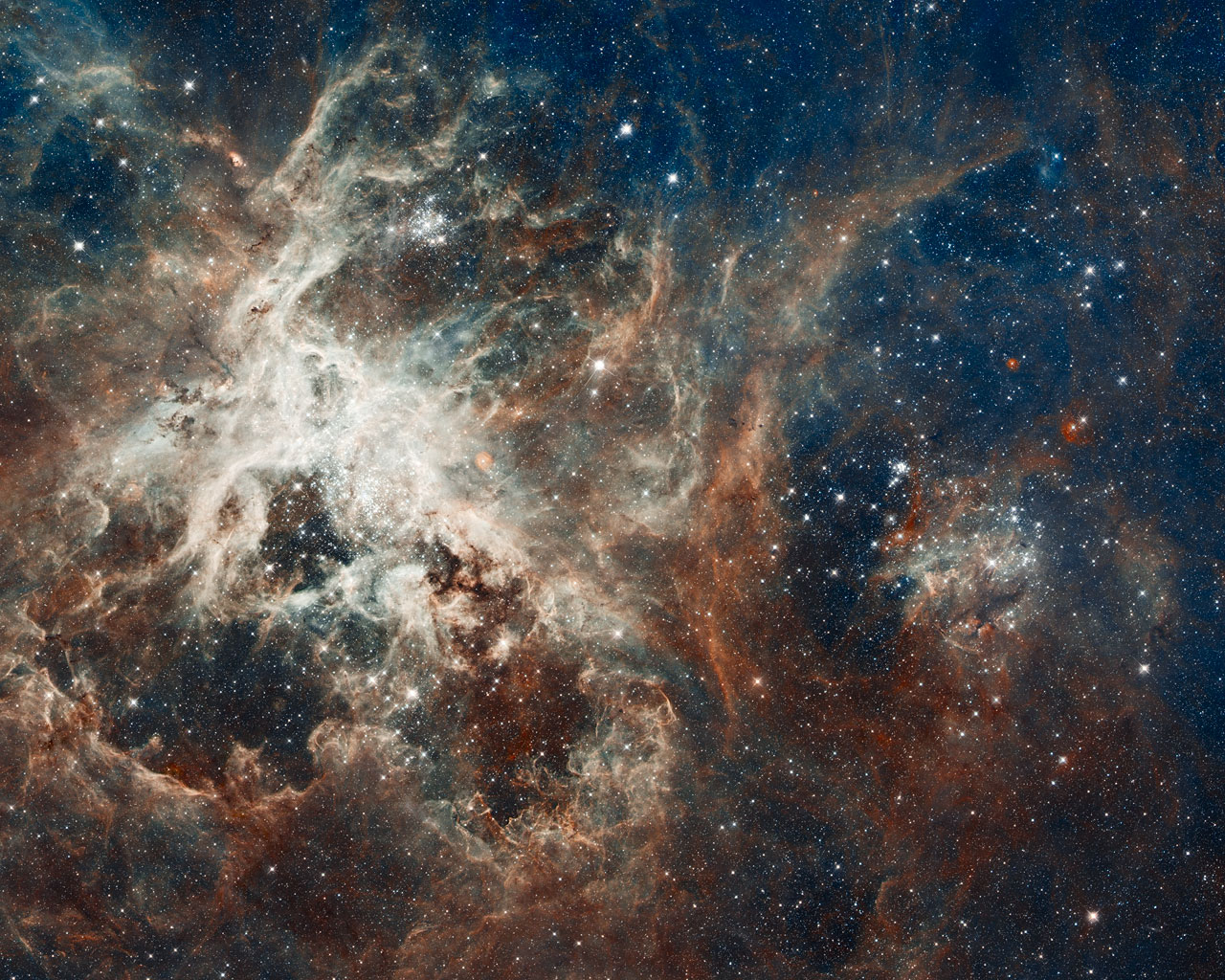
局所銀河群全体で知られている中で最大かつ最も活発な星形成領域は、私たちの隣の銀河である大マゼラン雲(LMC)にあります。タランチュラ星雲が、局所的な星形成領域であるオリオン星雲と同じ距離にあったとしたら、空の半分を占めるでしょう。30ドラドゥスとも呼ばれる赤とピンクのガスは、巨大な輝線星雲を示していますが、超新星残骸や暗黒星雲も存在します。中央左側の明るい星の塊はR136と呼ばれ、既知の中で最も質量が大きく、最も高温で、最も明るい星の多くを含んでいます。上の画像は、ハッブル宇宙望遠鏡の観測によって作成された史上最大のモザイク画像の1つであり、この謎めいた星形成領域のこれまでにない詳細を明らかにしました。この画像は、ハッブルの打ち上げ22周年を記念して公開されています。今週の天文学セミナー:大論争、パート1
原文(English)
The largest, most violent star forming region known in the whole Local Group of galaxies lies in our neighboring galaxy the Large Magellanic Cloud (LMC). Were the Tarantula Nebula at the distance of the Orion Nebula -- a local star forming region -- it would take up fully half the sky. Also called 30 Doradus, the red and pink gas indicates a massive emission nebula, although supernova remnants and dark nebula also exist there. The bright knot of stars left of center is called R136 and contains many of the most massive, hottest, and brightest stars known. The above image is one of the largest mosaics ever created by observations of the Hubble Space Telescope and has revealed unprecedented details of this enigmatic star forming region. The image is being released to celebrate the 22nd anniversary of Hubble's launch. Astronomy Seminar of the Week: The Great Debate, Part I
\ この感動を宇宙仲間にシェア /
宇宙をXでシェア
© NASA / APOD