南極星の軌跡
South Pole Star Trails
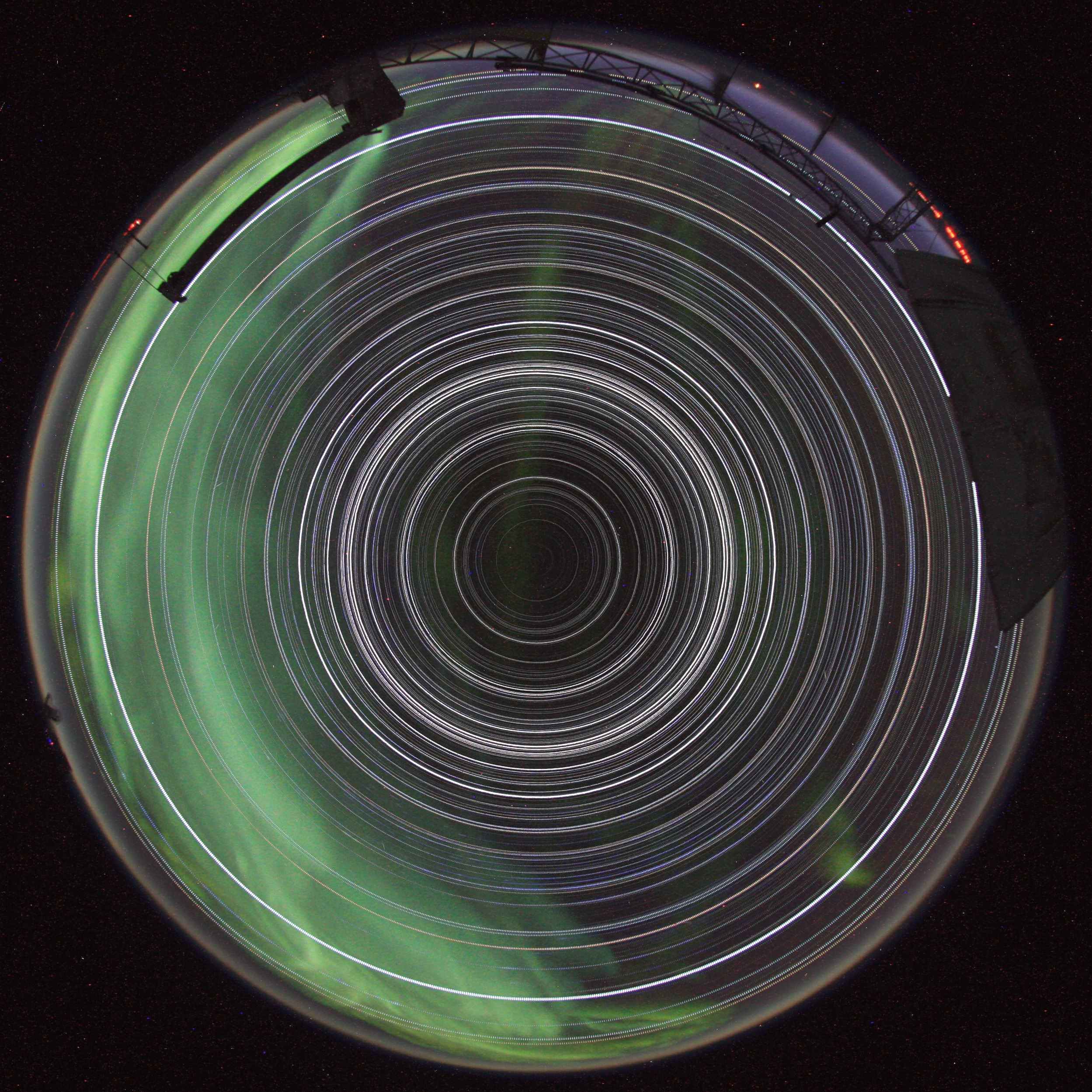
この24時間にわたる星の軌跡の驚くべき画像では、どの星も地平線の下に沈まず、太陽も地平線の上に昇ることはありません。すべての軌跡が完全な円として示されているこのような画像は、地球上の2つの場所からしか撮影できません。この例は、2012年5月1日に、南極にあるマーティン・A・ポメランツ天文台(MAPO)の屋上にある加熱ボックス内のデジタルカメラで撮影されました。真上にあるかすかな八分儀座には、地球の自転軸の投影である南天の極があり、すべての星の軌跡の円の中心に位置しています。北極星や北天の極ほど良い位置にはありませんが、南天の極の周りの小さくても比較的明るい円から外れている星はベータ・ヒュドリです。全天視野の右側の地平線にある逆さ傘状の構造物は、SPUD望遠鏡の地上遮蔽板です。この24時間の夜には、南極オーロラのきらめく姿も見られました。
原文(English)
No star dips below the horizon and the Sun never climbs above it in this remarkable image of 24 hour long star trails. Showing all the trails as complete circles, such an image could be achieved only from two places on planet Earth. This example was recorded during the course of May 1, 2012, the digital camera in a heated box on the roof of MAPO, the Martin A. Pomerantz Observatory at the South Pole. Directly overhead in the faint constellation Octans is the projection of Earth's rotational axis, the South Celestial Pole, at the center of all the star trail circles. Not so well placed as Polaris and the North Celestial Pole, the star leaving the small but still relatively bright circle around the South Celestial Pole is Beta Hydri. The inverted umbrella structure on the horizon at the right of the allsky field of view is the ground shield for the SPUD telescope. A shimmering apparition of the aurora australis also visited on this 24 hour night.
\ この感動を宇宙仲間にシェア /
宇宙をXでシェア
© Robert Schwarz / APOD