渦巻銀河NGC 4038の衝突
Spiral Galaxy NGC 4038 in Collision
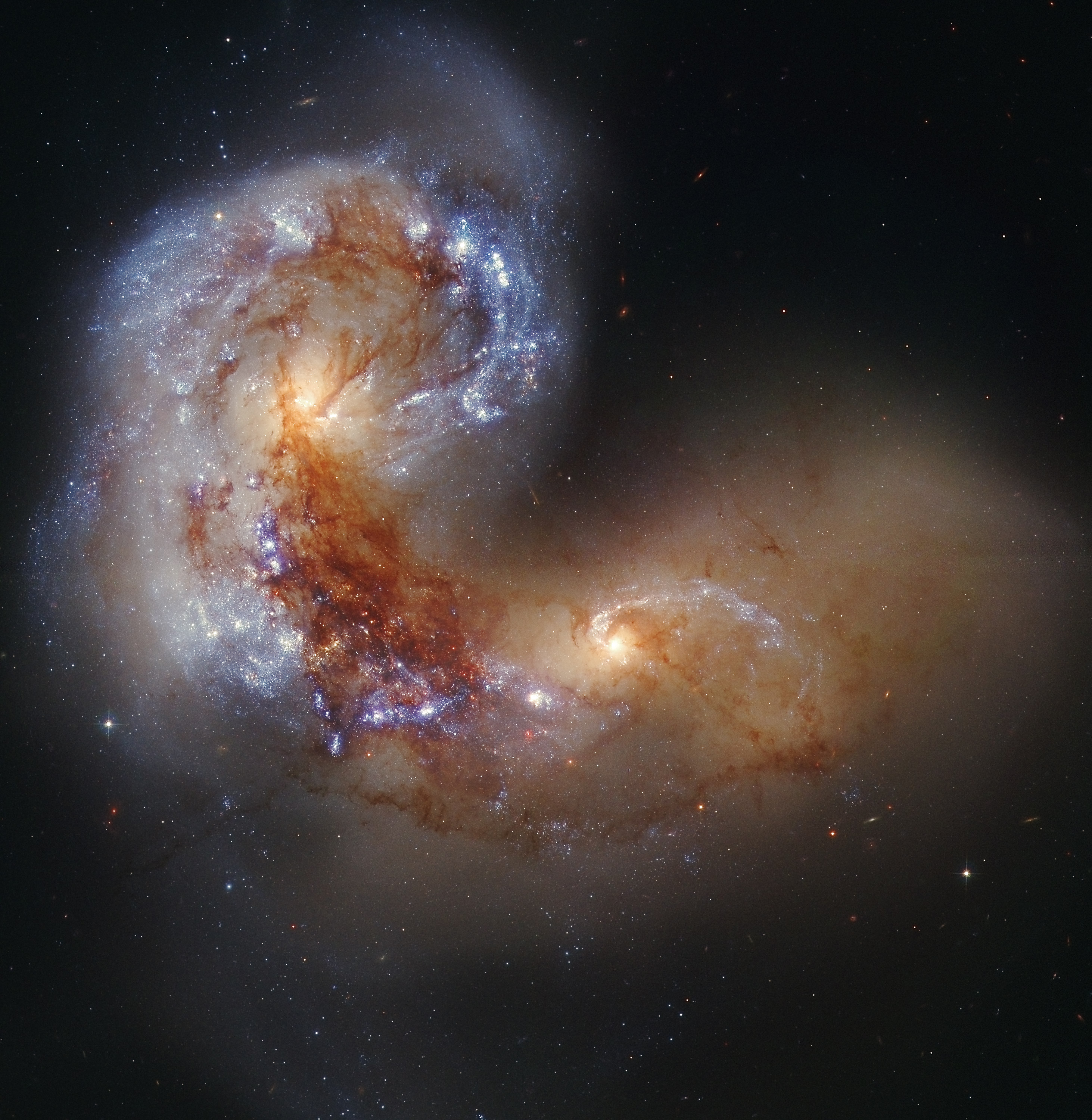
この銀河は、ここ1000年ほど不運に見舞われています。実際、過去1億年はあまり良い年ではなく、おそらく次の10億年ほどもかなり激動の時代になるでしょう。左上に見えるNGC 4038は、かつては普通の渦巻銀河で、何事もなく静かに過ごしていましたが、右隣のNGC 4039が衝突しました。アンテナと呼ばれる、進化し続ける残骸が上に描かれています。重力によってそれぞれの銀河が再構築されるにつれて、ガスの雲が互いに衝突し、明るい青色の星の塊が形成され、巨大な星が形成されて爆発し、茶色の塵の糸が飛び散ります。最終的に、2つの銀河は1つのより大きな渦巻銀河に収束します。このような衝突は珍しいことではなく、私たちの天の川銀河でさえ過去に何度か衝突を経験しており、数十億年後には隣のアンドロメダ銀河と衝突すると予測されています。この画像を構成するフレームは、銀河の衝突をより深く理解するために、軌道上のハッブル宇宙望遠鏡によってプロの天文学者によって撮影されました。これらのフレーム、そしてハッブルが撮影した他の多くの深宇宙画像はその後公開され、興味のあるアマチュアがダウンロードして、この視覚的に素晴らしい合成画像を作成することができるようになりました。ギャラリー:ペルセウス座流星群 2012
原文(English)
This galaxy is having a bad millennium. In fact, the past 100 million years haven't been so good, and probably the next billion or so will be quite tumultuous. Visible on the upper left, NGC 4038 used to be a normal spiral galaxy, minding its own business, until NGC 4039, toward its right, crashed into it. The evolving wreckage, known famously as the Antennae, is pictured above. As gravity restructures each galaxy, clouds of gas slam into each other, bright blue knots of stars form, massive stars form and explode, and brown filaments of dust are strewn about. Eventually the two galaxies will converge into one larger spiral galaxy. Such collisions are not unusual, and even our own Milky Way Galaxy has undergone several in the past and is predicted to collide with our neighboring Andromeda Galaxy in a few billion years. The frames that compose this image were taken by the orbiting Hubble Space Telescope by professional astronomers to better understand galaxy collisions. These frames -- and many other deep space images from Hubble -- have since been made public, allowing an interested amateur to download and process them into this visually stunning composite. Growing Gallery: Perseid Meteor Shower 2012
\ この感動を宇宙仲間にシェア /
宇宙をXでシェア
© NASA / APOD