オーストリアのアナレンマ
Austrian Analemma
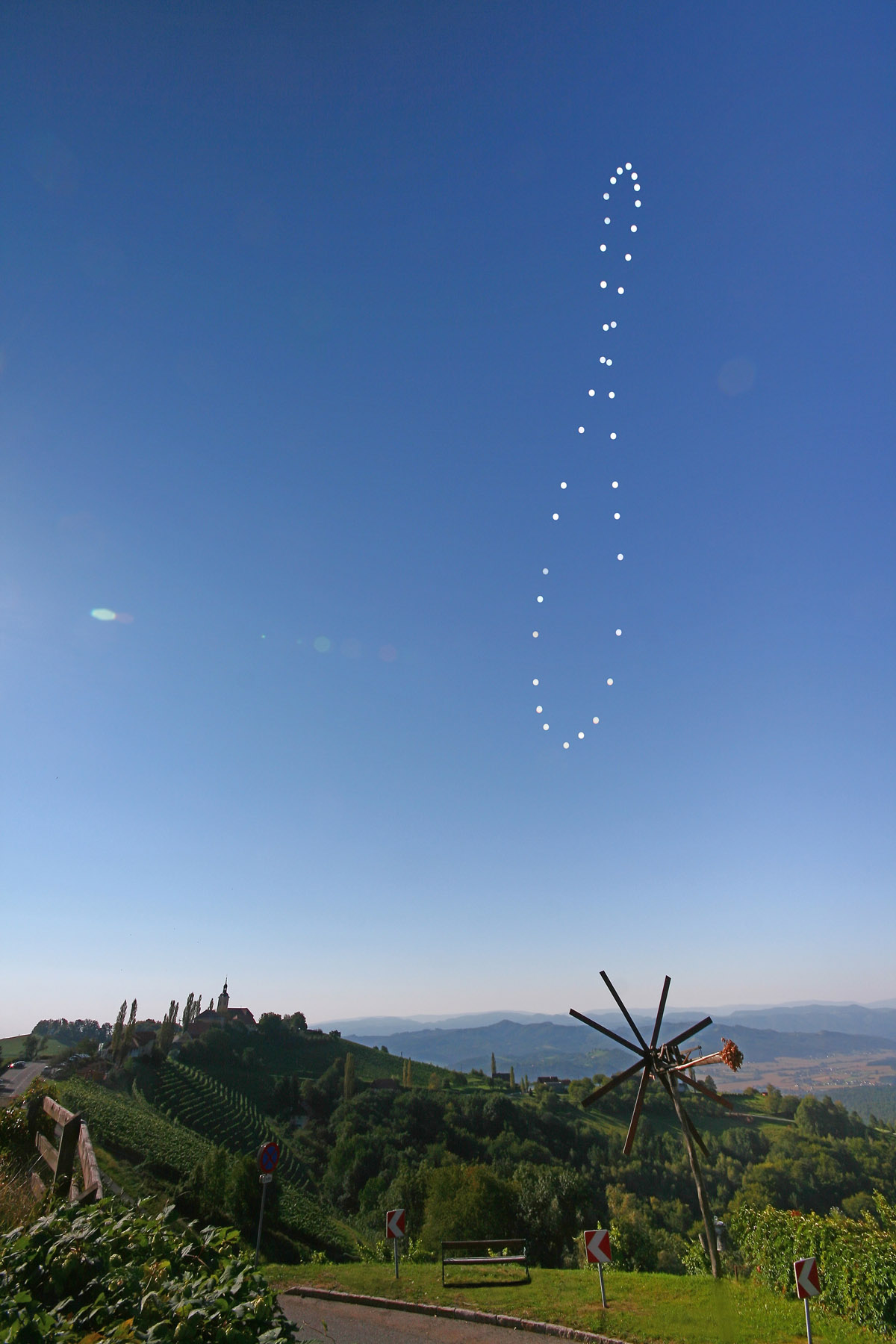
本日、世界時14時49分に太陽が南に向かって天の赤道を横切ります。春分(昼夜が等しい日)となるこの天文現象は、北半球では秋の始まり、南半球では春の始まりを告げるものです。太陽が天の赤道上にあるため、地球上の人々はほぼ12時間の昼と12時間の夜を経験します。これを記念して、オーストリア南部の空を毎年通過する太陽の旅を丁寧に記録したこの画像をご覧ください。この画像は、2011年9月29日から2012年9月9日までの毎日同じ時間に撮影された画像で構成されており、太陽の位置を捉えています。複数の太陽が交差する曲線を描き、これはアナレンマとして知られています。実際、過去1年間の2つの春分と秋分の日付は、曲線の交点ではなく中央に相当します。夏至と冬至は、曲線の上部と下部にあります。もちろん、多くの人は、左手に向かう山道を走り、途中のブドウ畑を通り過ぎて近くのキッツェックの町まで行き、ワインで春分の日を祝うのも良い考えだと考えるでしょう。道端のベンチの近くには、このワイン産地で伝統的に鳥よけとして使われている、風車のようなクラポテッツがあります。
原文(English)
Today, the Sun crosses the celestial equator heading south at 14:49 Universal Time. An equinox (equal night), this astronomical event marks the first day of autumn in the northern hemisphere and spring in the south. With the Sun on the celestial equator, Earth dwellers will experience nearly 12 hours of daylight and 12 hours of darkness. To celebrate, consider this careful record of the Sun's yearly journey through southern Austrian skies. The scene is composed of images made at the same time each day, capturing the Sun's position on dates from September 29, 2011 through September 9, 2012. The multiple suns trace an intersecting curve known as an analemma. In fact, the past year's two equinox dates correspond to the middle (not the intersection point) of the curve. The summer and winter solstices are at the top and bottom. Of course, many would also consider it a good idea to travel the mountain road toward the left, passing the vineyards along the way to reach the nearby town of Kitzeck and toast the equinox with a glass of wine. Near the roadside bench is a windmill-like klapotetz, traditionally used in this wine-growing region to keep the birds away.
\ この感動を宇宙仲間にシェア /
宇宙をXでシェア
© Robert Pölzl / APOD