9月のオーロラ
September's Aurora
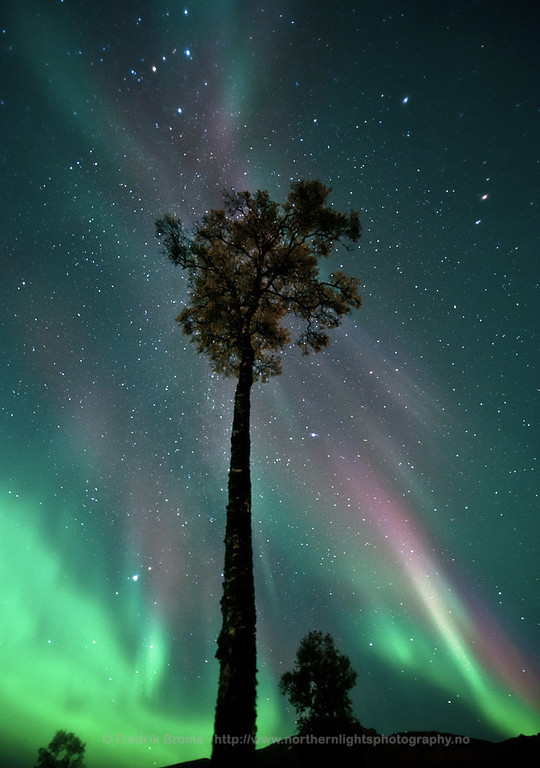
明日、太陽が天の赤道を南に向かって横切ると、9月の秋分が訪れます。この出来事は、南半球では春の始まり、北半球では秋の始まりを告げる天文学的な出来事です。そして、その関連性はまだ謎に包まれていますが、秋分の季節には地磁気嵐が増加します。北半球の夜が長くなるにつれて、秋分はオーロラハンターにとって良い季節の到来を告げるものでもあります。9月20日に記録されたこれらの色鮮やかなオーロラは、ノルウェー北部のトロムソ郊外のノルウェー海沿岸近くで、カメラと広角レンズで撮影されました。高度約100キロメートルで輝くオーロラの光線は平行ですが、遠近法によって、シルエットになった松の木の後ろの消失点から放射されているように見えます。この魅惑的な北の夜には、木のてっぺんの右上に北極星、左に黄色がかった巨星シェダル(カシオペヤ座α星)、右にコカブ(こぐま座β星)などの星が見られます。画面左下では、緑がかったオーロラのカーテンを通して、明るいアルタイルが輝いている。
原文(English)
September's equinox arrives tomorrow as the Sun crosses the celestial equator heading south. The event marks the astronomical beginning of spring in the southern hemisphere and autumn in the north. And though the connection is still puzzling, the equinox seasons bring an increase in geomagnetic storms. So as northern nights grow longer, the equinox also heralds the arrival of a good season for aurora hunters. Recorded on September 20, these colorful northern lights were captured with camera and wide-angle lens near the Norwegian Sea coast outside Tromsø in Northern Norway. Shining at altitudes of 100 kilometers or so, the aurora rays are parallel, but perspective makes them appear to radiate from a vanishing point behind the silhouetted pine tree. Stars in this enchanting northern night include Polaris above and right of the tree top, and yellowish giant stars Shedar (Alpha Cassiopiae) to the left and Kochab (Beta Ursae Minoris) to the right. Bright Altair shines through the greenish auroral curtain at the lower left of the scene.
\ この感動を宇宙仲間にシェア /
宇宙をXでシェア
© Fredrick Broms / APOD