日の出のアナレンマ(ちょっとした追加要素付き)
Sunrise Analemma (with a little extra)
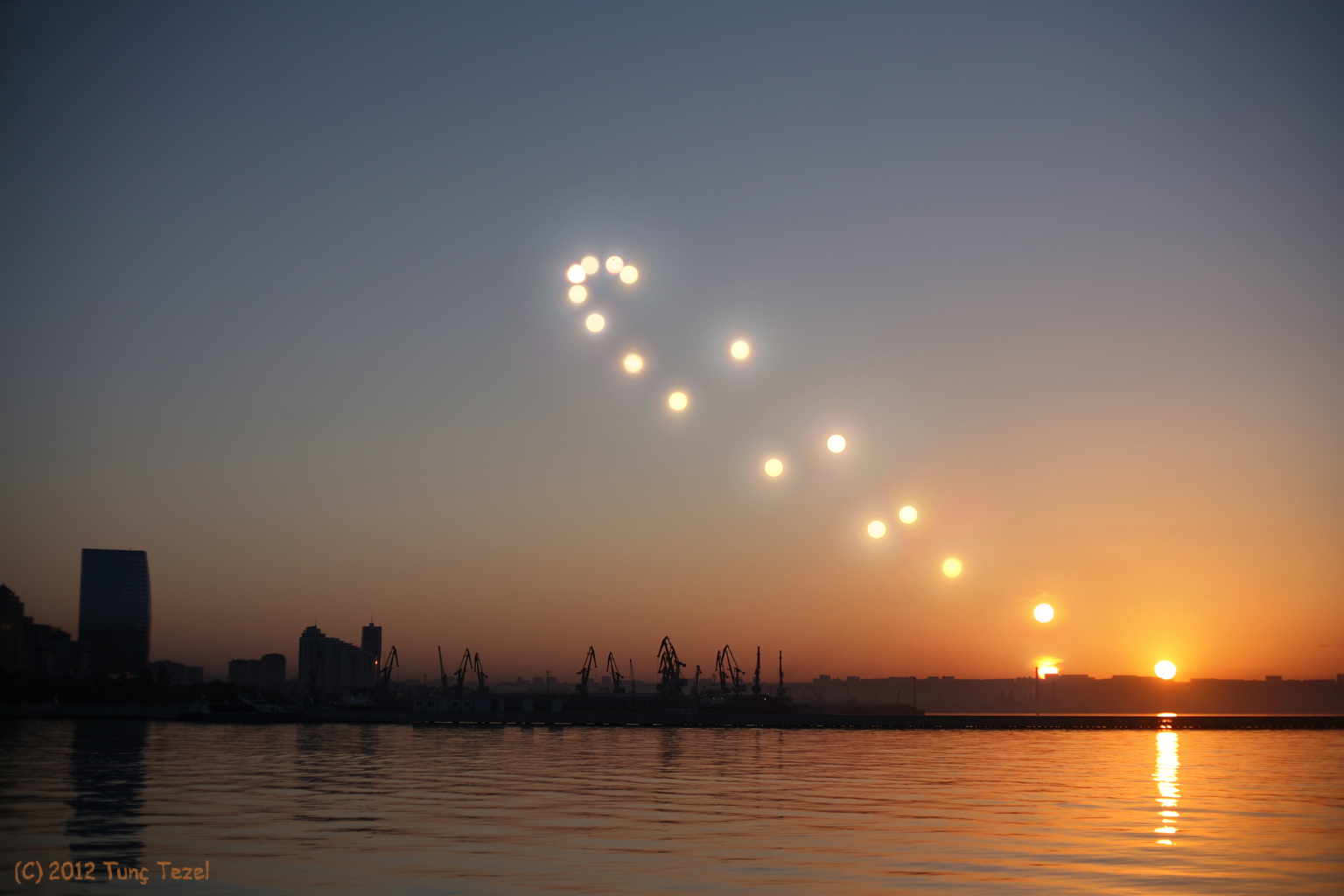
アナレンマとは、地球の1年間を通して毎日同じ時刻に太陽の位置を記録したときに得られる8の字型の曲線のことです。この場合、4月2日から9月16日までの日付で02:31 UTに撮影された17枚の画像を合成したものが、アナレンマ曲線の半分に相当します。このシーンは、アゼルバイジャンの港湾都市バクーの遊歩道から、東の昇る太陽とカスピ海を眺めたものです。太陽が地平線に最も近いこれらの日付は、2012年の春分と秋分である3月20日から9月22日までの期間をほぼ網羅しています。6月20日の北半球の夏至は、左側の8の字の頂点に相当し、このとき太陽は最も北の赤緯に位置していました。もちろん、今年は6月6日に撮影された画像には、ちょっとした特別なものが含まれています。わずかに強調された、フレーム上部近くの明るい太陽円盤上の小さな黒い点は、この綿密に計画された日の出アナレンマプロジェクト中に珍しい太陽面通過を起こした金星です。
原文(English)
An analemma is that figure-8 curve that you get when you mark the position of the Sun at the same time each day throughout planet Earth's year. In this case, a composite of 17 individual images taken at 0231 UT on dates between April 2 and September 16 follows half the analemma curve. The scene looks east toward the rising sun and the Caspian sea from the boardwalk in the port city of Baku, Azerbaijan. With the sun nearest the horizon, those dates almost span the period between the 2012 equinoxes on March 20 and September 22. The northern summer Solstice on June 20 corresponds to the top of the figure 8 at the left, when the Sun stood at its northernmost declination. Of course, this year the exposure made on June 6 contained a little something extra. Slightly enhanced, the little black spot on the bright solar disk near the top of the frame is planet Venus, caught in a rare transit during this well-planned sunrise analemma project.
\ この感動を宇宙仲間にシェア /
宇宙をXでシェア
© Tunç Tezel / APOD