ベスタを離れる
Leaving Vesta
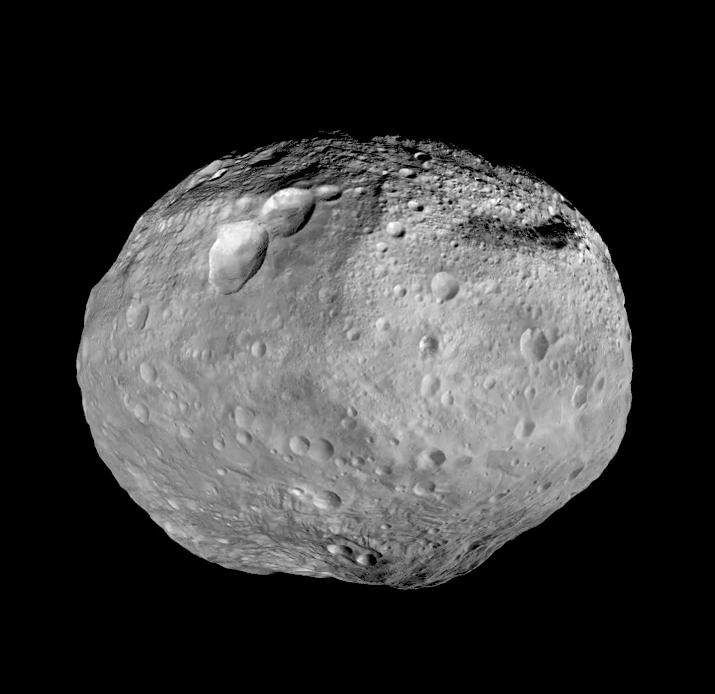
次の目的地はケレス。先週、ロボット探査機ドーンは小惑星ベスタへの1年間のミッションを終え、火星と木星の間、太陽系の小惑星帯にあるこの遠い天体を訪れた最初の探査機となった。ドーンがベスタで撮影した最高の画像の多くは、上記の全体像にまとめられている。ベスタは、太陽系の初期の頃の名残であり、地球のような岩石惑星の構成要素であった証拠を示している。ベスタの古代の表面には、巨大な衝突によって作られたと思われる大きなクレーターと長い溝が見られる。この小惑星の重力が低いため、巨大な崖や、地球のエベレスト山の2倍の高さに達する大きな山など、表面の特徴が見られる(画像下部参照)。しかし、直径約500キロメートルのベスタは、小惑星帯で2番目に質量が大きい天体である。そこで、2週間前、ドーンは穏やかなイオンロケットを噴射し、最も質量が大きいケレスの追跡を開始した。計画通りに進めば、ドーンは2015年にケレスに到達するでしょう。遠くから見るとケレスはかなり違って見えますが、ドーンは何を発見するのでしょうか?APODの評価にご協力ください:あなたの年齢は?
原文(English)
Next stop: Ceres. Last week the robotic Dawn spacecraft ended its year-long mission to asteroid Vesta, becoming the first spacecraft ever to visit this far off world located between Mars and Jupiter, in the Solar System's main asteroid belt. Many of the best images taken by Dawn at Vesta have been compiled into the above encompassing view. Vesta shows evidence of being a leftover from the early years of our Solar System, a building block for rocky planets like Earth. Vesta's ancient surface shows heavy cratering and long troughs likely created by huge impacts. The minor planet's low gravity allows for surface features like huge cliffs and a large mountain that reaches twice the height of Earth's Mount Everest, visible at the image bottom. Vesta, however, spanning about 500 kilometers across, is only the second most massive object in the asteroid belt. And so, two weeks ago, Dawn fired its gentle ion rockets and has begun chasing the most massive: Ceres. If everything goes as planned, Dawn will reach Ceres in 2015. Ceres looks quite different to the distant telescope -- but what will Dawn find? Help evaluate APOD: How old are you?
\ この感動を宇宙仲間にシェア /
宇宙をXでシェア
© NASA / APOD