NGC 7293:らせん星雲
NGC 7293: The Helix Nebula
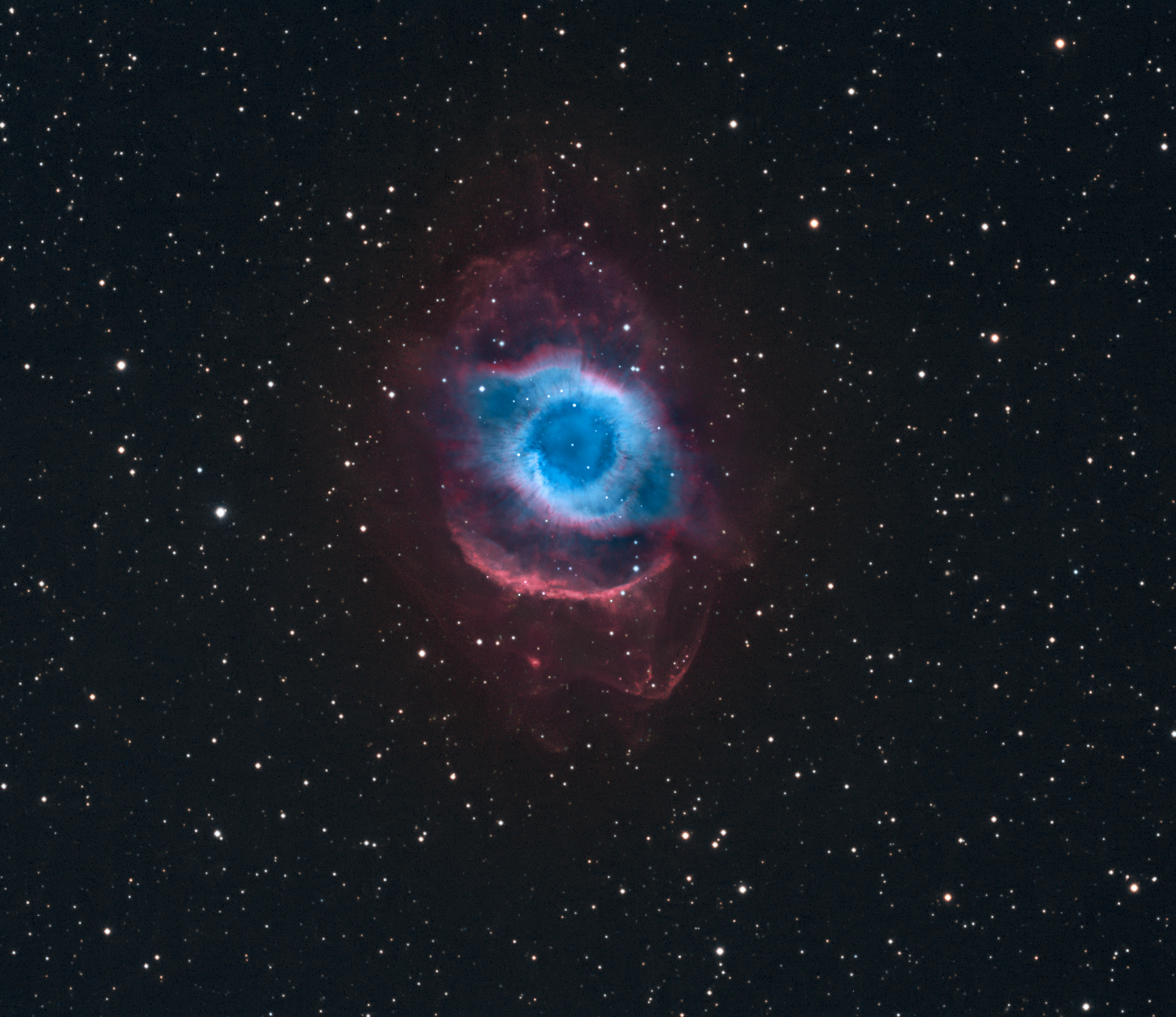
地球からわずか700光年離れたみずがめ座の方向に、太陽のような恒星が死を迎えている。その最後の数千年で形成されたのが、恒星進化の最終段階に典型的な惑星状星雲の、よく研究されている近距離の例であるヘリックス星雲(NGC 7293)である。この星雲の深層像を作成するために、合計58時間の露光時間が費やされた。赤色の水素原子と青緑色の酸素原子の輝線からの狭帯域データを蓄積することで、直径約3光年のヘリックスの明るい内側領域の驚くべき詳細が明らかになるだけでなく、星雲の広がりが6光年以上にも及ぶ、より淡い外側のハローの特徴も捉えている。ヘリックスの中心にある白い点は、この惑星状星雲の高温の中心星である。一見すると単純な星雲に見えるヘリックスだが、現在では驚くほど複雑な幾何学的構造を持っていることが分かっている。
原文(English)
A mere seven hundred light years from Earth, in the constellation Aquarius, a sun-like star is dying. Its last few thousand years have produced the Helix Nebula (NGC 7293), a well studied and nearby example of a Planetary Nebula, typical of this final phase of stellar evolution. A total of 58 hours of exposure time have gone in to creating this deep view of the nebula. Accumulating narrow band data from emission lines of hydrogen atoms in red and oxygen atoms in blue-green hues, it shows remarkable details of the Helix's brighter inner region, about 3 light-years across, but also follows fainter outer halo features that give the nebula a span of well over six light-years. The white dot at the Helix's center is this Planetary Nebula's hot, central star. A simple looking nebula at first glance, the Helix is now understood to have a surprisingly complex geometry.
\ この感動を宇宙仲間にシェア /
宇宙をXでシェア
© Martin Pugh / APOD