二重星団
A Double Star Cluster
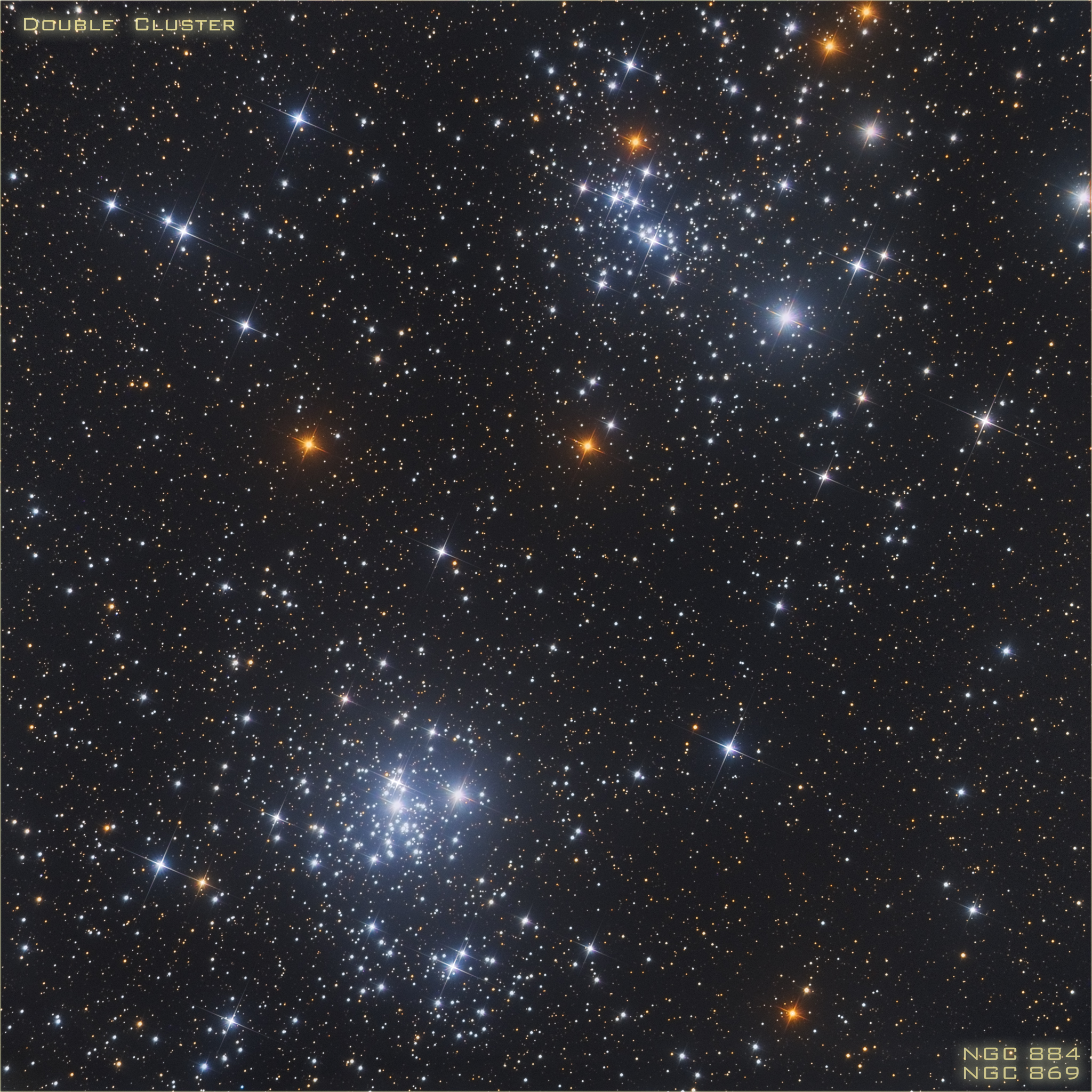
これほど互いに近い位置にある星団はほとんど見られません。しかし、約7,000光年離れたこの2つの散開星団(銀河星団)は、双眼鏡で容易に観測でき、北天のペルセウス座にある美しい星野です。暗い空の場所からは肉眼でも見ることができ、紀元前130年にギリシャの天文学者ヒッパルコスによってカタログ化されました。現在ではhペルセウスとカイペルセウス、またはNGC 869(右上)とNGC 884として知られるこれらの星団は、わずか数百光年しか離れておらず、太陽よりもはるかに若く高温の星を含んでいます。物理的に近いだけでなく、個々の星に基づく星団の年齢も似ており、両方の星団が同じ星形成領域で形成された可能性が高いことを示しています。APOD編集者の講演:RJNは1月3日にフィラデルフィアで、JTBは1月4日にニューヨーク市で講演します。
原文(English)
Few star clusters are seen to be so close to each other. Some 7,000 light-years away, though, this pair of open or galactic star clusters is an easy binocular target, a lovely starfield in the northern constellation Perseus. Also visible to the unaided eye from dark sky areas, it was cataloged in 130 BC by Greek astronomer Hipparchus. Now known as h and chi Persei, or NGC 869 (above right) and NGC 884, the clusters themselves are separated by only a few hundred light-years and contain stars much younger and hotter than the Sun. In addition to being physically close together, the clusters' ages based on their individual stars are similar - evidence that both clusters were likely a product of the same star-forming region. APOD Editors to Speak: RJN in Philadelphia on Jan. 3 & JTB in New York City on Jan. 4
\ この感動を宇宙仲間にシェア /
宇宙をXでシェア
© F. Antonucci, M. Angelini, & F. Tagliani,
ADARA Astrobrallo / APOD